
Loading, please wait...
LOT 1302
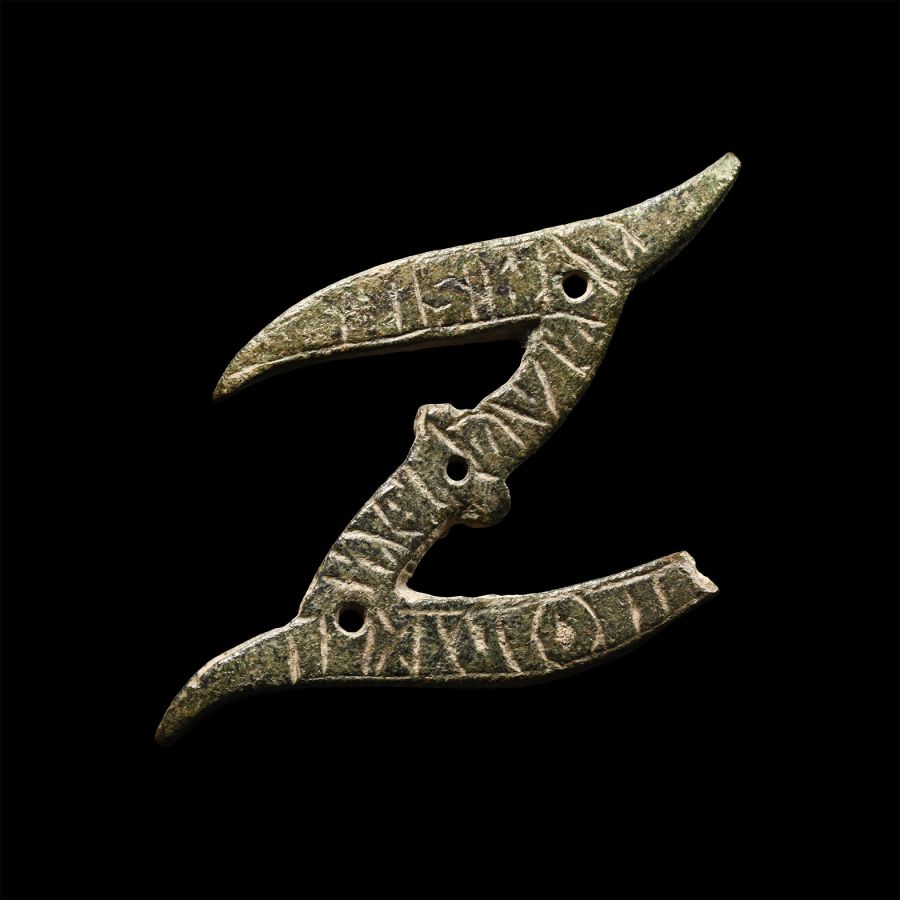
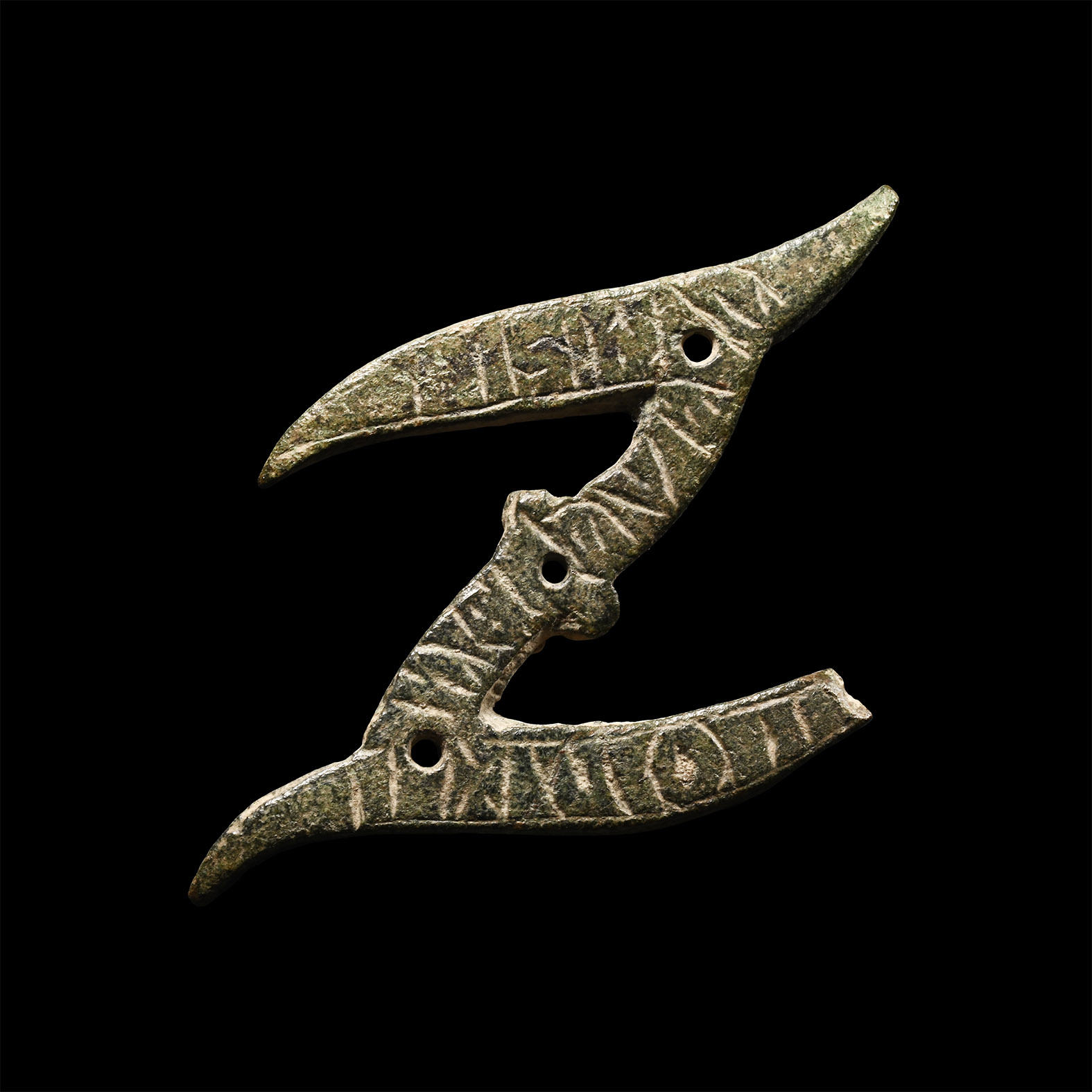
Medieval Bronze Mount with Inscription
14TH-15TH CENTURY A.D.
2 1/8 in. (19.3 grams, 55 mm).
Formed as a capital 'N' or 'Z' with spurs to the median bar and swept arms; reserved enigmatic inscription 'MON[..] / [...] / NISI[.]. [No Reserve]
ProvenanceAcquired on the UK art market in the 1990s.
Ex Paul Moore, Sussex, UK.
Property of a Stowmarket, UK, gentleman.
Accompanied by a previous typed and encapsulated identification card.
TimeLine Auctions follows a vetting process to ensure the authenticity and legality of all items, reinforcing our commitment to integrity and responsible trading. Each antiquity, antique, and coin lot undergoes thorough examination by a vetting committee of at least ten external specialists, professional trade association members, scientists, and archaeologists: Our Vetting Process
AUCTIONS:
TimeLine is a leading auction house specialising in antiquities, ancient art, collectables, natural history, coins, medals, and books. Our auctions offer museums, collectors, historians, and enthusiasts the opportunity to acquire unique and historically significant pieces.
-
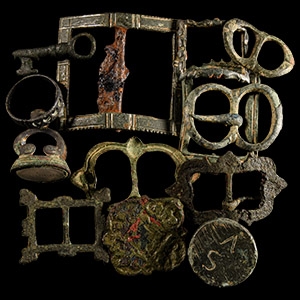
Medieval and Later Bronze Artefact Collection
Mainly 15th-19th century A.D.Sold for (Inc. bp): £20
Comprising various buckles; a key; a heraldic pendant devoid of loop with remains of enamel; a stamp seal with stone intaglio engraved with cursive text; a discoid weight with 'S V' to both sides; and an openwork ring. 110 grams total, 21-48 mm
Found Northampton and Somerset, UK. -
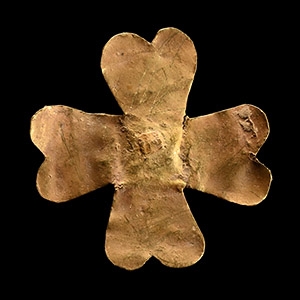
Medieval Gold Floral Cross Pilgrim's Mount
Circa 12th-15th century A.D.Sold for (Inc. bp): £117
In sheet-gold with a loop to the reverse. 0.28 grams, 13 mm
From a late Japanese specialist collector, 1970-2000s. -
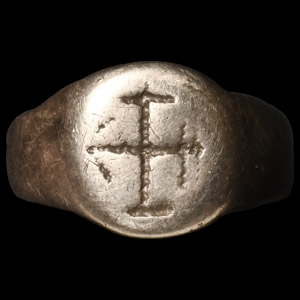
Medieval Silver Ring with Anchor Cross
Circa 12th-14th century A.D.Sold for (Inc. bp): £195
Discoid integral bezel with low-relief anchor motif. 4.55 grams, 21.38 mm overall, 18.26 mm internal diameter (approximate size British P, USA 7 1/2, Europe 16.23, Japan 15)
From the collection of a High Wycombe, Buckinghamshire, UK, gentleman, circa 2000.
