
Loading, please wait...
LOT 1562
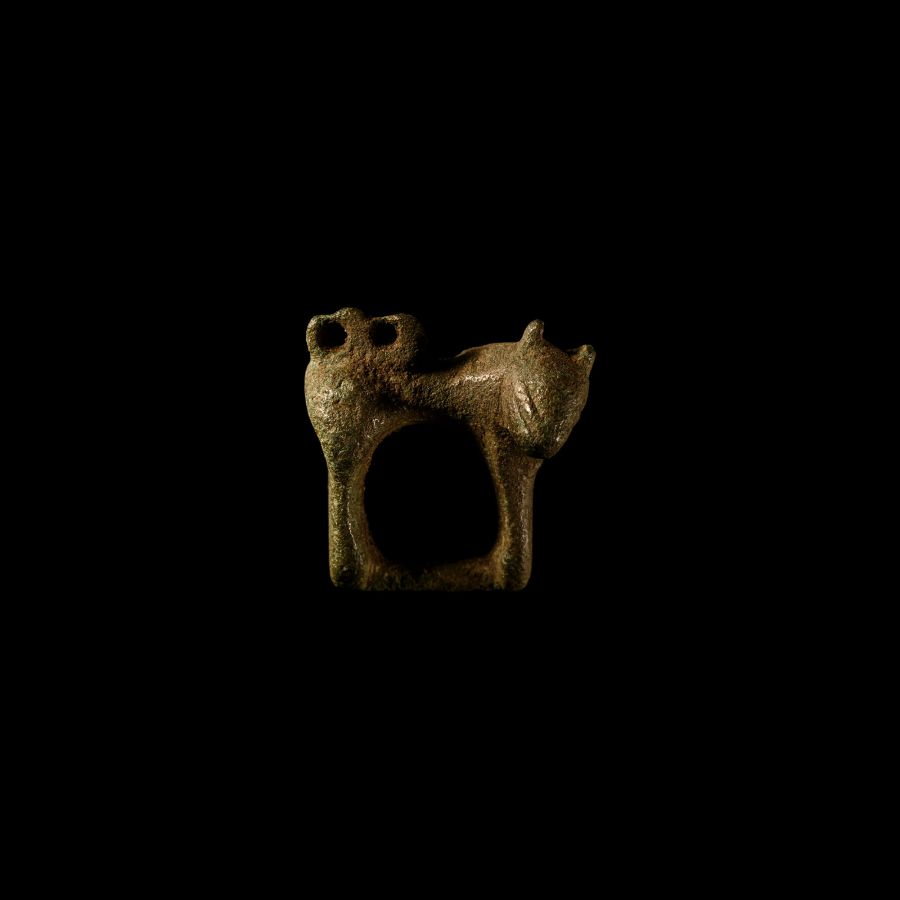
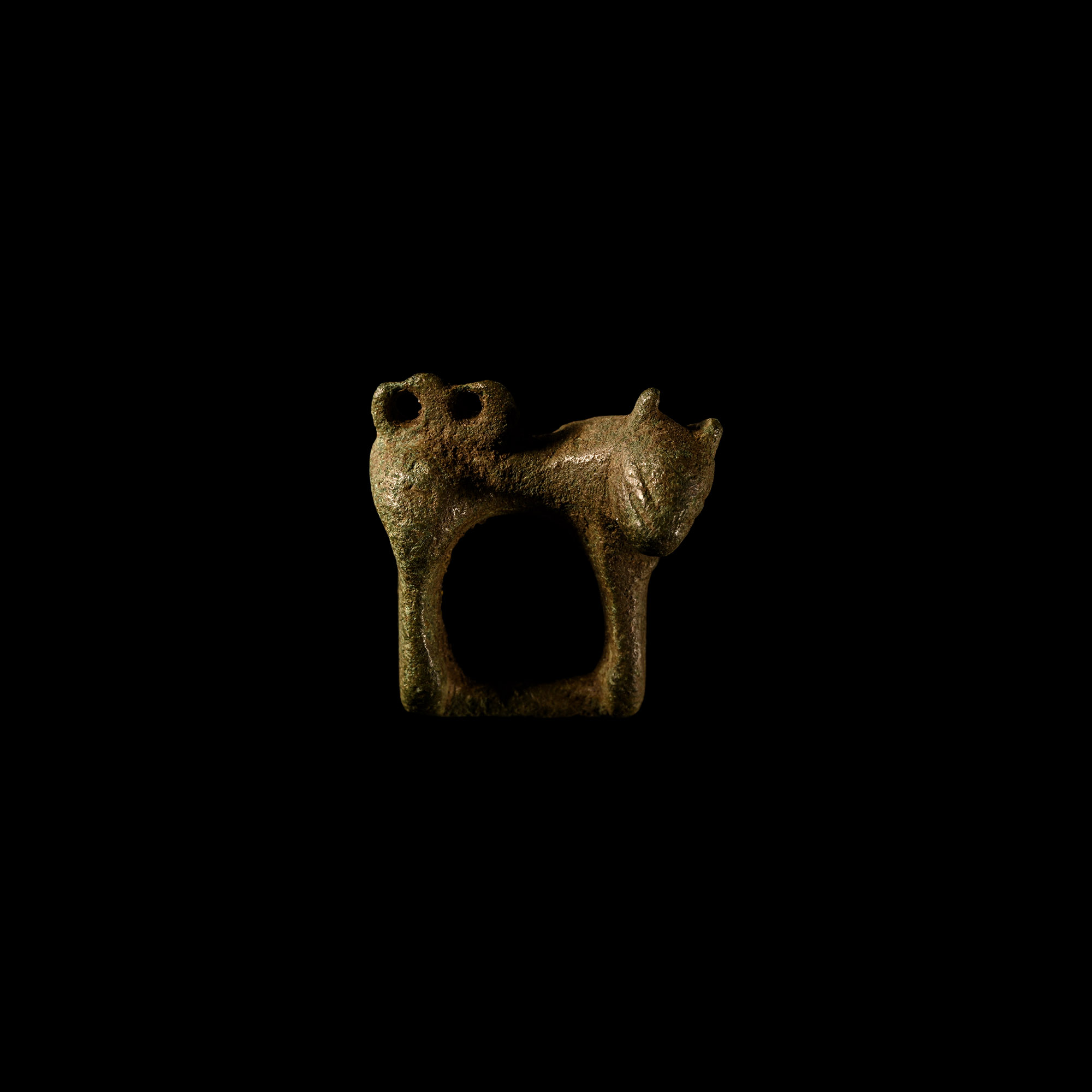
Medieval Bronze Lion Fitting
13TH-14TH CENTURY A.D.
3/4 in. (6.21 grams, 18 mm).
Formed as a lion standing right, head turned right, tail arched over rump forming two attachment holes; bar spanning the gap between front and hind paws. [No Reserve]
ProvenanceFound Nottinghamshire, UK.
CONDITIONTimeLine Auctions follows a vetting process to ensure the authenticity and legality of all items, reinforcing our commitment to integrity and responsible trading. Each antiquity, antique, and coin lot undergoes thorough examination by a vetting committee of at least ten external specialists, professional trade association members, scientists, and archaeologists: Our Vetting Process
AUCTIONS:
TimeLine is a leading auction house specialising in antiquities, ancient art, collectables, natural history, coins, medals, and books. Our auctions offer museums, collectors, historians, and enthusiasts the opportunity to acquire unique and historically significant pieces.
-
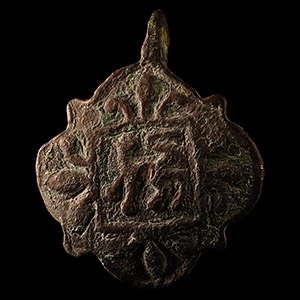
Medieval Bronze Knight's Heraldic Horse Harness Pendant
13th-15th century A.D.Sold for (Inc. bp): £72
Quatrefoil in form with triangular tab between each lobe, displaying a crude lion rampant standing left within a square with surrounding fleurettes; integral suspension loop. 12.7 grams, 40 mm
Found Berkshire, UK. Accompanied by a copy of the British Museum's Portable Antiquities Scheme (PAS) report no.BERK-21FE54. -
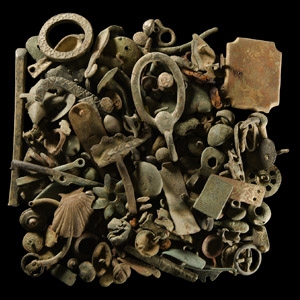
Medieval and Later Bronze Artefact Group
Circa 12th-20th century A.D.Sold for (Inc. bp): £52
Comprising: buttons; spur rowels; weights; jewellery items; furniture and clothes fittings, together with other miscellaneous items; including objects displaying decorative elements. 695 grams total, 0.9-10.4 cm
Found Berkshire, UK. -
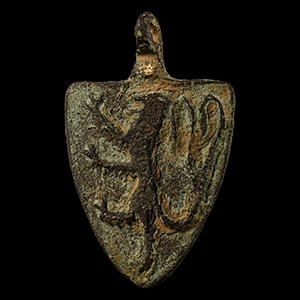
Medieval Knight's Gilt Bronze 'Havering Family' Heraldic Horse Harness Pendant
13th-14th century A.D.Sold for (Inc. bp): £104
The heater-shield pendant with integral suspension loop and traces of gilding, bearing device of a 'lion rampant queue fourchy or' (a golden lion rampant with a doubled tail). 5.4 grams, 34 mm
Found near Fakenham, Norfolk, UK, circa 2000. Property of a retired academic.
This device is associated with several families in the medieval period, including that of Havering (originating in Cornwall) and also with the Dukes of Limburg (of the house of Leuven, 1288-1406 AD), the family were also Dukes of Brabant and Lothier).
