
Loading, please wait...
LOT 1907
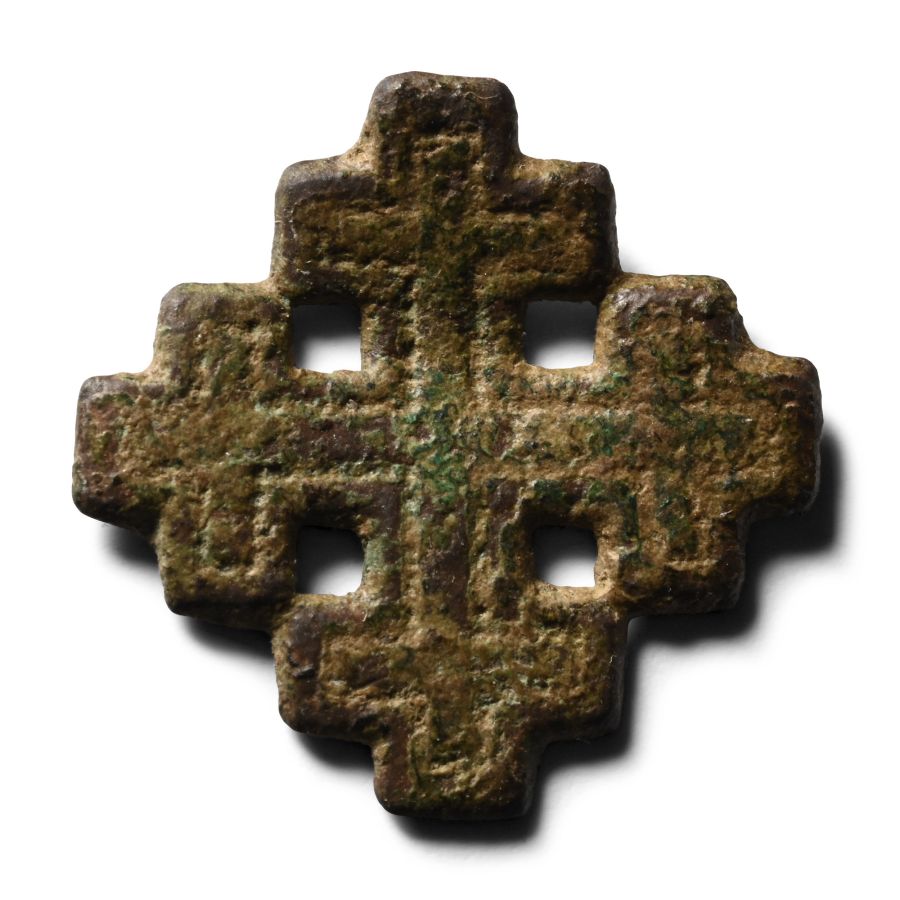
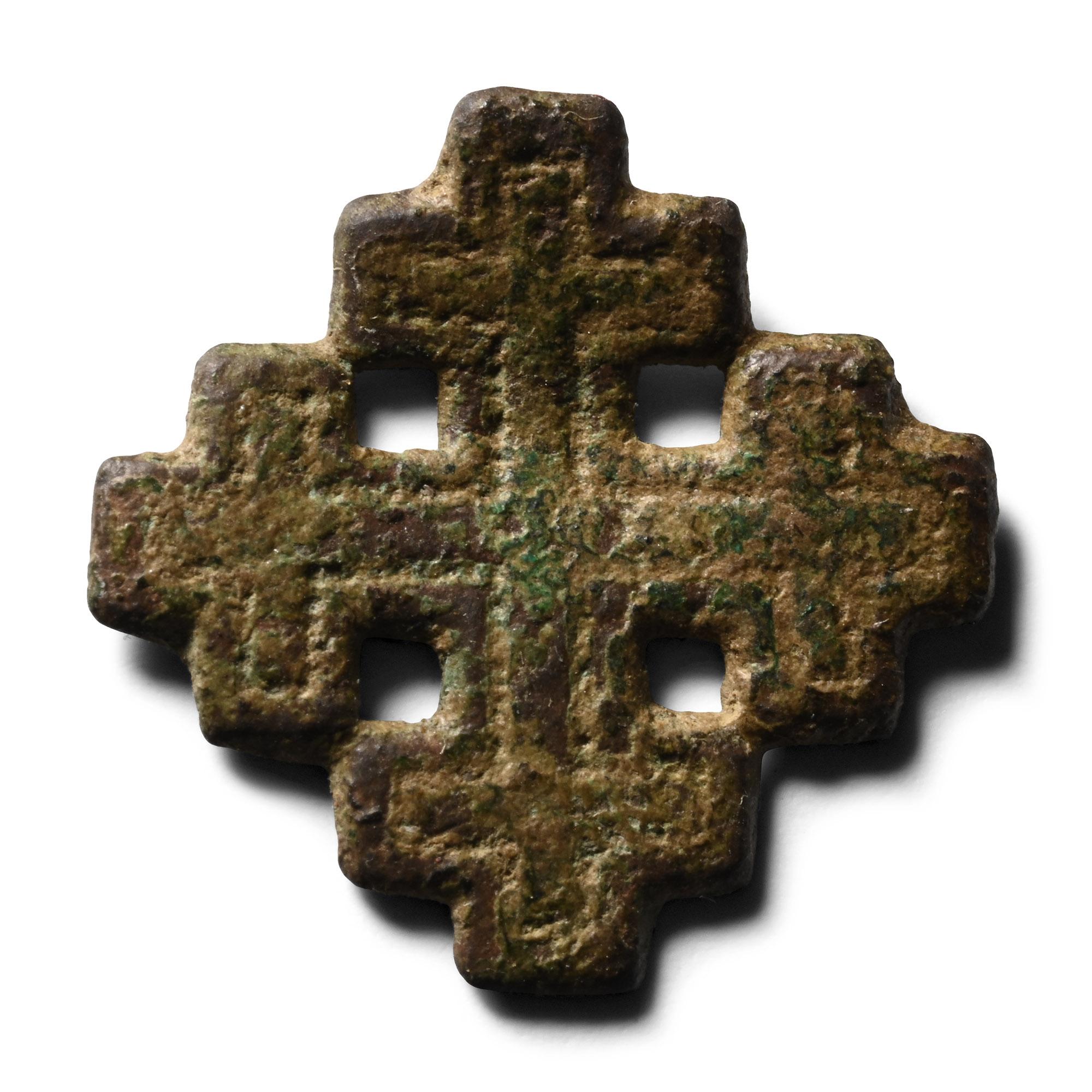
Medieval Bronze Knight's Holy Sepulchre Badge
CIRCA 13TH-14TH CENTURY A.D.
3/4 in. (0.75 grams, 18 mm).
Formed as a cross-crosslet, the symbol of the Knights of the Holy Sepulchre, with a punched-point border. [No Reserve]
ProvenanceFound Suffolk, UK.
LiteratureCf. Mitchiner, M., Medieval Pilgrim & Secular Badges, London, 1986, items 939-41.
FootnotesThe 'Equestrian Order of the Holy Sepulchre of Jerusalem' was an order of knighthood under the protection of the Pope, formed around 1099 AD by Duke Godfrey of Bouillon, the leader of the First Crusade. It was established for the protection of pilgrims travelling to the Holy Land and was recognised by a Papal Bull in about 1113 AD.
CONDITIONTimeLine Auctions follows a vetting process to ensure the authenticity and legality of all items, reinforcing our commitment to integrity and responsible trading. Each antiquity, antique, and coin lot undergoes thorough examination by a vetting committee of at least ten external specialists, professional trade association members, scientists, and archaeologists: Our Vetting Process
AUCTIONS:
TimeLine is a leading auction house specialising in antiquities, ancient art, collectables, natural history, coins, medals, and books. Our auctions offer museums, collectors, historians, and enthusiasts the opportunity to acquire unique and historically significant pieces.
-
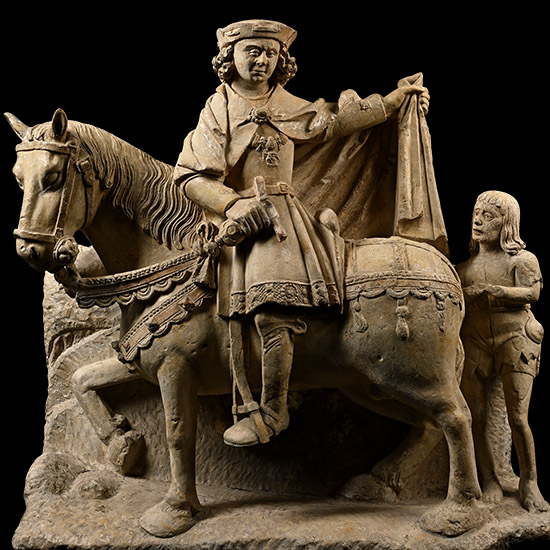
Large Medieval Carved Limestone of St Martin on Horseback with Cloak and Beggar
Flemish, 15th century A.D.Sold for (Inc. bp): £31,200
Carved in high relief, limestone scene depicting Saint Martin of Tours on horseback with his sword raised to cut off a portion of his military cloak to share it with a beggar; the saint wearing articulated armour buckled at his forearms and on his lower leg, with a billowing cloak draped across his shoulders; the horse shown in a contrapposto stance with one foreleg raised, with ornamental caparison and harness pendants; the beggar depicted with emaciated form wearing only underclothes, hands pressed together in supplication; to the reverse, traces of original fixing to a wall or architectural setting; restored. 108 kg, 78.5 cm high
Ex Richard Chester Master, Cirencester, UK. Kate Thurlow & Robin Thompson Collection, 21 October 1998. This lot has been checked against the Interpol Database of stolen works of art and is accompanied by search certificate number no.13384-259005.
The subject derives from the episode recorded by Sulpicius Severus in his Vita Sancti Martini (c. 397 A.D.), in which the young Roman soldier Martin, stationed at Amiens, divided his cloak to share it with a freezing beggar; that same night, he dreamt that Christ appeared to him wearing the half of the garment which he had given away. Martin subsequently converted to Christianity and eventually became Bishop of Tours, where he was venerated as one of the most important saints of early medieval Western Europe; his feast day is celebrated on 11th November. The present relief belongs to a tradition of Flemish devotional sculpture that flourished in the 15th century, when the prosperous towns of the Low Countries — Bruges, Ghent, Brussels, and Mechelen — became pre-eminent centres of religious carving exported across Northern Europe. Comparable examples to this piece are held in the collections of the Musée de Cluny, Paris, and the Rijksmuseum, Amsterdam. -
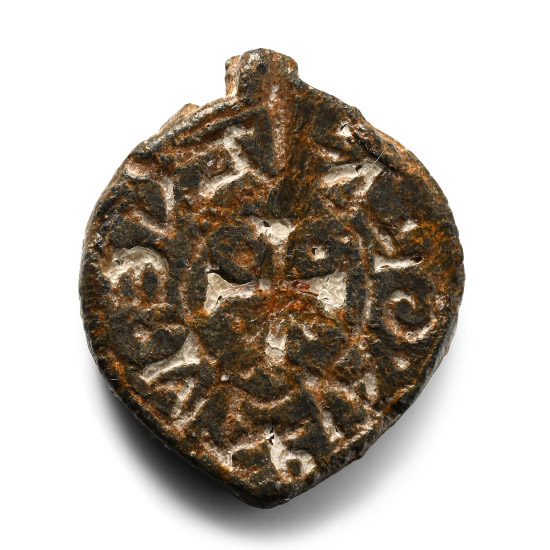
Medieval Lead 'Hail Mary Full of Grace' Seal Matrix
England, 1300-1400 A.D.Sold for (Inc. bp): £47
Flat discoid with central design of a cross pattée with a pellet in each angle; abbreviated inscription to the border 'AVE:MARIA:GRA' (Hail Mary (full of) grace); lug at the top. 13.4 grams, 26 mm
Found Islip, Northamptonshire, UK. Recorded with UKDFD no.44886. -
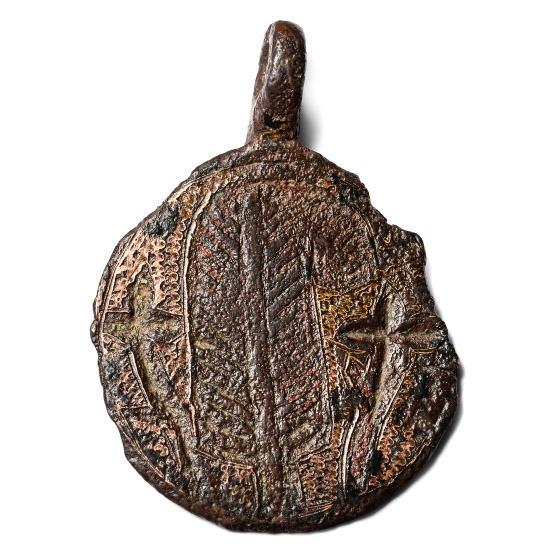
Medieval Knight's Bronze Heraldic Horse Harness Pendant with Feather
13th-15th century A.D.Sold for (Inc. bp): £52
Discoid pendant with a feather flanked by fleur-de-lys. 6.8 grams, 42 mm
From the private collection of Graham Slater (1927-2024), Cambridge, UK; formed 1980s-1990s.
