
Loading, please wait...
LOT 1830
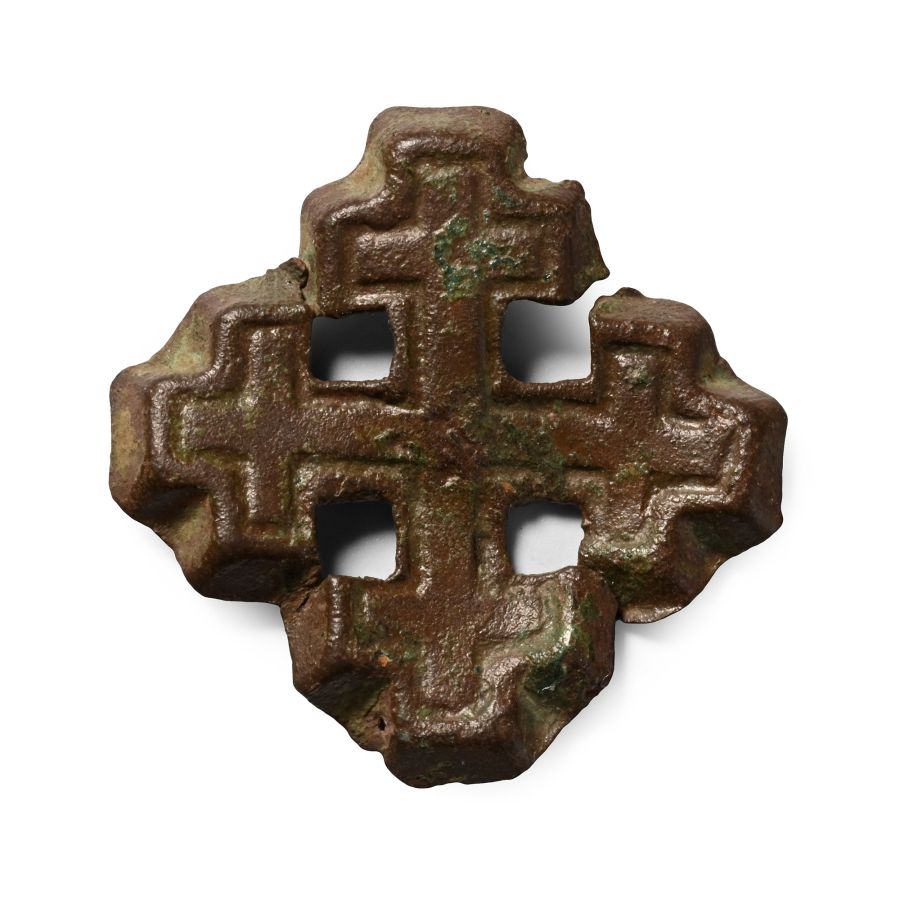
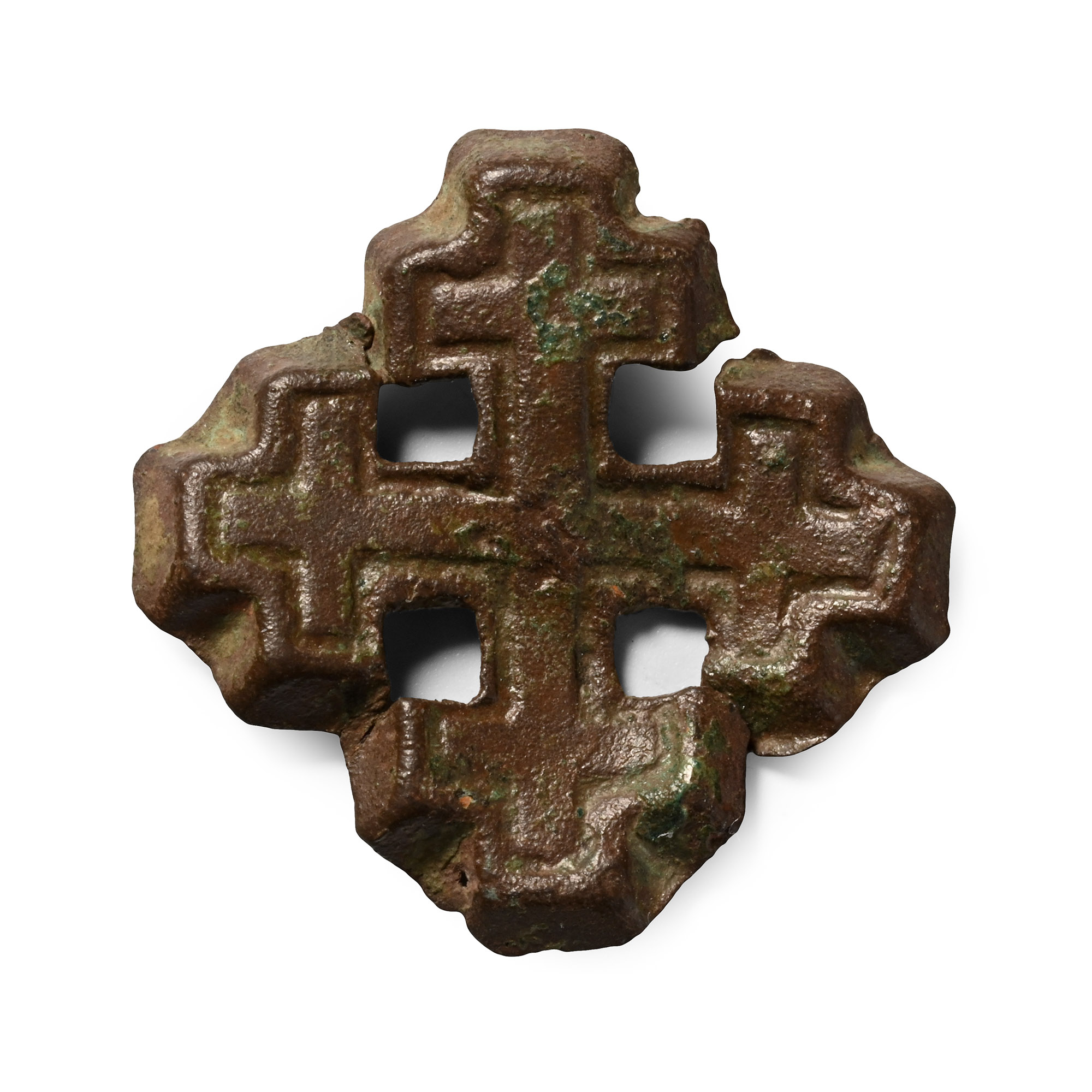
Medieval Bronze Knight's Holy Sepulchre Badge
CIRCA 13TH-14TH CENTURY A.D.
1 in. (1.07 grams, 24 mm).
Formed as a cross-crosslet, the symbol of the Knights of the Holy Sepulchre, with punched-point border. [No Reserve]
ProvenanceFound Waltham St.
Lawrence, Windsor and Maidenhead, UK.
Cf. Mitchiner, M., Medieval Pilgrim & Secular Badges, London, 1986, items 939-41.
FootnotesThe 'Equestrian Order of the Holy Sepulchre of Jerusalem' was an order of knighthood under the protection of the Pope, formed around 1099 AD by Duke Godfrey of Bouillon, the leader of the First Crusade. It was established for the protection of pilgrims travelling to the Holy Land and was recognised by a Papal Bull in about 1113 AD.
CONDITIONTimeLine Auctions follows a vetting process to ensure the authenticity and legality of all items, reinforcing our commitment to integrity and responsible trading. Each antiquity, antique, and coin lot undergoes thorough examination by a vetting committee of at least ten external specialists, professional trade association members, scientists, and archaeologists: Our Vetting Process
AUCTIONS:
TimeLine is a leading auction house specialising in antiquities, ancient art, collectables, natural history, coins, medals, and books. Our auctions offer museums, collectors, historians, and enthusiasts the opportunity to acquire unique and historically significant pieces.
-
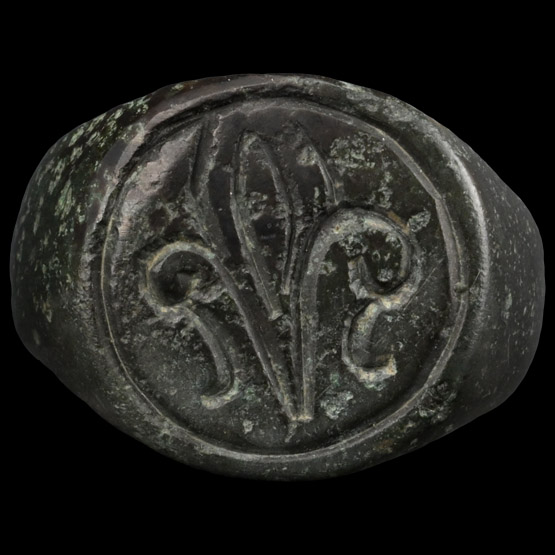
Medieval Bronze Ring with Fleur-De-Lys
Circa 11th-13th century A.D.Sold for (Inc. bp): £78
With discoid bezel, incuse border and fleur-de-lys motif. 8.74 grams, 23.55 mm overall, 19.64 mm internal diameter (approximate size British T 1/2, USA 9 3/4, Europe 21.89, Japan 21)
Ex German art market, 2000s. Acquired from an EU collector living in London. From the collection of a Surrey, UK, gentleman. -
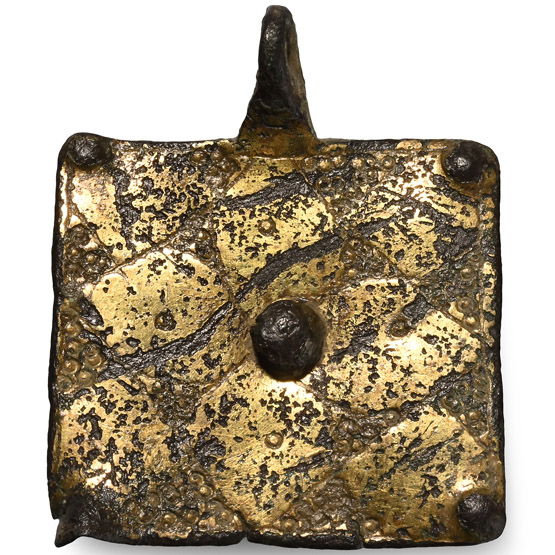
Medieval Knight's Gilt Bronze Heraldic Horse Harness Pendant
14th-15th century A.D.Sold for (Inc. bp): £39
Rectangular with raised pellet in each corner and at the centre, gilded on obverse with suspension loop. 8.47 grams, 38 mm
From the private collection of the late Graham Slater (1927-2024), Cambridge, UK, acquired 1980s-1990s. -
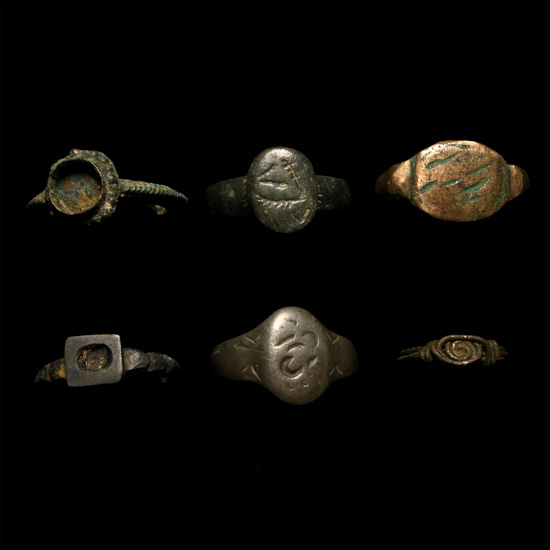
Celtic to Medieval Bronze Ring Collection
1st century B.C.-16th century A.D.Sold for (Inc. bp): £91
Comprising: a coiled ring with a coiled bezel; a ring with a raised oval bezel with linear motifs; two rings with an incuse motif on the bezel; two rings with recessed cells to accept an insert. 21.97 grams total, 19-26 mm
Acquired on the UK and EU art market before 2000. From the private collection of a Surrey, UK, gentleman.
A similar cast ring with a silver sheet and notched decoration was found in the Necropolis of Zabran, Zemun, and dated 10th-15th century A.D. These rings were often decorated with geometric and abstract lines.
