
Loading, please wait...
LOT 1875
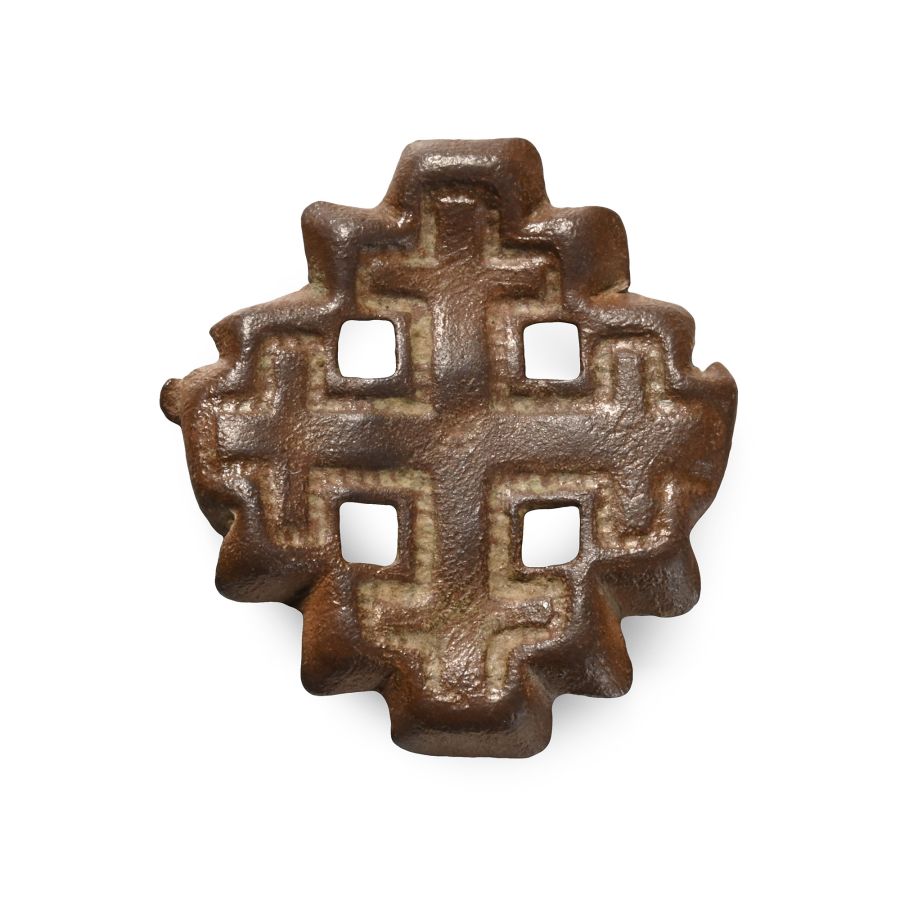
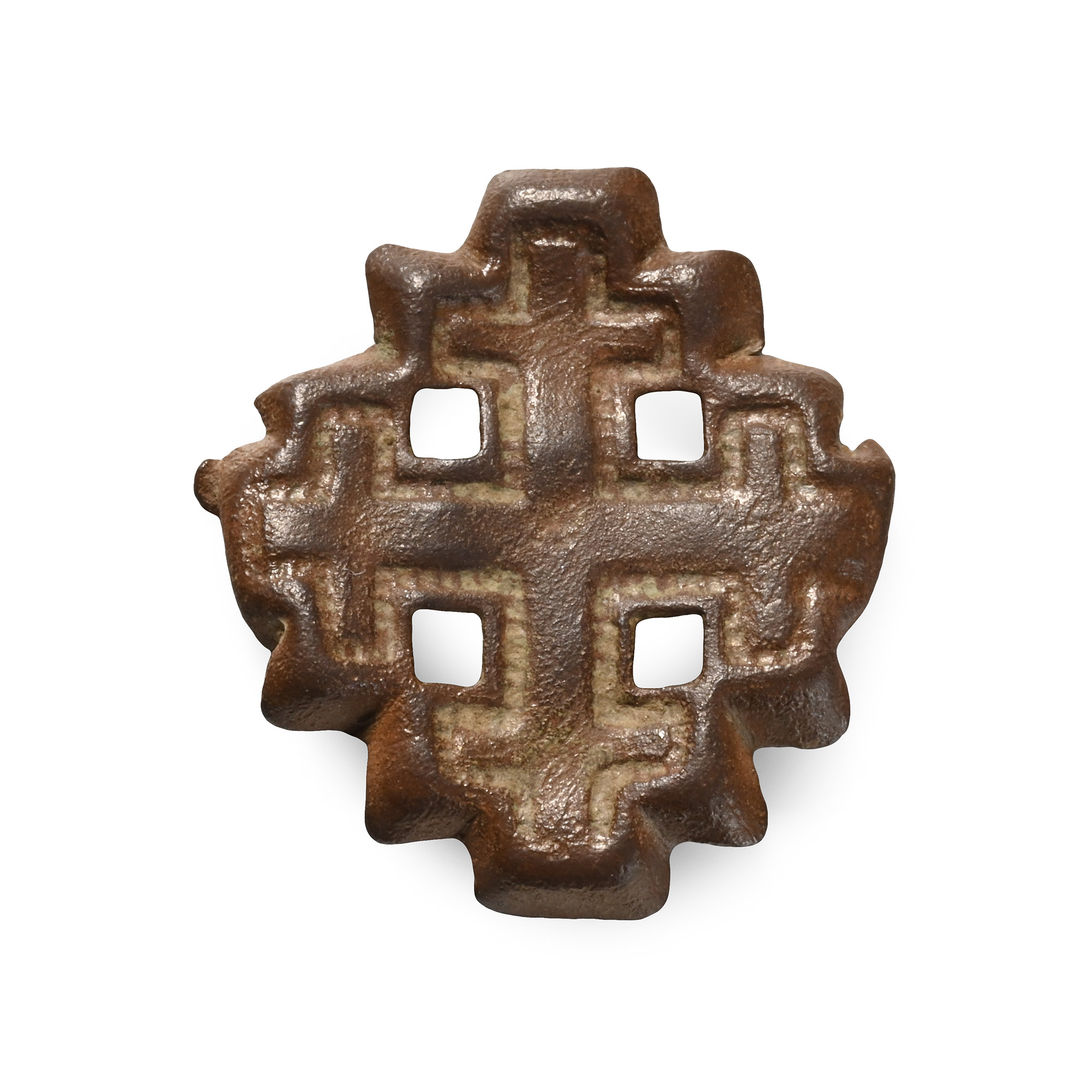
Medieval Bronze Knight's Holy Sepulchre Badge
CIRCA 13TH-14TH CENTURY A.D.
1 in. (1.05 grams, 23 mm).
Formed as a cross-crosslet, the symbol of the Knights of the Holy Sepulchre, with punched-point border. [No Reserve]
ProvenanceFound Suffolk, UK.
Property of a Suffolk, UK, gentleman.
Cf. Mitchiner, M., Medieval Pilgrim & Secular Badges, London, 1986, items 939-41.
FootnotesThe 'Equestrian Order of the Holy Sepulchre of Jerusalem' was an order of knighthood under the protection of the Pope, formed around 1099 AD by Duke Godfrey of Bouillon, the leader of the First Crusade. It was established for the protection of pilgrims travelling to the Holy Land and was recognised by a Papal Bull in about 1113 AD.
CONDITIONTimeLine Auctions follows a vetting process to ensure the authenticity and legality of all items, reinforcing our commitment to integrity and responsible trading. Each antiquity, antique, and coin lot undergoes thorough examination by a vetting committee of at least ten external specialists, professional trade association members, scientists, and archaeologists: Our Vetting Process
AUCTIONS:
TimeLine is a leading auction house specialising in antiquities, ancient art, collectables, natural history, coins, medals, and books. Our auctions offer museums, collectors, historians, and enthusiasts the opportunity to acquire unique and historically significant pieces.
-
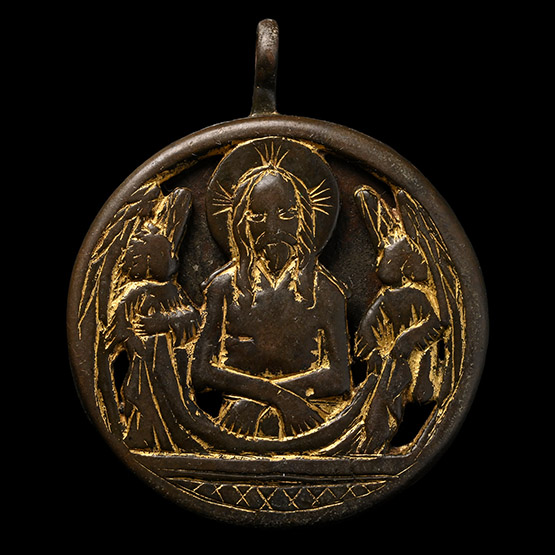
Medieval Gilt Copper Devotional Reliquary Pendant
Germany, 15th century A.D.Sold for (Inc. bp): £572
A large circular openwork pendant with a fitted lid, the lid depicting Christ between two angels holding a shroud; the reverse with seated and crowned Virgin Mary holding infant Jesus on her lap. 57.2 grams, 57 mm
Private collection, UK. -
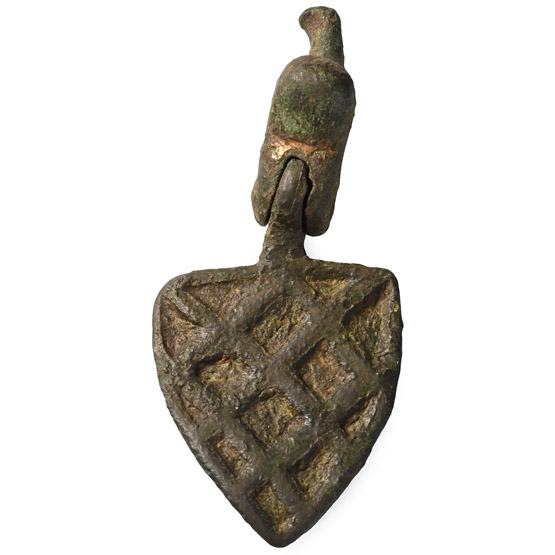
Medieval Knight's Bronze Heraldic Horse Harness Pendant with Hanger
14th-15th century A.D.Sold for (Inc. bp): £78
Heater-shaped with attachment lug above, heraldic design of crossed lines. 7.89 grams, 45 mm
From the private collection of the late Graham Slater (1927-2024), Cambridge, UK, acquired 1980s-1990s. -
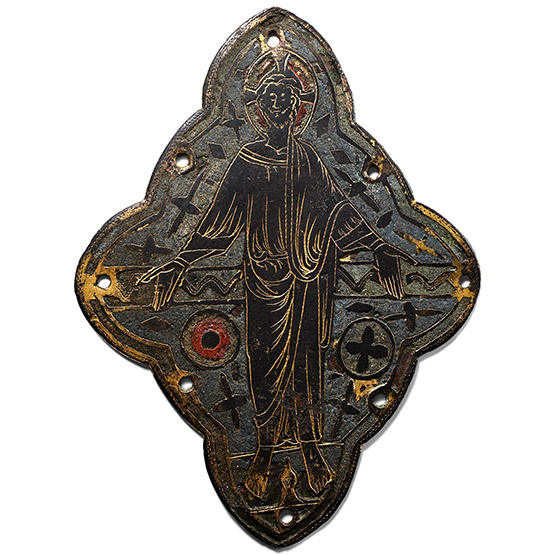
Large Medieval Gilt Bronze Champleve Plaque Depicting Christ in Majesty
Limoges, 13th century A.D.Sold for (Inc. bp): £3,900
Decorated in blue, green and red champlevé enamel, displaying the engraved figure of a standing Christ, his hands gesturing outwards towards the viewer; traces of original gilding; originally the central panel of a processional cross. 124 grams, 15.2 cm
Private collection, Europe. Acquired on the French art market. This lot has been checked against the Interpol Database of stolen works of art and is accompanied by search certificate number no.13092-248393.
From the 12th to 14th century, there was a large industry producing metal objects decorated in enamel using the champlevé technique, of which most of the survivals and probably most of the original production, are religious objects such as reliquaries, crosses and statues of saints. The centre of this production was Limoges, France.
