
Loading, please wait...
LOT 1882
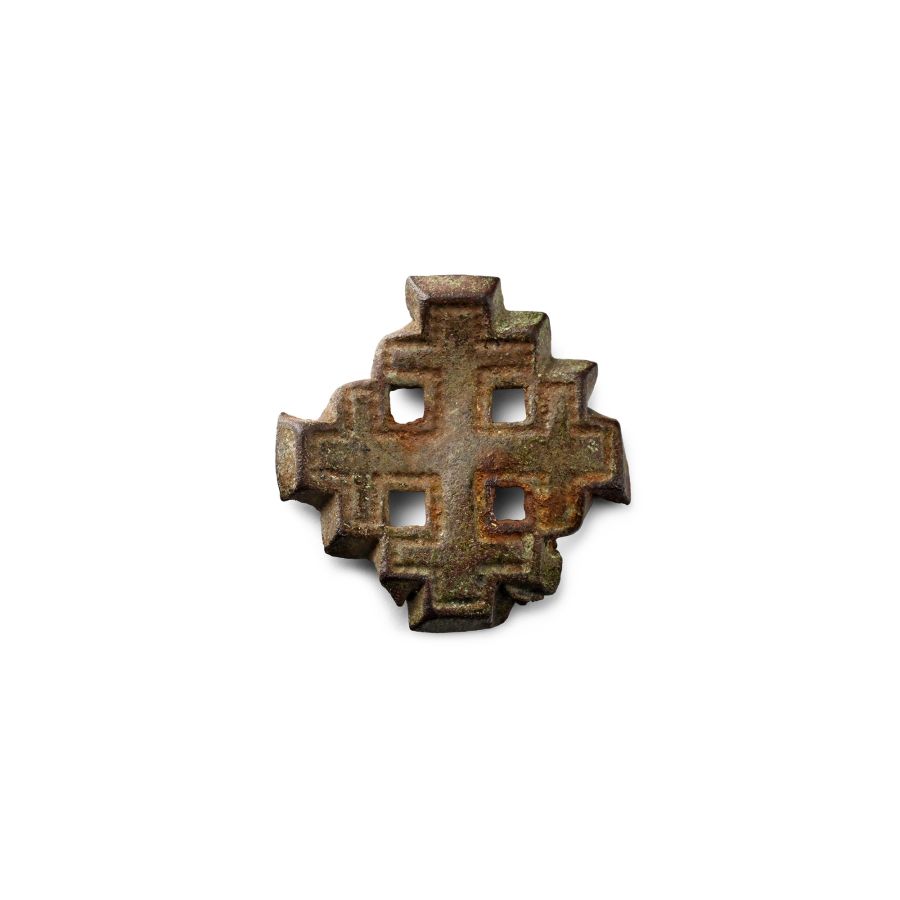
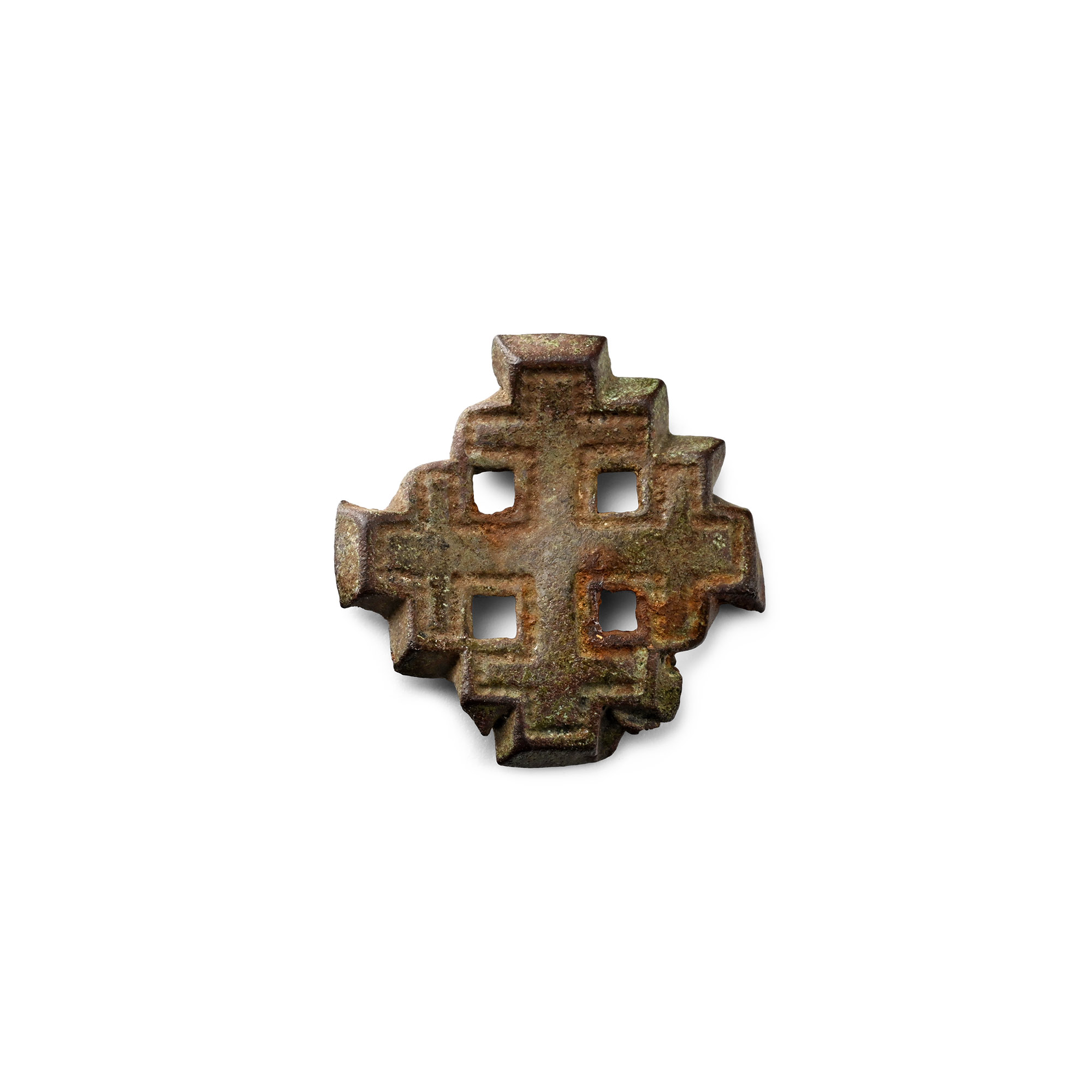
Medieval Bronze Knight's Holy Sepulchre Badge
CIRCA 13TH-14TH CENTURY A.D.
3/4 in. (0.61 grams, 18 mm).
Formed as a cross-crosslet, the symbol of the Knights of the Holy Sepulchre, with chamfered border. [No Reserve]
ProvenanceFound near Feltwell, Norfolk, UK.
From the private collection of Kenneth Machin (1936-2020), Buckinghamshire, UK; his collection of antiquities and natural history was formed since 1948; thence by descent.
This lot is accompanied by an illustrated lot declaration signed by the Head of the Antiquities Department, Dr Raffaele D'Amato.
Cf. Mitchiner, M., Medieval Pilgrim & Secular Badges, London, 1986, items 939-41.
CONDITIONTimeLine Auctions follows a vetting process to ensure the authenticity and legality of all items, reinforcing our commitment to integrity and responsible trading. Each antiquity, antique, and coin lot undergoes thorough examination by a vetting committee of at least ten external specialists, professional trade association members, scientists, and archaeologists: Our Vetting Process
AUCTIONS:
TimeLine is a leading auction house specialising in antiquities, ancient art, collectables, natural history, coins, medals, and books. Our auctions offer museums, collectors, historians, and enthusiasts the opportunity to acquire unique and historically significant pieces.
-
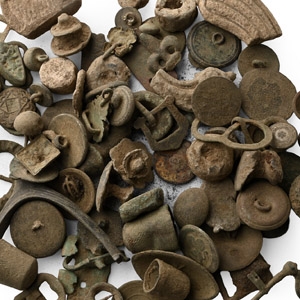
Medieval and Other Bronze and Lead Artefact Group
9th-20th century A.D.Sold for (Inc. bp): £52
Including decorative studs, a whistle, thimbles, buttons and other items, mainly from Bildeston Church Farm, Suffolk. 714 grams total, 15-62 mm
Found Suffolk, UK. This lot is accompanied by an illustrated lot declaration signed by the Head of the Antiquities Department, Dr Raffaele D'Amato.
N.B. This lot is for UK buyers only. -
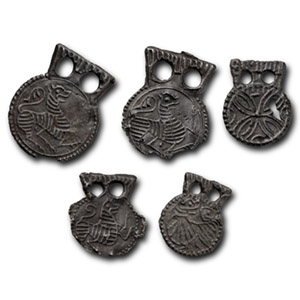
Medieval 'Thames' Decorated Spangle Group
13th-14th century A.D.Sold for (Inc. bp): £78
Including rosette, advancing beast and other types; pierced for attachment. 1.51 grams total, 12-17 mm
Found Billingsgate spoil from the Thames foreshore, London, UK, circa 1984. Property of an Essex collector. From the private collection of a Kent, UK, gentleman. This lot is accompanied by an illustrated lot declaration signed by the Head of the Antiquities Department, Dr Raffaele D'Amato. -
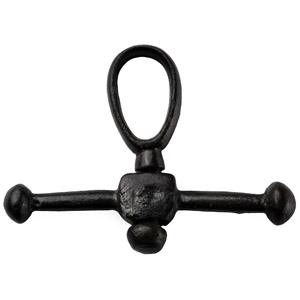
Medieval Bronze Purse Bar
15th-16th century A.D.Sold for (Inc. bp): £52
With bulb finials, latticework to one side of rectangular central panel, vertical swivel with oval suspension loop. 35 grams, 72 mm
Ex Graham Slater (1924-2024) collection, Cambridge, UK; his collection assembled since the 1980s. From a Cambridgeshire, UK, private collection. This lot is accompanied by an illustrated lot declaration signed by the Head of the Antiquities Department, Dr Raffaele D'Amato.
