
Loading, please wait...
LOT 1881
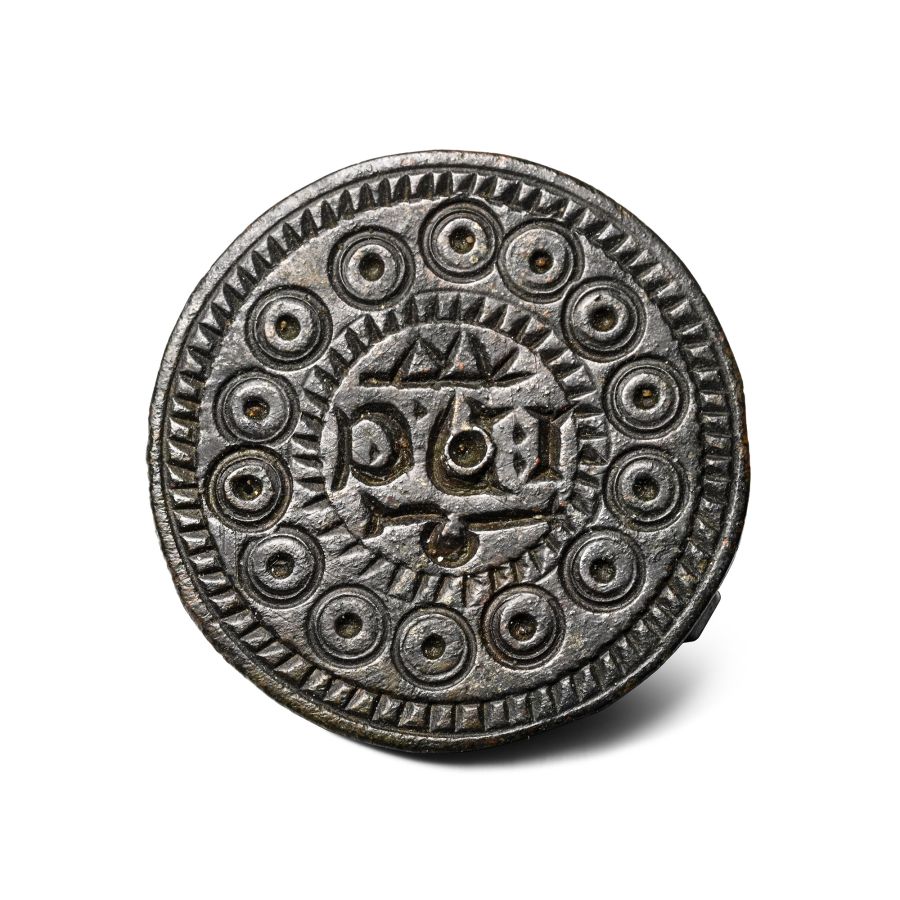
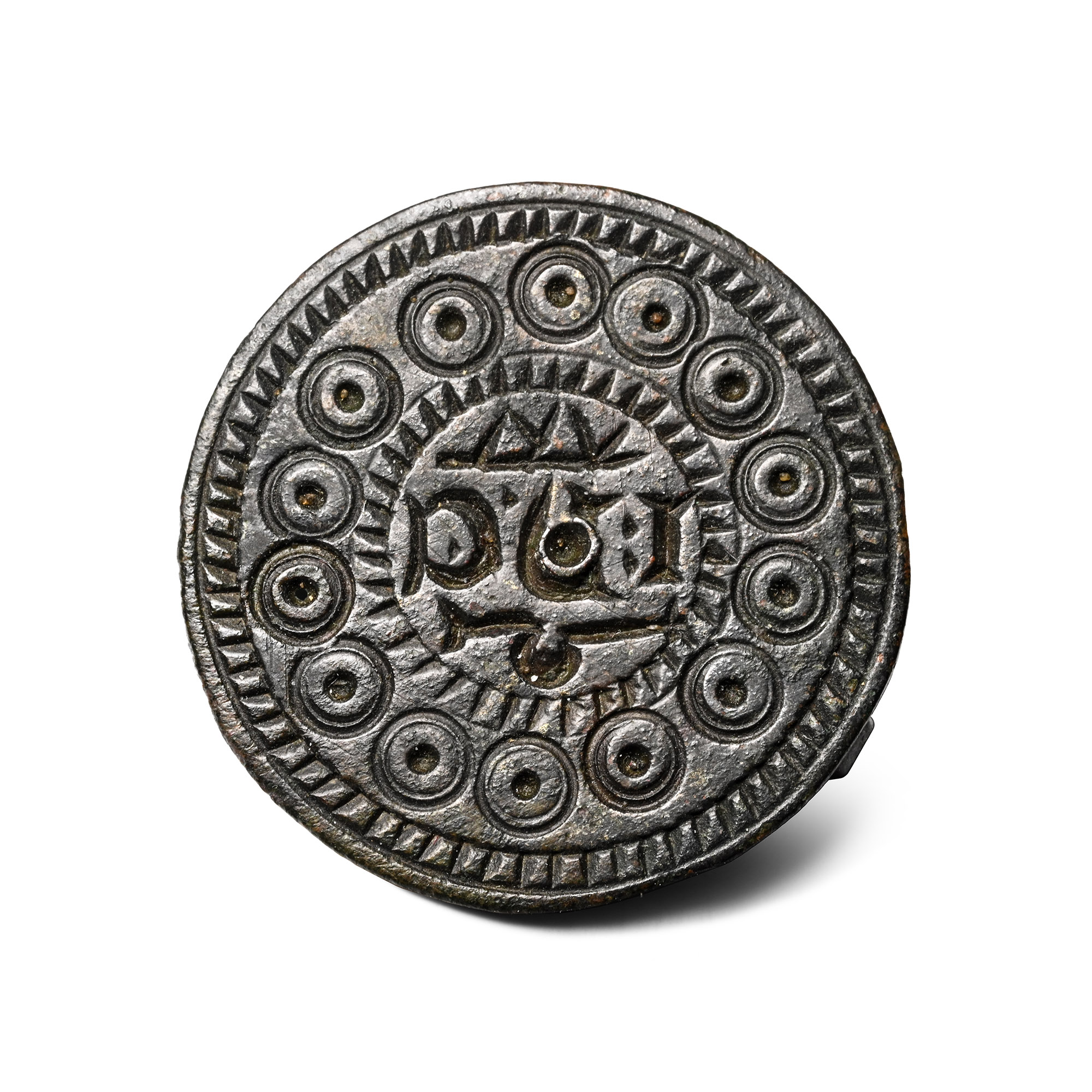
Medieval Bronze Jetton Brooch
CIRCA 14TH-15TH CENTURY A.D.
1 in. (3.15 grams, 26 mm).
Discoid brooch with a faux-ropework border, band of ring-and-dot motifs around the circumference enclosing a central inscription 'INC' with Greek letter omega above. [No Reserve]
ProvenanceEx London, UK, collection.
Ex Simmons Gallery, 1990s.
TimeLine Auctions follows a vetting process to ensure the authenticity and legality of all items, reinforcing our commitment to integrity and responsible trading. Each antiquity, antique, and coin lot undergoes thorough examination by a vetting committee of at least ten external specialists, professional trade association members, scientists, and archaeologists: Our Vetting Process
AUCTIONS:
TimeLine is a leading auction house specialising in antiquities, ancient art, collectables, natural history, coins, medals, and books. Our auctions offer museums, collectors, historians, and enthusiasts the opportunity to acquire unique and historically significant pieces.
-
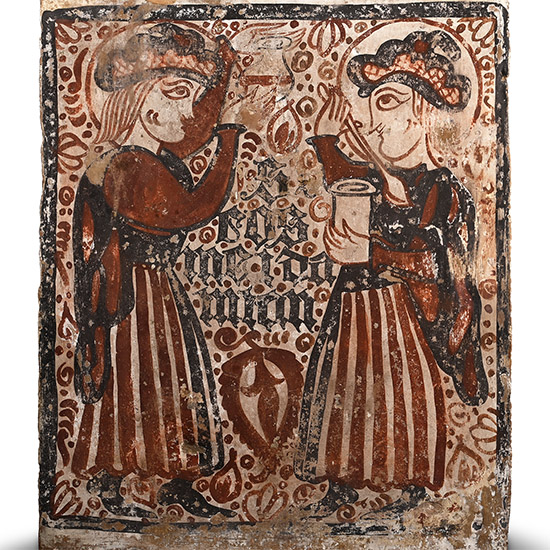
Spanish Medieval Socarrat Wall Tile Showing Saints Cosmas and Damian
Late 15th century A.D. or laterSold for (Inc. bp): £4,420
Showing two opposing surgeon saints, Cosmas and Damian, holding their medical attributes and shown nimbate, dressed in contemporary garments, with an inscription naming them at the centre, the background with densely arranged decorative motifs. 8.25 kg, 43 cm
Private collection, Spain. Private collection, London, UK.
Cosmas and Damian were two Arab physicians who were martyred in Syria during the persecutions under Emperor Diocletian. -
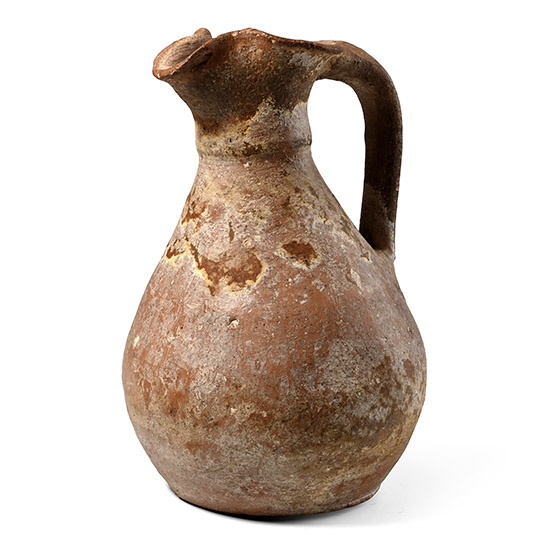
Medieval Terracotta Jug with Handle
Circa 14th-15th century A.D.Sold for (Inc. bp): £156
Comprising a piriform body with a flat base and a narrow neck with a trefoil lip, a strap handle to the rear. 368 grams, 15.5 cm
Previously from the Eileen Lewenstein collection, gifted in the 1970s. From the Ffestiniog pottery collection, Wales, UK. -
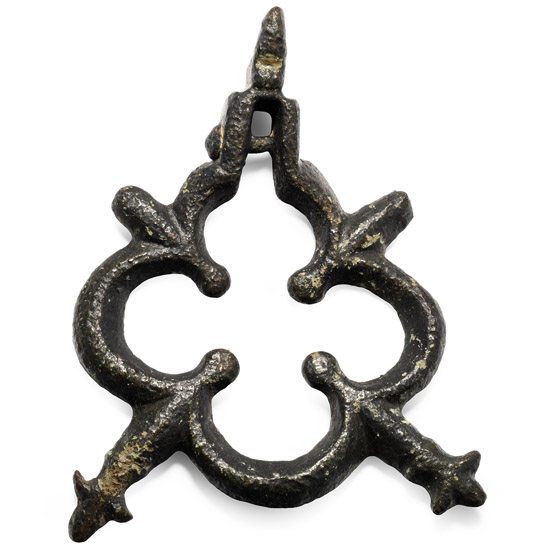
Large Medieval Knight's Bronze Openwork Heraldic Horse Harness Pendant
Circa 14th-15th century A.D.Sold for (Inc. bp): £39
Formed as an openwork quatrefoil with two projecting fleur-de-lys motifs, loop above. 26.1 grams, 69 mm
From the private coin collection of a West London, UK, gentleman, formed since the mid 1980s.
