
Loading, please wait...
LOT 1535
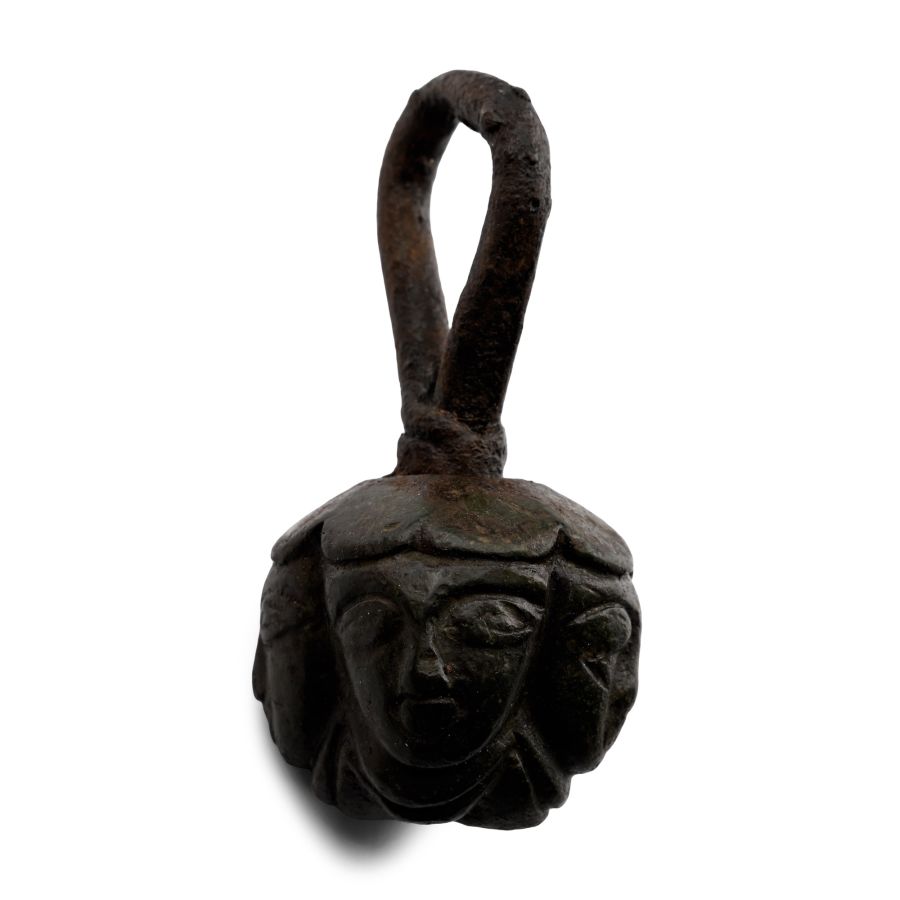
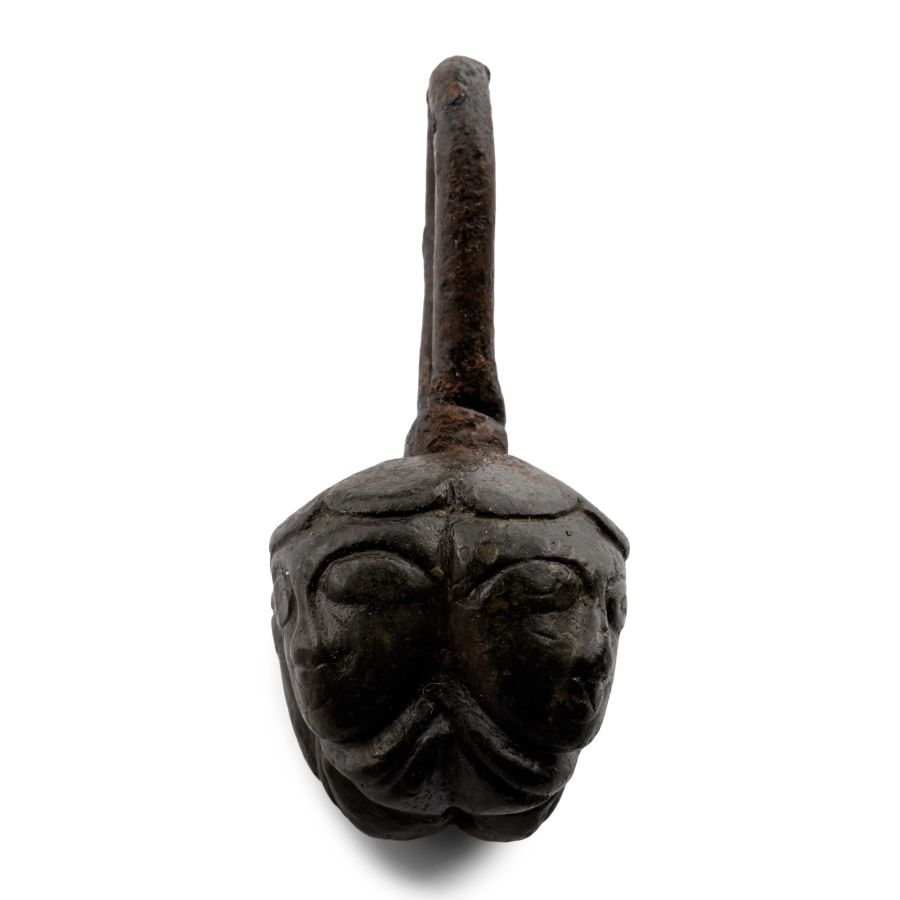
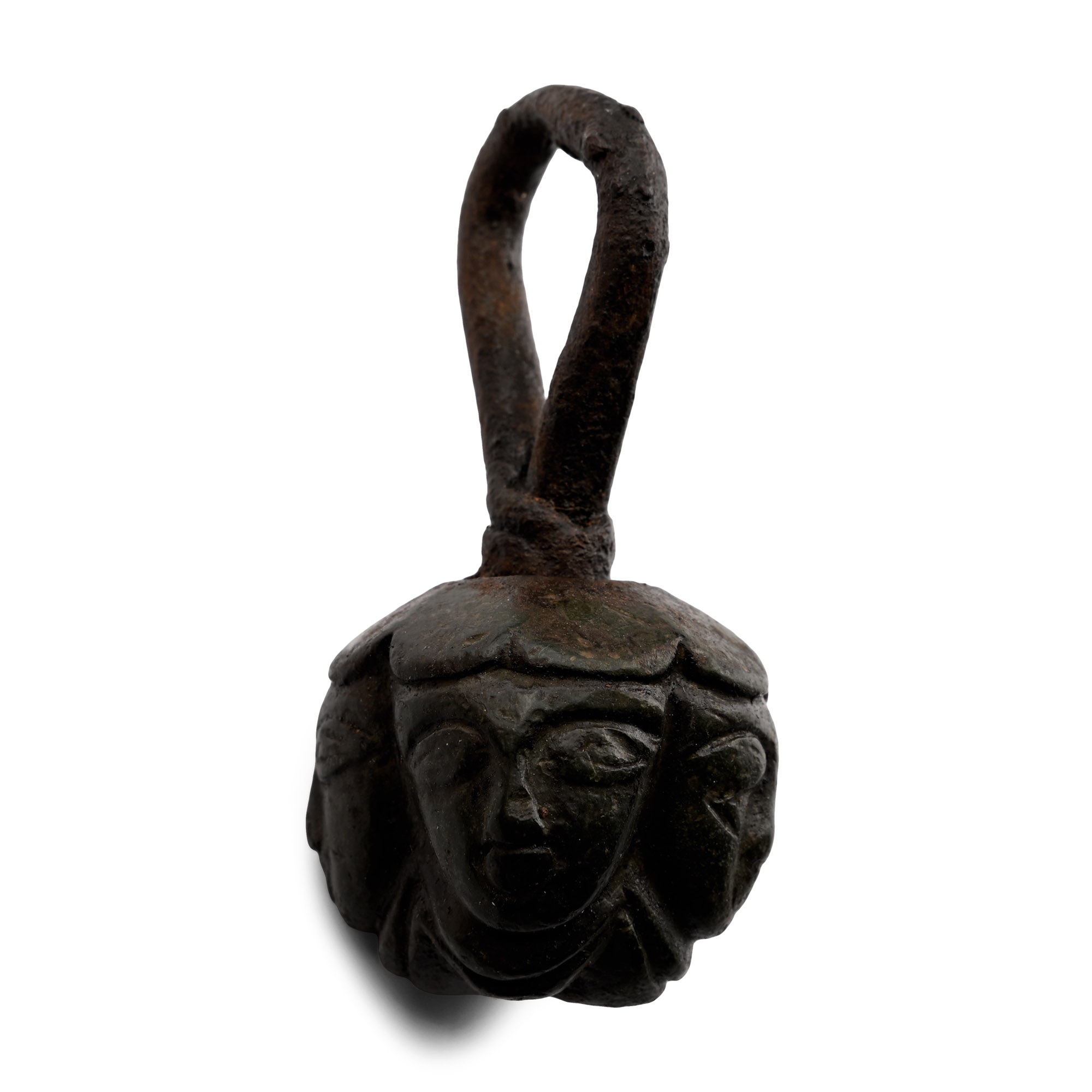
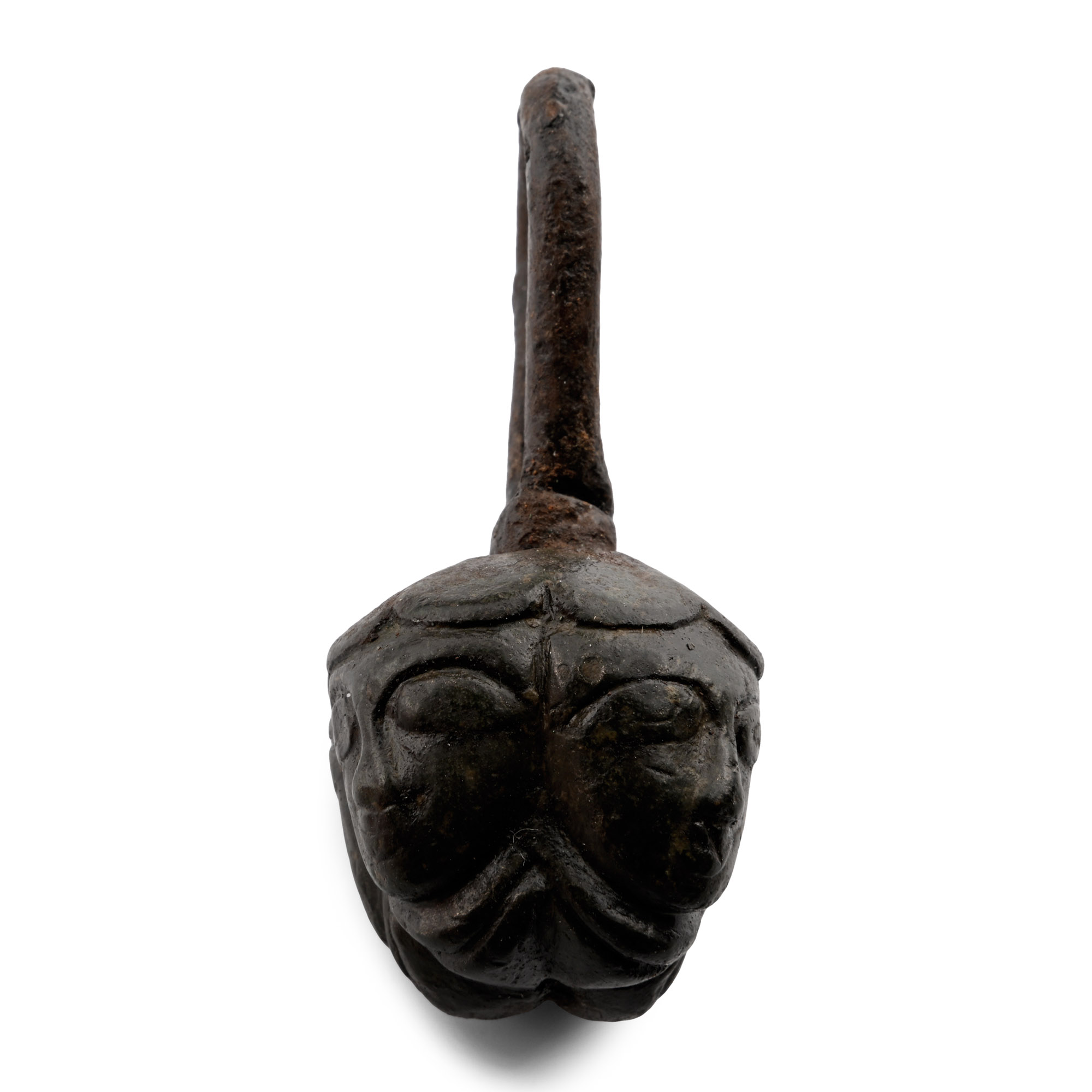
Medieval Bronze Flail Head with Four Heads
14TH-15TH CENTURY A.D.
2 3/8 in. (114 grams, 60 mm).
Formed as four radiating D-shaped masks beneath a rosette, substantial suspension loop.
ProvenanceFrom the private collection of a London gentleman, from his grandfather's collection formed before the early 1970s.
CONDITIONTimeLine Auctions follows a vetting process to ensure the authenticity and legality of all items, reinforcing our commitment to integrity and responsible trading. Each antiquity, antique, and coin lot undergoes thorough examination by a vetting committee of at least ten external specialists, professional trade association members, scientists, and archaeologists: Our Vetting Process
AUCTIONS:
TimeLine is a leading auction house specialising in antiquities, ancient art, collectables, natural history, coins, medals, and books. Our auctions offer museums, collectors, historians, and enthusiasts the opportunity to acquire unique and historically significant pieces.
-
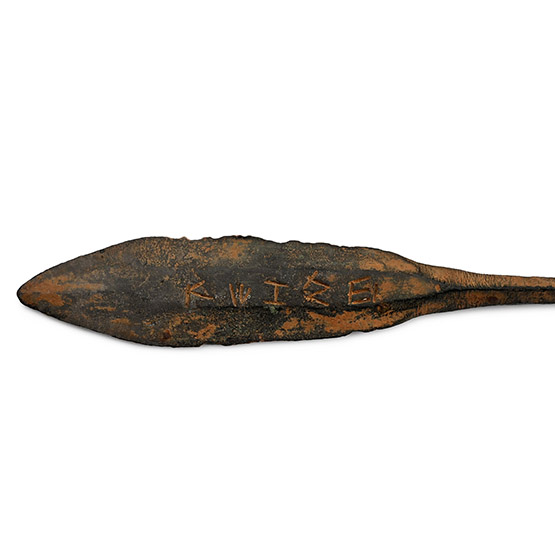
Aramaic Inscribed Bronze Arrowhead for Zscha..., Son of Adnb
1st millennium B.C.Sold for (Inc. bp): £1,105
Comprising a two-edged lentoid-section leaf-shaped blade and lozenge-section tang; each side with a short incised Aramaic inscription; ḥṣ zš bn ʾdnb = arrow of Zscha..., son of Adnb. 14 grams, 94 mm
From the collection of a gentleman, acquired on the London art market in the 1990s. -
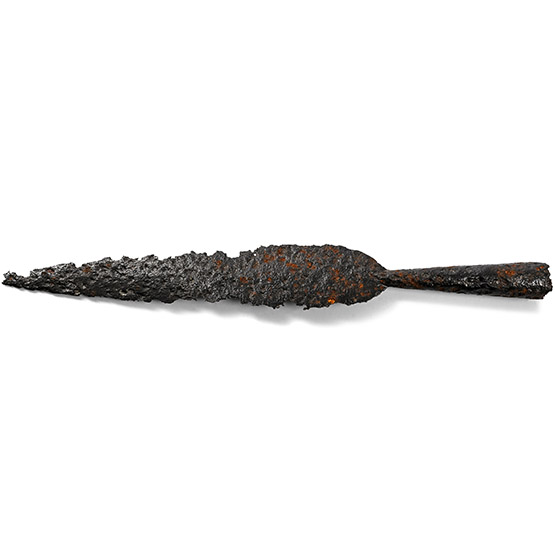
Greek Iron Lancehead
Magna Graecia, 6th century B.C.Sold for (Inc. bp): £234
Blade widened at the base, ribbed, conical socket with wooden remains. 277 grams total, 43 cm including stand (lance 25.8 cm)
From the famous arms and armour collection of Axel Guttmann (1944-2001), Berlin, Germany. Ex Hermann Historica, Munich, Germany, 4 May 2011, no.1783 (lot). From a private specialist collection, London, UK. Accompanied by copies of the relevant Hermann Historica catalogue pages.
The spear finds an almost identical parallel in two spearheads from Lavello, found associated with a Corinthian helmet and a sword, as part of Burial objects, dating back to around the middle of the 6th century BC. This type of hoplite weaponry was used by individual warriors, who, in Daunia (South Italic Apulia), while adopting Greek models, fought on horseback, according to a fighting style centred on the heroic duel between leaders. -
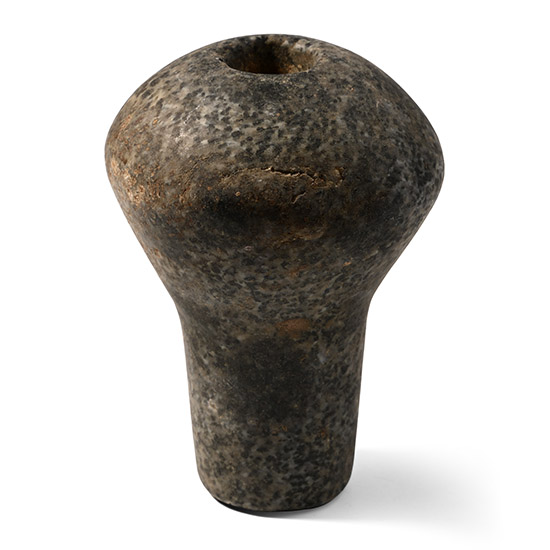
Western Asiatic Polished Stone Macehead
3rd-2nd millennium B.C.Sold for (Inc. bp): £117
With slightly carinated equator to the globular body and tubular shaft. 377 grams, 91 mm
From the collection of North West London, UK, gentleman, early 2000s.
