
Loading, please wait...
LOT 1046
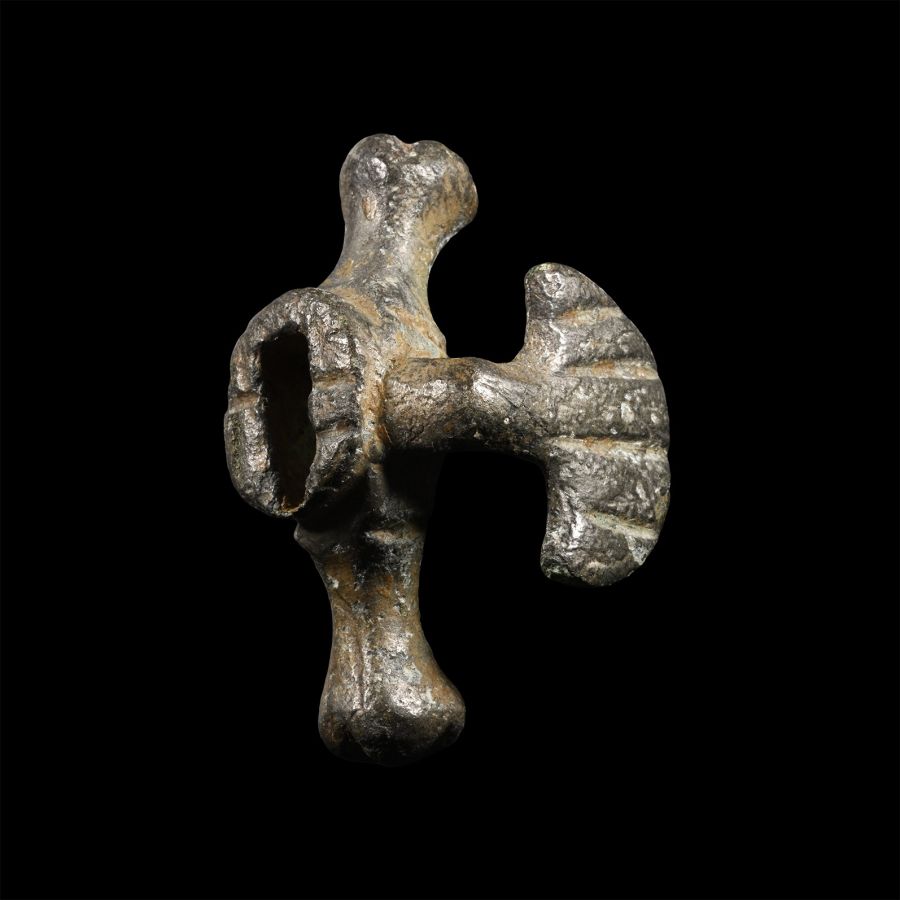
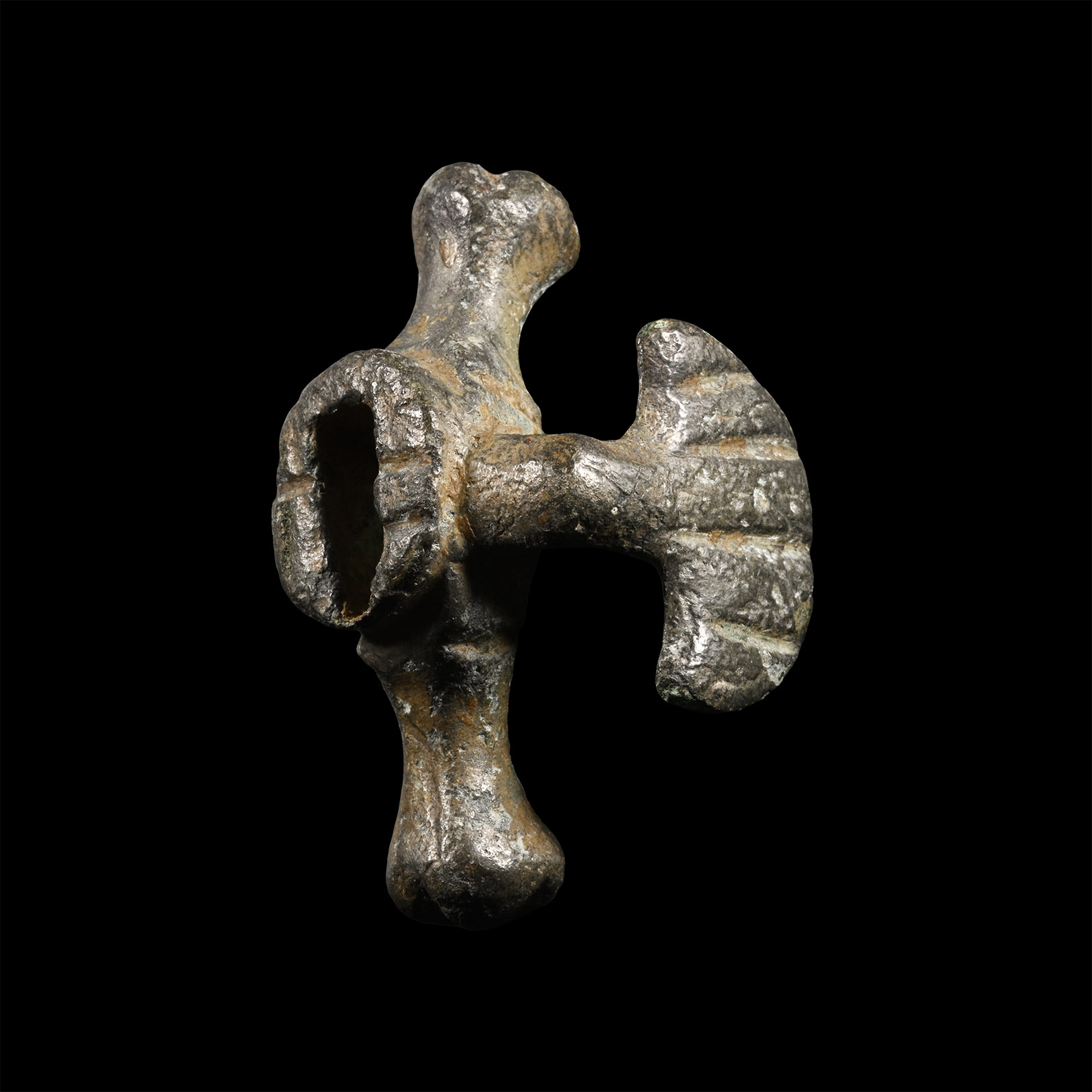
Medieval Bronze Dagger Quillon with Scallop Shell
CIRCA 13TH-16TH CENTURY A.D.
2 in. (41 grams, 52 mm).
With four-lobed finials, slot to the body, short arm with D-shaped scallop guard. [No Reserve]
ProvenanceAcquired on the UK art market in the 1990s.
Property of a Stowmarket, UK, gentleman.
Cf. similar find recorded with the Portable Antiquities Scheme under reference LEIC-F0FBD6 / 1012774.
CONDITIONTimeLine Auctions follows a vetting process to ensure the authenticity and legality of all items, reinforcing our commitment to integrity and responsible trading. Each antiquity, antique, and coin lot undergoes thorough examination by a vetting committee of at least ten external specialists, professional trade association members, scientists, and archaeologists: Our Vetting Process
AUCTIONS:
TimeLine is a leading auction house specialising in antiquities, ancient art, collectables, natural history, coins, medals, and books. Our auctions offer museums, collectors, historians, and enthusiasts the opportunity to acquire unique and historically significant pieces.
-
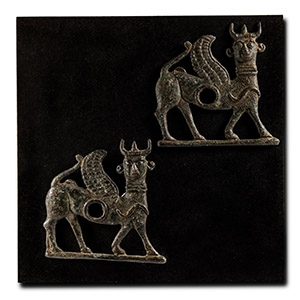
Luristan Bronze Horse Bit Terminal Pair
9th-8th century B.C.Sold for (Inc. bp): £1,560
Comprising two terminals in the form of human-headed horned and winged sphinxes; mounted on a custom-made display stand. 218 grams total, 15 cm wide including stand
From an old London, UK, collection. Ex London, UK, gallery.
The most admirable horse bits ever created by man are undoubtedly those from Luristan, a province in the north-west of Iran which extended along the valleys that make up the central part of the Zagros mountains. Worked in cast bronze with the lost wax process, they almost always had a rigid cannon in round or square bars which were flattened and rolled up around themselves at the ends, but their exceptional feature were the figural side bars. The local metalsmiths, in a period of time between 1200 and 700 B.C. managed to create an infinite number of typologies: horses, oxen, ibex, roosters and various mythological animals. -
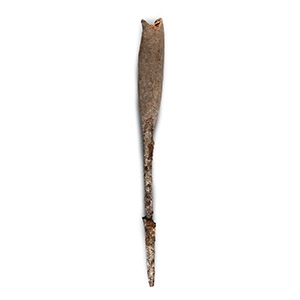
Roman Iron Military Plumbata Head
4th-5th century A.D.Sold for (Inc. bp): £65
Missile weapon with short iron shaft and square-section barbed head, lead sleeve to the lower end of the shaft. 116 grams, 19 cm
From the collection of B. Posey, UK, 1990s.
The lead-weighted darts known as plumbatae mamillatae, (or breasted javelin) were short darts mounted upon a shaft, of the same shape, and thrown from a short distance. A Roman soldier would typically carry around 5-6 of these darts at any one time, fastened to the back of his shield. They could be thrown overhand or underhand, with an effective throwing range of up to 60 meters by trained soldiers. They could also be fixed upon longer shafts. -
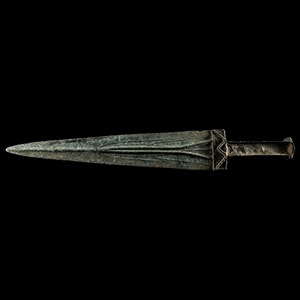
Luristan Bronze Short Sword
10th century B.C.Sold for (Inc. bp): £845
With triangular blade in outline and prominent mid-rib divided in three sections; square shoulders with rectangular guard; rectangular grip with openings for inlays on either side. 367 grams, 45 cm
Acquired 1980-2015. Ex Abelita family collection.
This bronze sword has the handle cast onto the blade. The grip is flanged for accepting inlays. The blade has square shoulders and is decorated with geometric triangles. According to Moorey this type dates to the turn of 2nd millennium B.C.
