
Loading, please wait...
LOT 1894
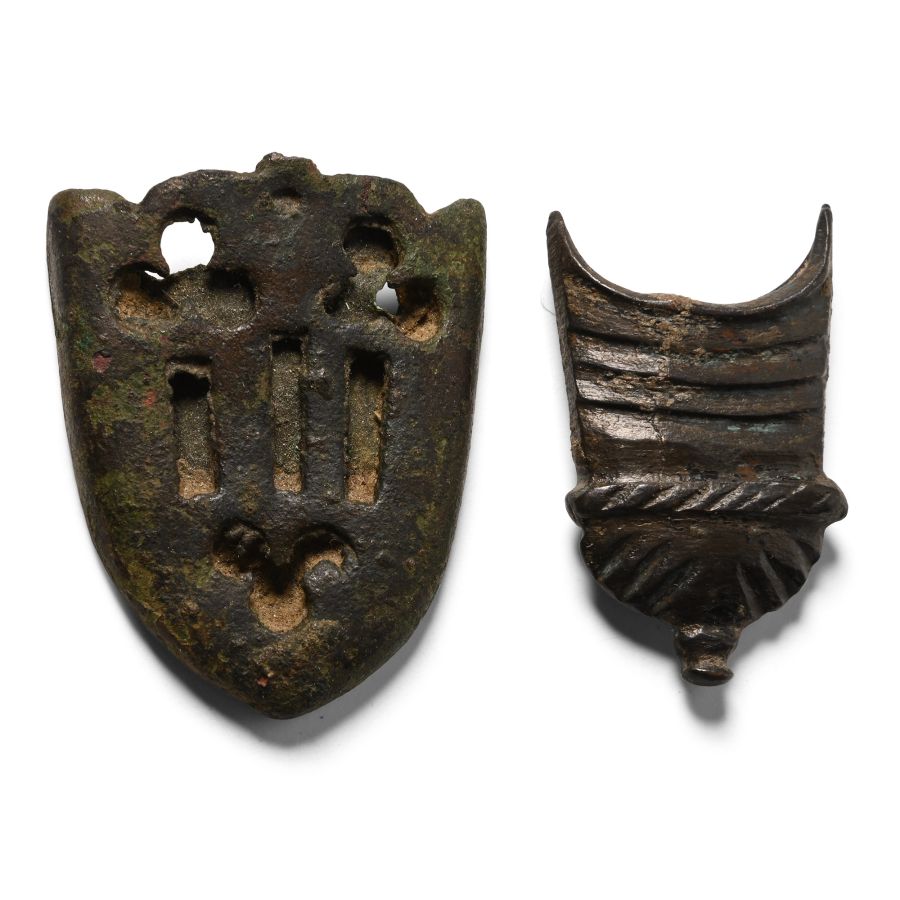
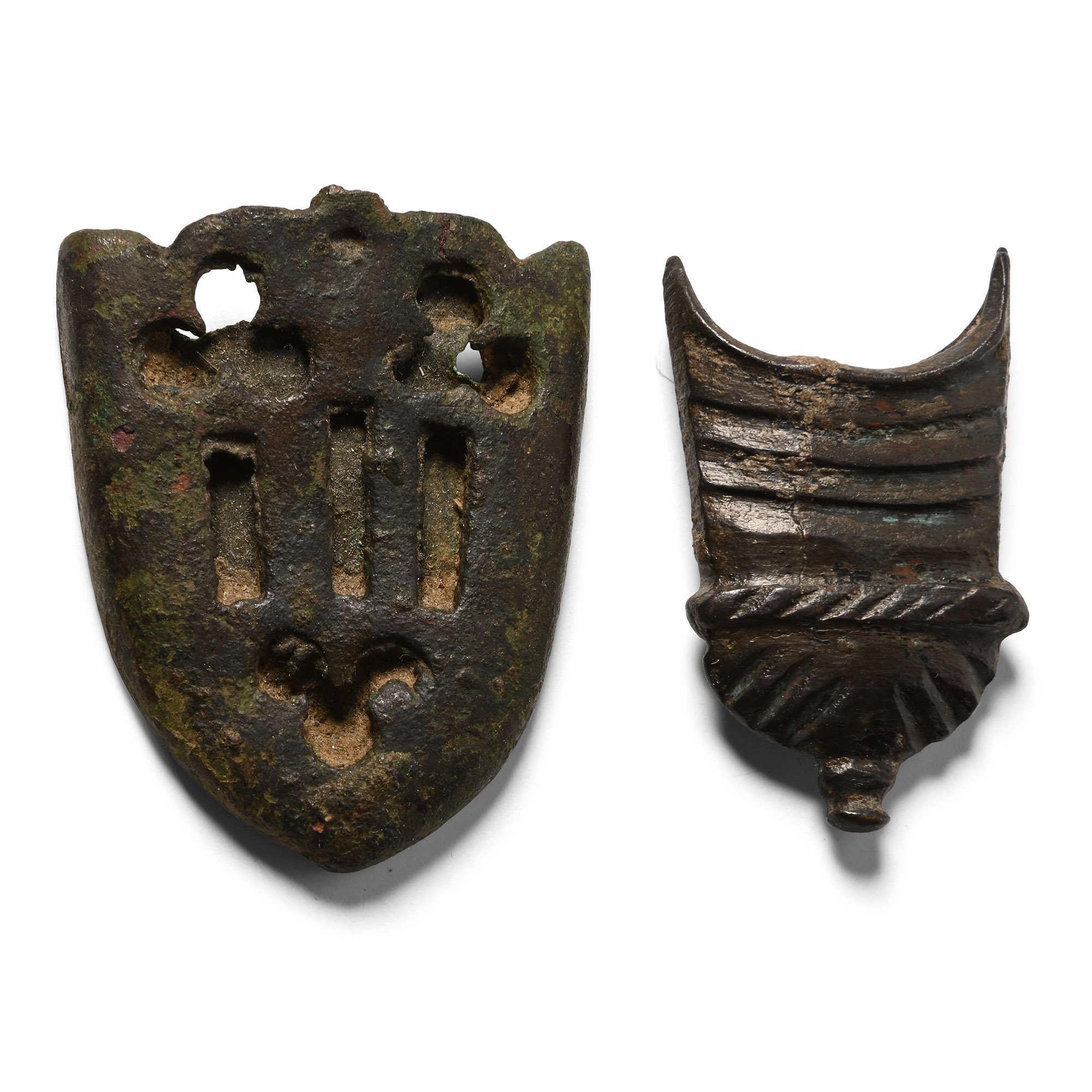
Medieval Bronze Dagger Chape Group
CIRCA 13TH-14TH CENTURY A.D.
1 3/8 - 1 5/8 in. (22.1 grams total, 36-42 mm).
Comprising: an openwork chape with three fleur-de-lys motifs and three vertical bars; a chape with horizontal stripes and a faux-ropework border. [2, No Reserve]
ProvenanceFrom the private collection of Graham Slater (1927-2024), Cambridge, UK; formed 1980s-1990s.
Accompanied by two previous dealer's sales tickets.
TimeLine Auctions follows a vetting process to ensure the authenticity and legality of all items, reinforcing our commitment to integrity and responsible trading. Each antiquity, antique, and coin lot undergoes thorough examination by a vetting committee of at least ten external specialists, professional trade association members, scientists, and archaeologists: Our Vetting Process
AUCTIONS:
TimeLine is a leading auction house specialising in antiquities, ancient art, collectables, natural history, coins, medals, and books. Our auctions offer museums, collectors, historians, and enthusiasts the opportunity to acquire unique and historically significant pieces.
-
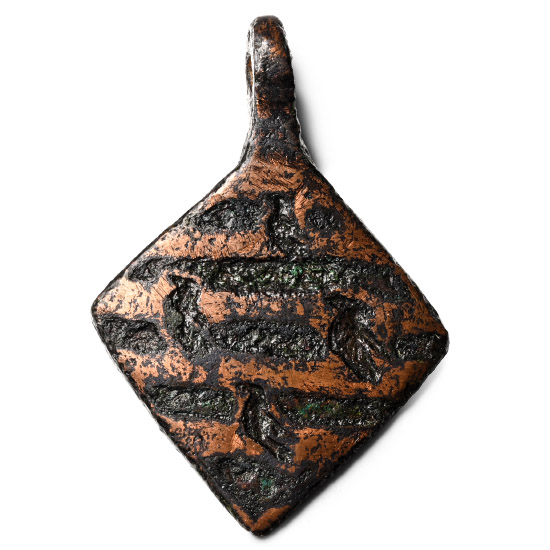
Medieval Knight's Bronze Heraldic Horse Harness Pendant with Martlets
13th-15th century A.D.Sold for (Inc. bp): £91
Lozenge-shaped pendant with barry of ten and four martlets. 8.54 grams, 37 mm
From the private collection of Graham Slater (1927-2024), Cambridge, UK; formed 1980s-1990s. -
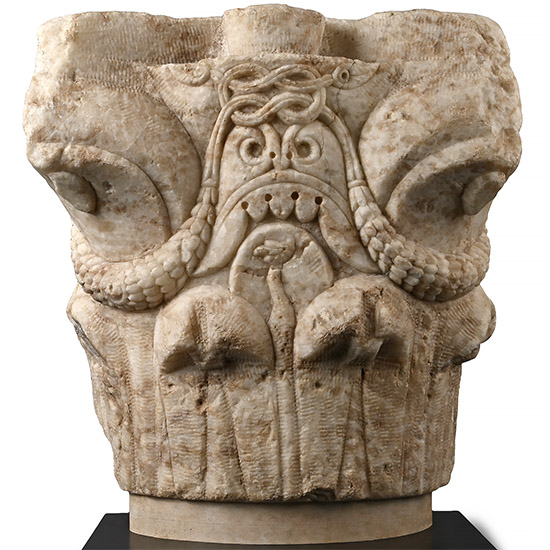
Romanesque Limestone Capital with Reef Knot
Visigothic Style, 12th century A.D.Sold for (Inc. bp): £7,670
Pillar capital for an architectural column or pier decorated with dense vegetation motifs, tapering swags or garlands; reef-knot motif and leaves above; unworked to the reverse. 74 kg total, 51.5 cm high including stand
Ex French collection. Holz Artles, 25 April 2015, no.83. Private collection, Kensington, London. Private collection, UK. This lot has been checked against the Interpol Database of stolen works of art and is accompanied by search certificate number no.13383-259007.
This finely carved capital belongs to a group of Romanesque capitals known as knotwork capitals, widespread in the South of France and North of Spain, where the influence of the architecture of the old Visigothic Kingdom was still strong. These capitals probably originate in one of the most famous sculpture workshops of Romanesque France. The base of the capital is topped by a row of abstractly sculpted acanthus leaves. The dominant section of the capital is decorated with stylised knotwork, composed of ornament that entwine and end in folded acanthus leaves. In between the entwined branches, there is more foliage forming the ‘head of a monster’ which playfully animates the sculpture. -
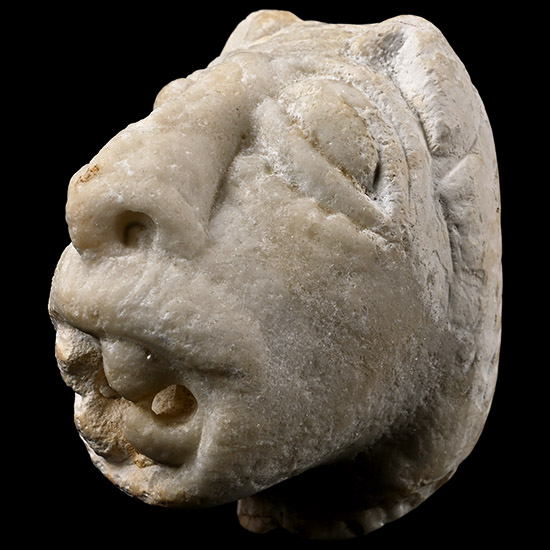
Medieval Marble Head of a Demonic Lion
Spain, 11th-13th century A.D.Sold for (Inc. bp): £936
Carved in the round with low pricked ears and hatched mane to the rear of the head, broad nose developing between domed lentoid eyes, broad upper lip, open mouth displaying teeth; repaired. 610 grams, 94 mm
with a London, UK gallery 1971-early 2000s. Private collection, London, UK.
