
Loading, please wait...
LOT 1595
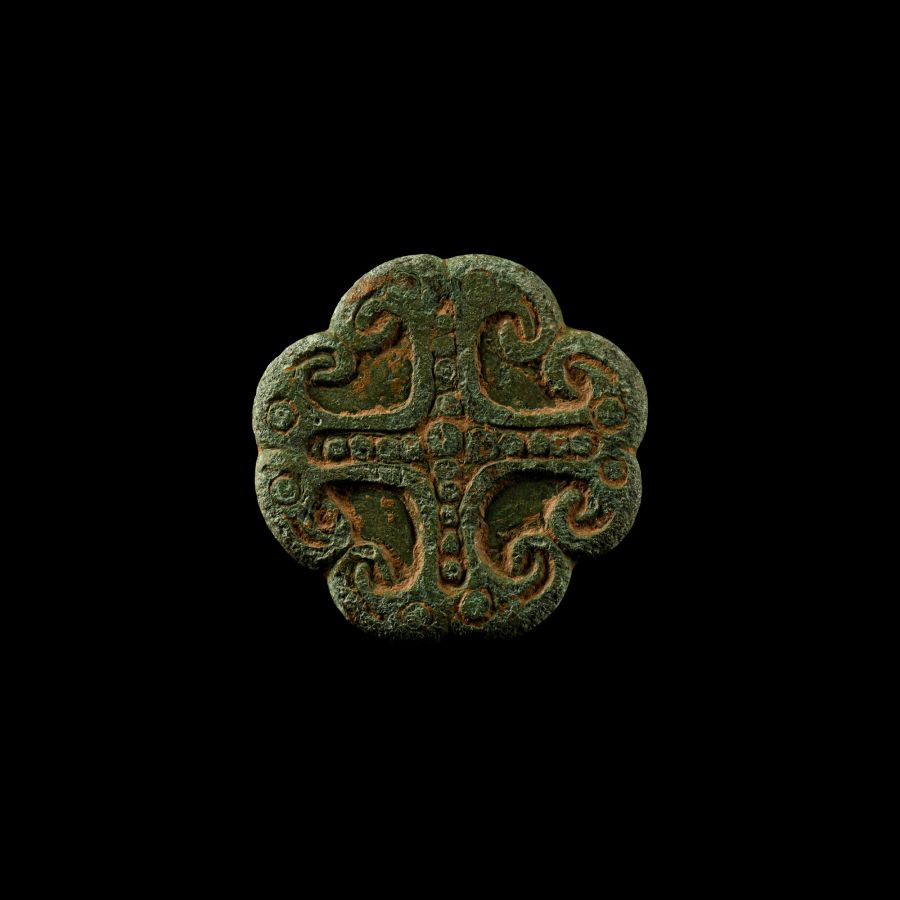
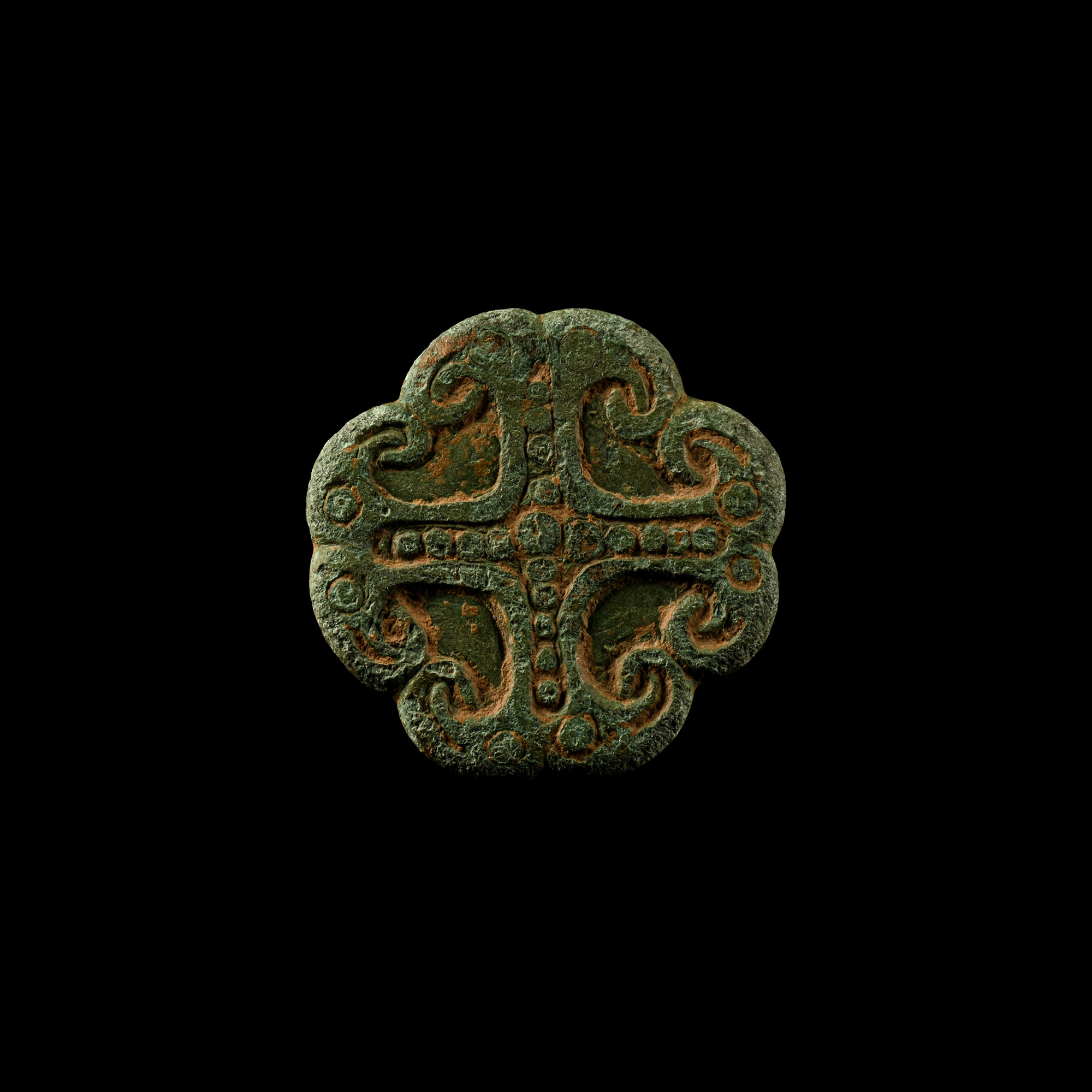
Medieval Bronze Cross Fleury Mount
CIRCA 15TH CENTURY A.D.
1 in. (9.35 grams, 26 mm).
Of quatrefoil form bearing a raised cross fleury ornamented with pellets; two decorative circular punches to reverse. [No Reserve]
ProvenanceFound Berkshire, UK.
CONDITIONTimeLine Auctions follows a vetting process to ensure the authenticity and legality of all items, reinforcing our commitment to integrity and responsible trading. Each antiquity, antique, and coin lot undergoes thorough examination by a vetting committee of at least ten external specialists, professional trade association members, scientists, and archaeologists: Our Vetting Process
AUCTIONS:
TimeLine is a leading auction house specialising in antiquities, ancient art, collectables, natural history, coins, medals, and books. Our auctions offer museums, collectors, historians, and enthusiasts the opportunity to acquire unique and historically significant pieces.
-
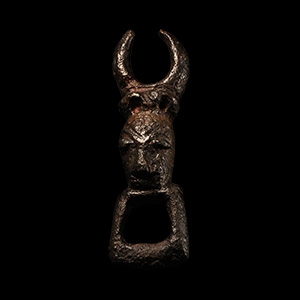
Anglo-Norman Zoomorphic Strap Junction
11th-12th century A.D.Estimate: £180 - 240 (+bp*)
Opening Bid: £90
Grotesque human head in relief to centre, crescentic remains of one loop above, trapezoidal lug below; trace remains of red enamelling. 17.9 grams, 51 mm
Found Romney Marsh area, 2023. Property of a Kent gentleman. -
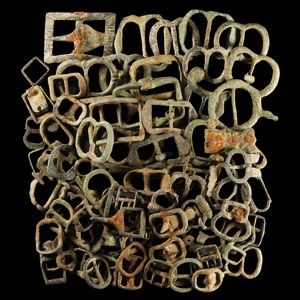
Medieval and Later Bronze Buckle Collection
Circa 12th-20th century A.D.Sold for (Inc. bp): £78
Comprising various types and sizes of buckle from various time periods; many displaying ornament or with a decoratively shaped frame; most with tongue absent. 298 grams total, 12-48 mm
Found Berkshire, UK. -
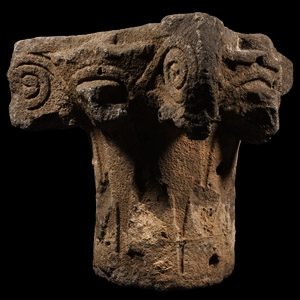
Large Medieval Crusader Period Carved Basalt Capital
12th-13th century A.D.Sold for (Inc. bp): £910
Architectural column capital modelling curled acanthus leaves, rising from a narrow stem, curving outwards and away from each other. 118.4 kg, 46 cm high
Fine condition.
Acquired 1970s-1996. Property of a North American collector. London collection, 2016. Accompanied by an academic report by Dr Raffaele D’Amato.
