
Loading, please wait...
LOT 1623
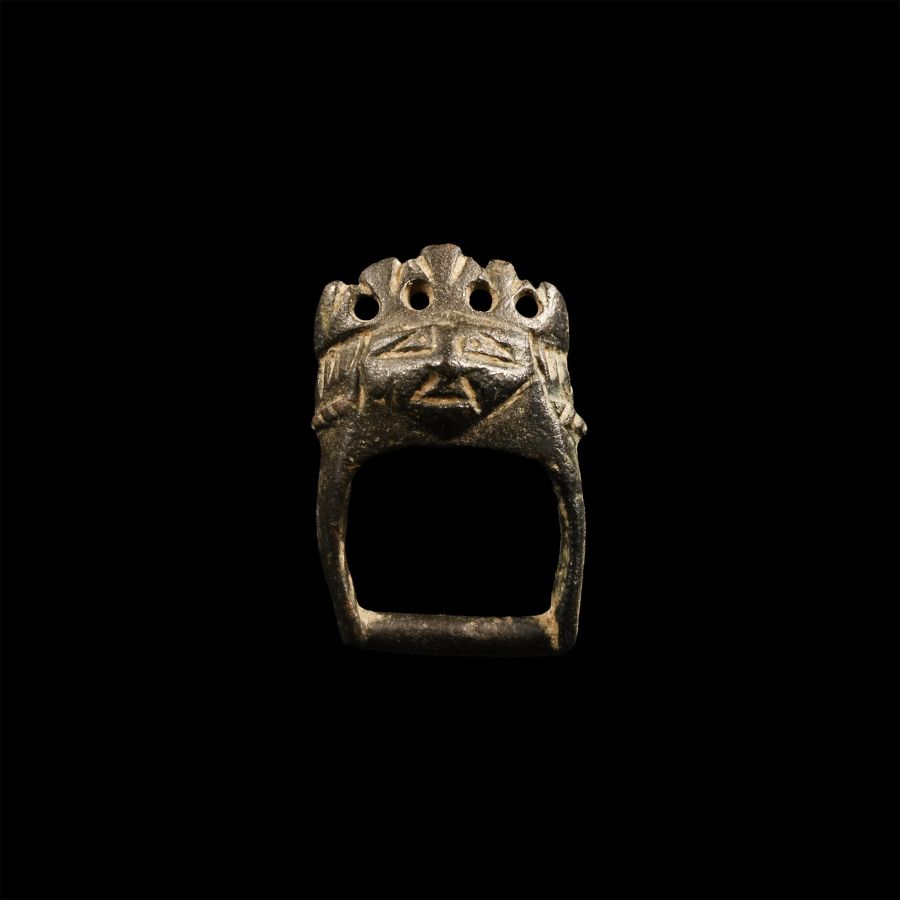
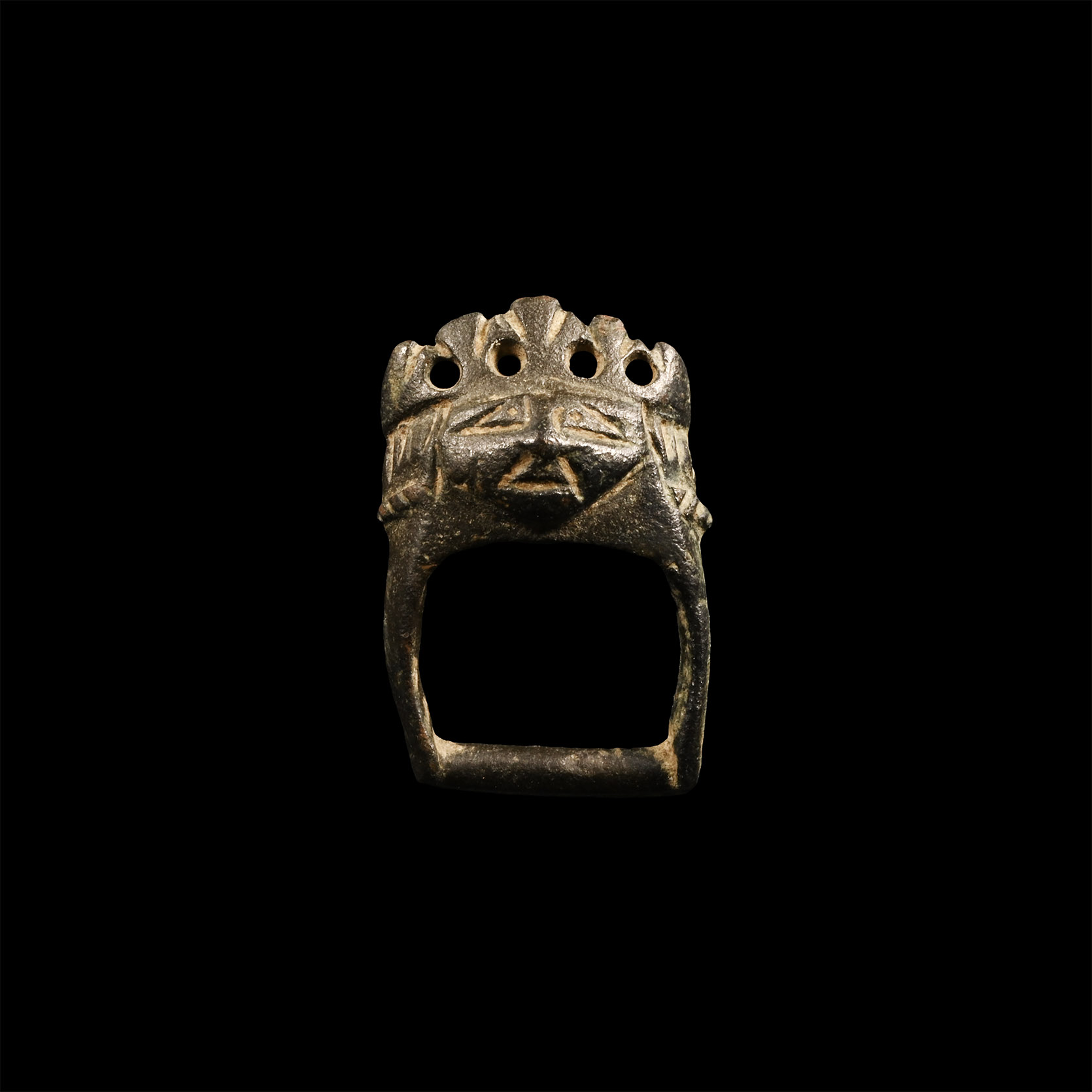
Medieval Bronze Buckle with Crowned Bust
CIRCA 13TH-14TH CENTURY A.D.
1 1/8 in. (5.77 grams, 28 mm).
The stylised head of a king in relief, with cropped curls falling beneath an openwork crown; tongue absent. [No Reserve]
ProvenanceFound Odiham, Hampshire, UK.
CONDITIONTimeLine Auctions follows a vetting process to ensure the authenticity and legality of all items, reinforcing our commitment to integrity and responsible trading. Each antiquity, antique, and coin lot undergoes thorough examination by a vetting committee of at least ten external specialists, professional trade association members, scientists, and archaeologists: Our Vetting Process
AUCTIONS:
TimeLine is a leading auction house specialising in antiquities, ancient art, collectables, natural history, coins, medals, and books. Our auctions offer museums, collectors, historians, and enthusiasts the opportunity to acquire unique and historically significant pieces.
-
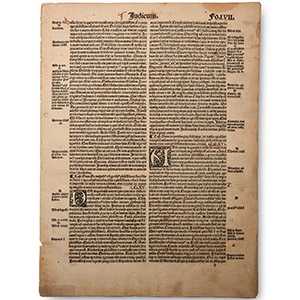
Medieval Judges Bible Page by Johann Gruninger
Printed 1492 A.D.Sold for (Inc. bp): £208
Being a single, double-sided leaf from an early printed paper Latin bible for the Book of Judges, chapters 15-18; the text set in two columns of blackletter type with numerous hand-applied rubrications (embellishments) in red, with foliation and other marks; square woodblock versals; printed by Johann Gruninger of Strasbourg with commentary by Nicholas de Lyra. 11 grams, 33 x 24.5 cm
Ex M Cummings collection, UK, 1990s-2000s. Accompanied by a Vulgate Latin text with English translation.
This portion of the Book of Judges tells of Samson slaying a thousand Philistines with the 'jawbone of an ass' together with the betrayal by Delilah, his loss of strength and capture when his hair was cut and and his eventual death by pulling down the pillars. -
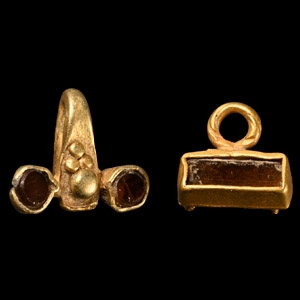
Medieval Gold and Garnet Garter Hooks
14th-16th century A.D.Sold for (Inc. bp): £169
Comprising both elements of a garment clasp: one rectangular with cut and polished garnet inlay, loop to one edge and two fitting loops to reverse; hook featuring two circular cells inlaid with cut and polished garnets, applied granules between. 0.89 grams total, 7-10 mm
From a late Japanese specialist collector, 1970-2000s. -
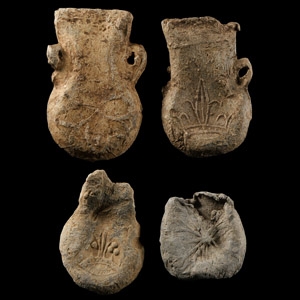
Medieval Pilgrim's Holy Water Ampulla Collection
Circa 15th-16th century A.D.Sold for (Inc. bp): £78
Each with a raised design to one or both faces. including floral, pelletted and other designs. 145 grams total, 29-50 mm
Found Berkshire, UK.
