
Loading, please wait...
LOT 1712
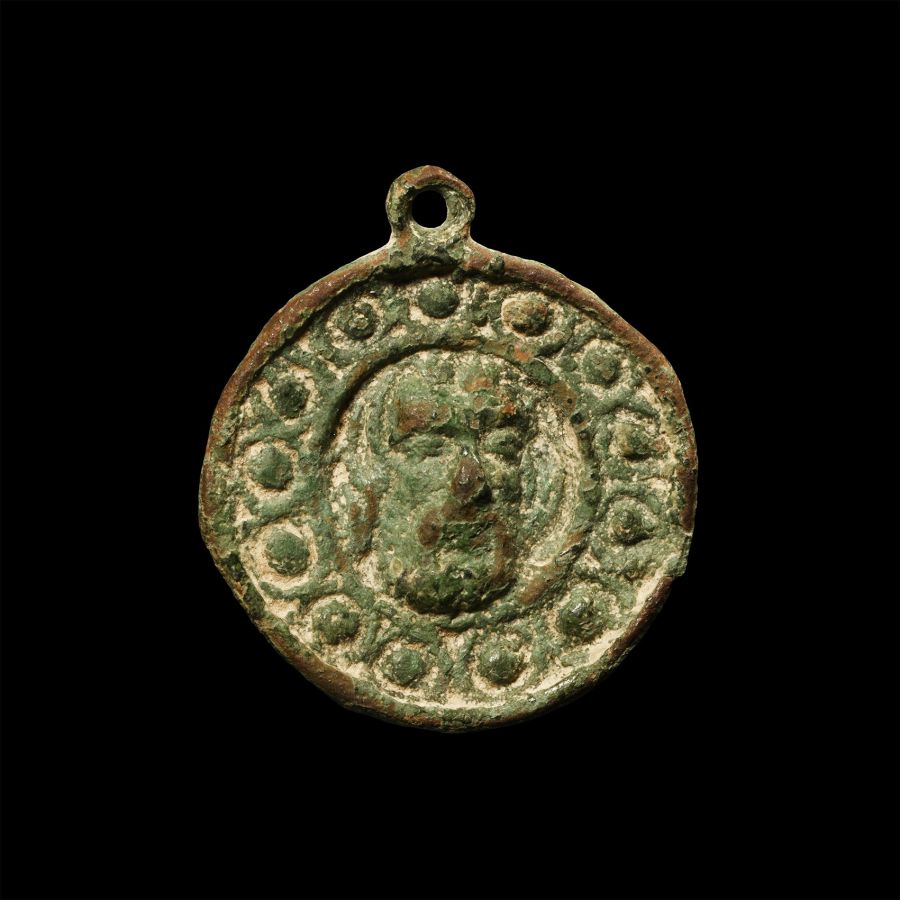
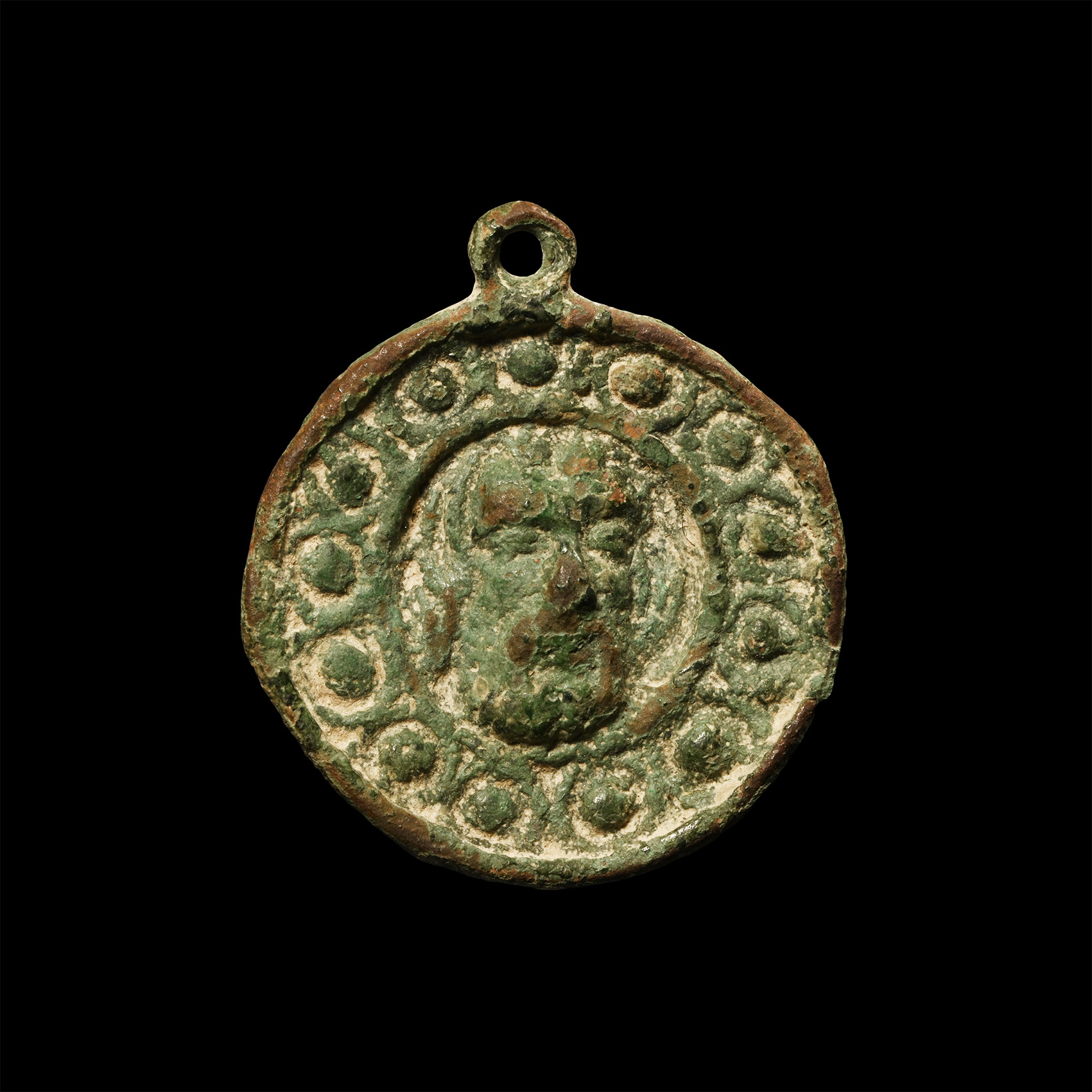
Medieval Bronze Badge with Head of Saint John the Baptist
15TH-16TH CENTURY A.D.
1 in. (3.32 grams, 24 mm).
Discoid in form with suspension loop to apex, raised head of Saint John the Baptist at centre, framed with pellet-in-ring motifs. [No Reserve]
ProvenanceFound Hampshire, UK.
CONDITIONTimeLine Auctions follows a vetting process to ensure the authenticity and legality of all items, reinforcing our commitment to integrity and responsible trading. Each antiquity, antique, and coin lot undergoes thorough examination by a vetting committee of at least ten external specialists, professional trade association members, scientists, and archaeologists: Our Vetting Process
AUCTIONS:
TimeLine is a leading auction house specialising in antiquities, ancient art, collectables, natural history, coins, medals, and books. Our auctions offer museums, collectors, historians, and enthusiasts the opportunity to acquire unique and historically significant pieces.
LOT 1712
Medieval Bronze Badge with Head of Saint John the Baptist
Sold for (Inc. bp): £46
-
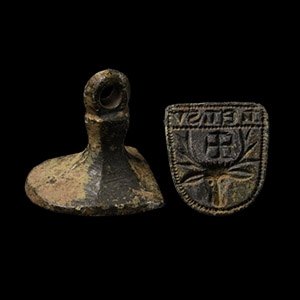
Medieval Bronze Seal Matrix with Stag's Head
13th-15th century A.D.Sold for (Inc. bp): £117
Comprising a shield-shaped die and hexagonal stem with suspension loop at apex, matrix depicting facing stag's head with boxed cross between its antlers and Latin inscription above: 'LELSV' (I am loyal). 6.91 grams, 18 mm
Found Berkshire, UK. Accompanied by a copy of the British Museum's Portable Antiquities Scheme (PAS) report no.BERK-D22C10.
The stag and cross device was used in the heraldic arms of St Eustace and St Hubert of Leige, who reputedly witnessed a stag with a cross between its antlers whilst out hunting. -
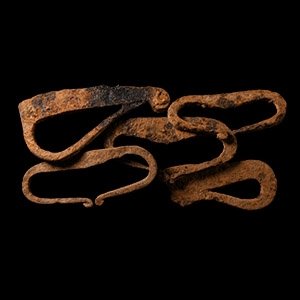
Medieval Iron Fire Starter Group
Circa 15th century A.D.Estimate: £80 - 100 (+bp*)
Opening Bid: £40
Including fire steels of various types with ornamental shaping. 118 grams total, 56-75 mm
Acquired 1990s-early 2000s. East Anglian private collection. -
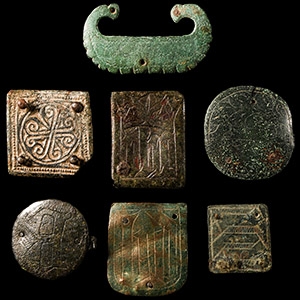
Medieval Belt and Other Mounts Group
13th-15th century A.D.Sold for (Inc. bp): £46
The majority bearing initials, including a crowned IHC monogram; blackletter 'B'; a possible cross cercelee within a double roundel and pellet border; together with other motifs and initials. 59 grams total, 27-52 mm
Acquired on the UK market, 1990s. Property of a retired academic.
