
Loading, please wait...


LOT 1627
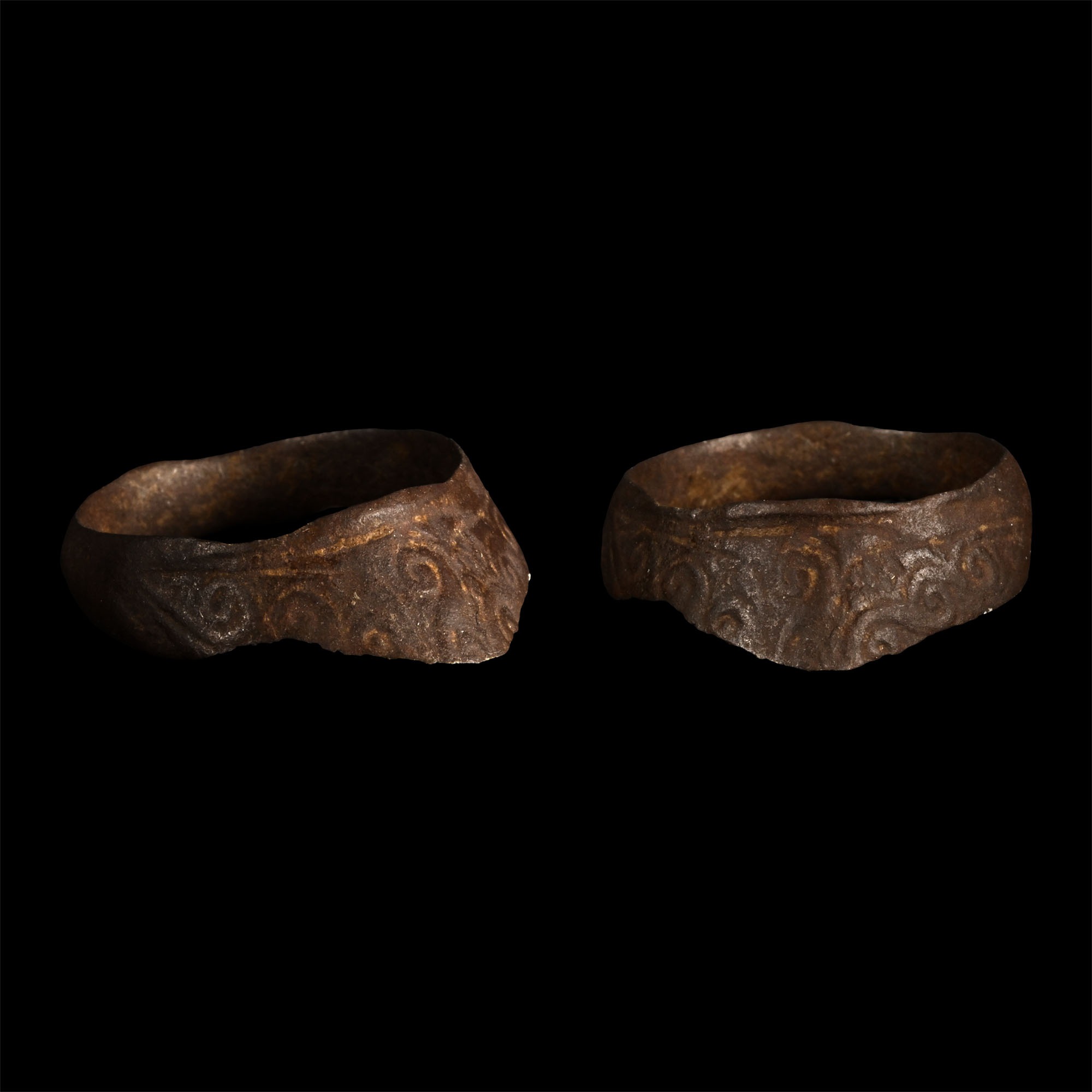
Medieval Bronze Archer's Thumb Ring
14TH-15TH CENTURY A.D.
1 1/8 in. (2.77 grams, 28.57 mm overall, 19.77 mm internal diameter (approximate size British T, USA 9 1/2, Europe 21.26, Japan 20)).
Applied boss to the base of the hoop, triangular extension with foliate scrolls. [No Reserve]
ProvenanceFrom an English collection formed before 2000.
This lot is accompanied by an illustrated lot declaration signed by the Head of the Antiquities Department, Dr Raffaele D’Amato.
TimeLine Auctions follows a vetting process to ensure the authenticity and legality of all items, reinforcing our commitment to integrity and responsible trading. Each antiquity, antique, and coin lot undergoes thorough examination by a vetting committee of at least ten external specialists, professional trade association members, scientists, and archaeologists: Our Vetting Process
AUCTIONS:
TimeLine is a leading auction house specialising in antiquities, ancient art, collectables, natural history, coins, medals, and books. Our auctions offer museums, collectors, historians, and enthusiasts the opportunity to acquire unique and historically significant pieces.
-
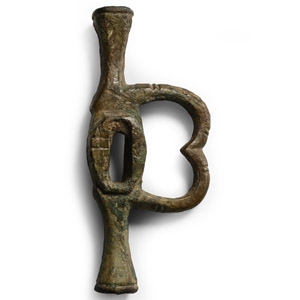
Medieval Bronze Dagger Quillon
Circa 15th century A.D.Sold for (Inc. bp): £65
Comprising flaring arms with engraved X-motif to each finial, large kidney-shaped loop to the side. 56.7 grams, 77 mm
From the collection of a Norfolk, UK, gentleman. Property of a private collector, West London, UK. This lot is accompanied by an illustrated lot declaration signed by the Head of the Antiquities Department, Dr Raffaele D’Amato. -
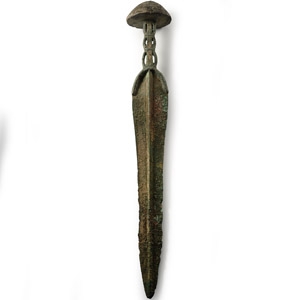
Luristan Bronze Sword
Late 2nd millennium B.C.Sold for (Inc. bp): £598
Later hilt with mushroom-shaped pommel, openwork grip with 'chain'-shaped pattern, crescentic guard, long sloping blade with rectangular-section mid-ridge. 1.05 kg, 55.2 cm
Acquired 1980-2015. Ex Abelita family collection. This lot is accompanied by an illustrated lot declaration signed by the Head of the Antiquities Department, Dr Raffaele D’Amato.
These bronze swords were characterised by a solid-cast hilt with penannular guard, a grip equipped with raised shaped figures and a conical, hollow-cast mushroom pommel. The blade had a very pronounced shaped central midrib. In the complete specimens the hilt was usually cast with the blade. -
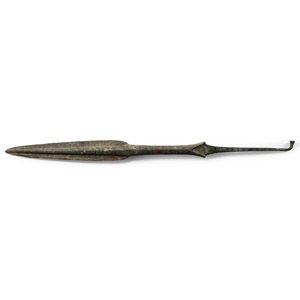
Luristan Bronze Spearhead
Late 2nd millennium B.C.Sold for (Inc. bp): £117
With ovate blade, central round rib and curved shoulders, the cylindrical long shaft widening towards the end, encasing a rectangular tang with bent tip. 351 grams, 44 cm
Acquired 1980-2015. Ex Abelita family collection. This lot is accompanied by an illustrated lot declaration signed by the Head of the Antiquities Department, Dr Raffaele D’Amato.
Similar spearheads were excavated in Marlik. Negahban stated that based upon the evidence on archaeological finds from West-North Iran, this type of spearhead may be dated to the final centuries of 2nd millennium B.C.
