
Loading, please wait...
LOT 0353
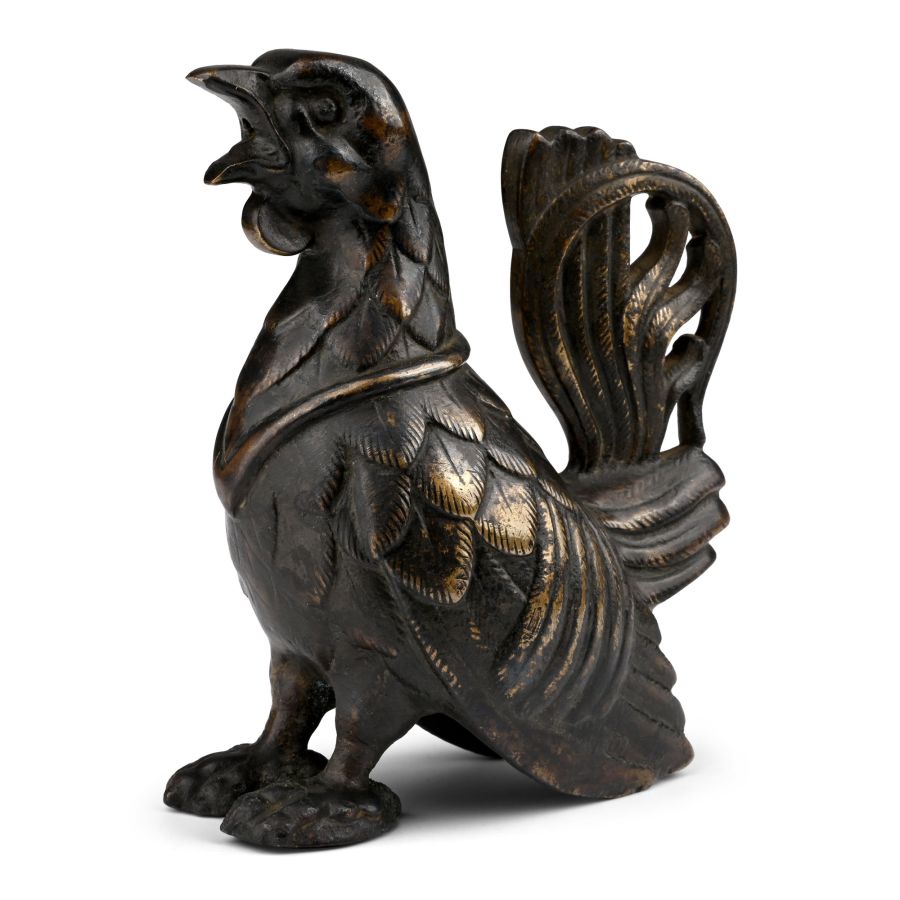
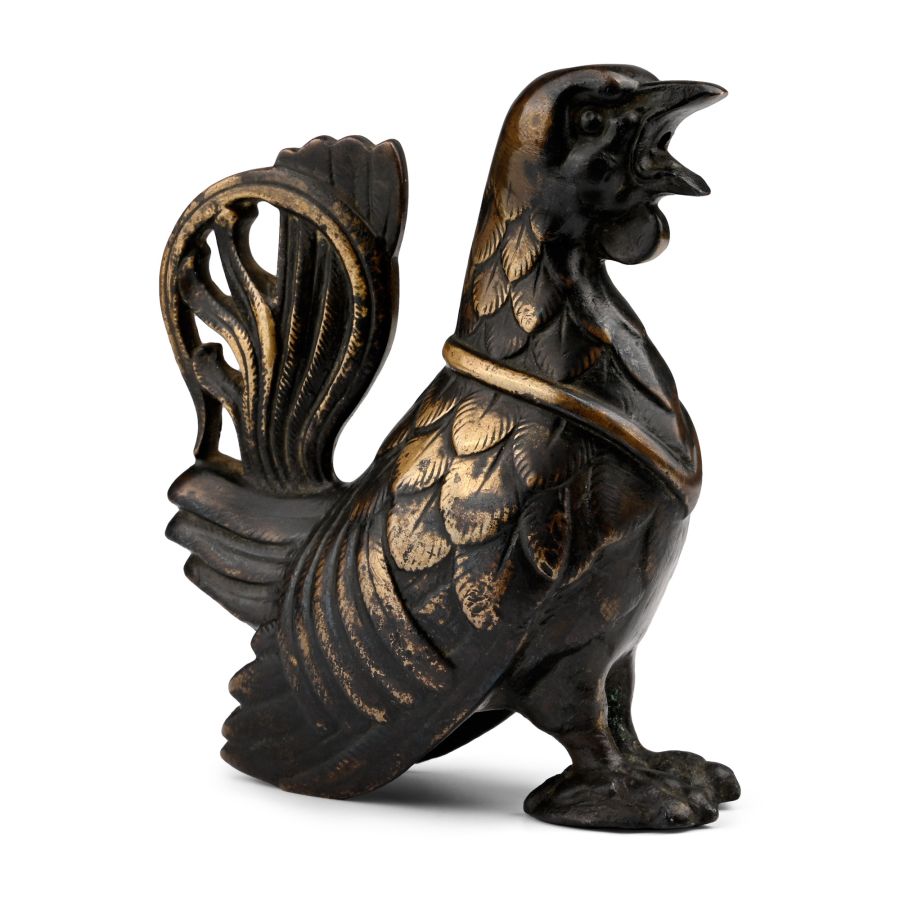
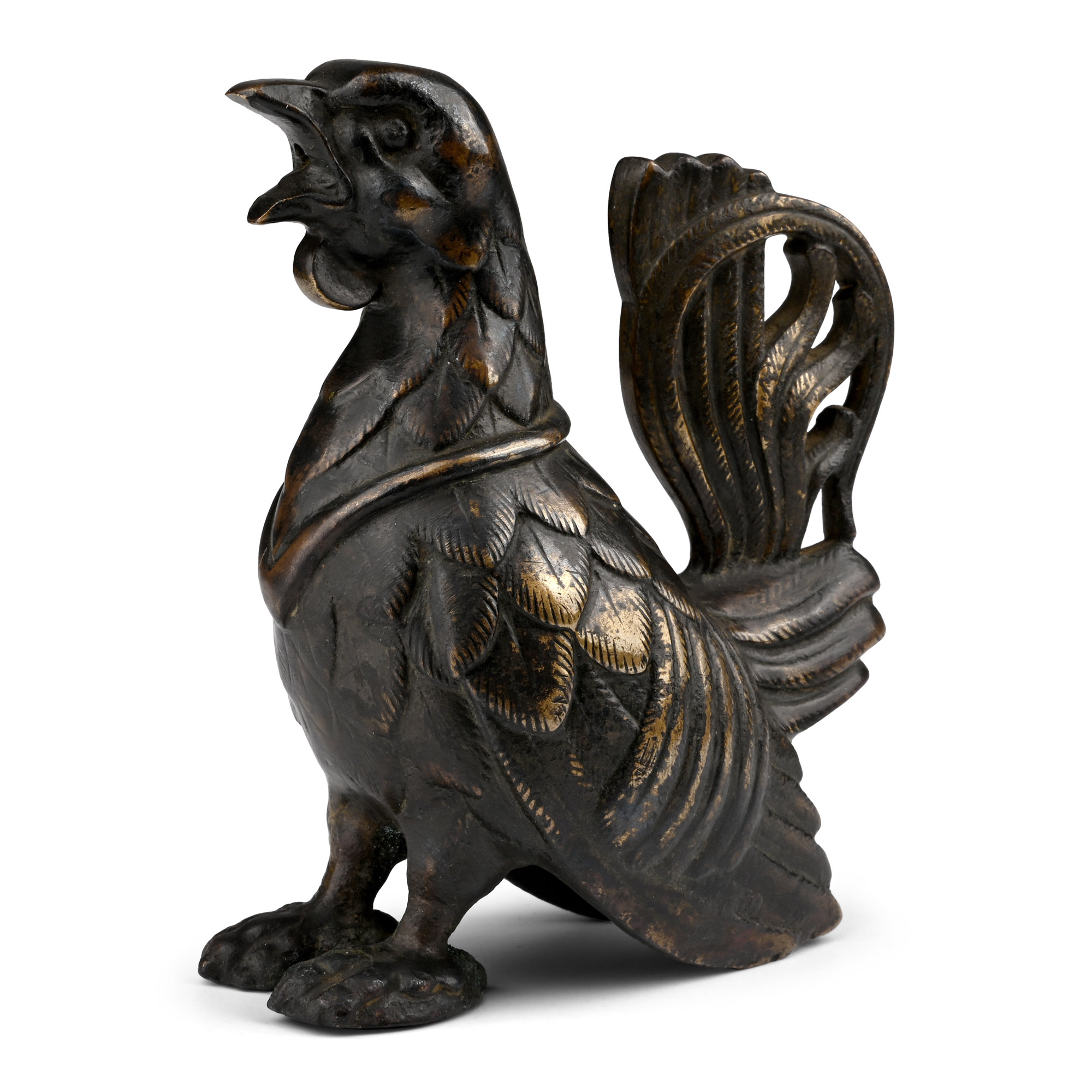
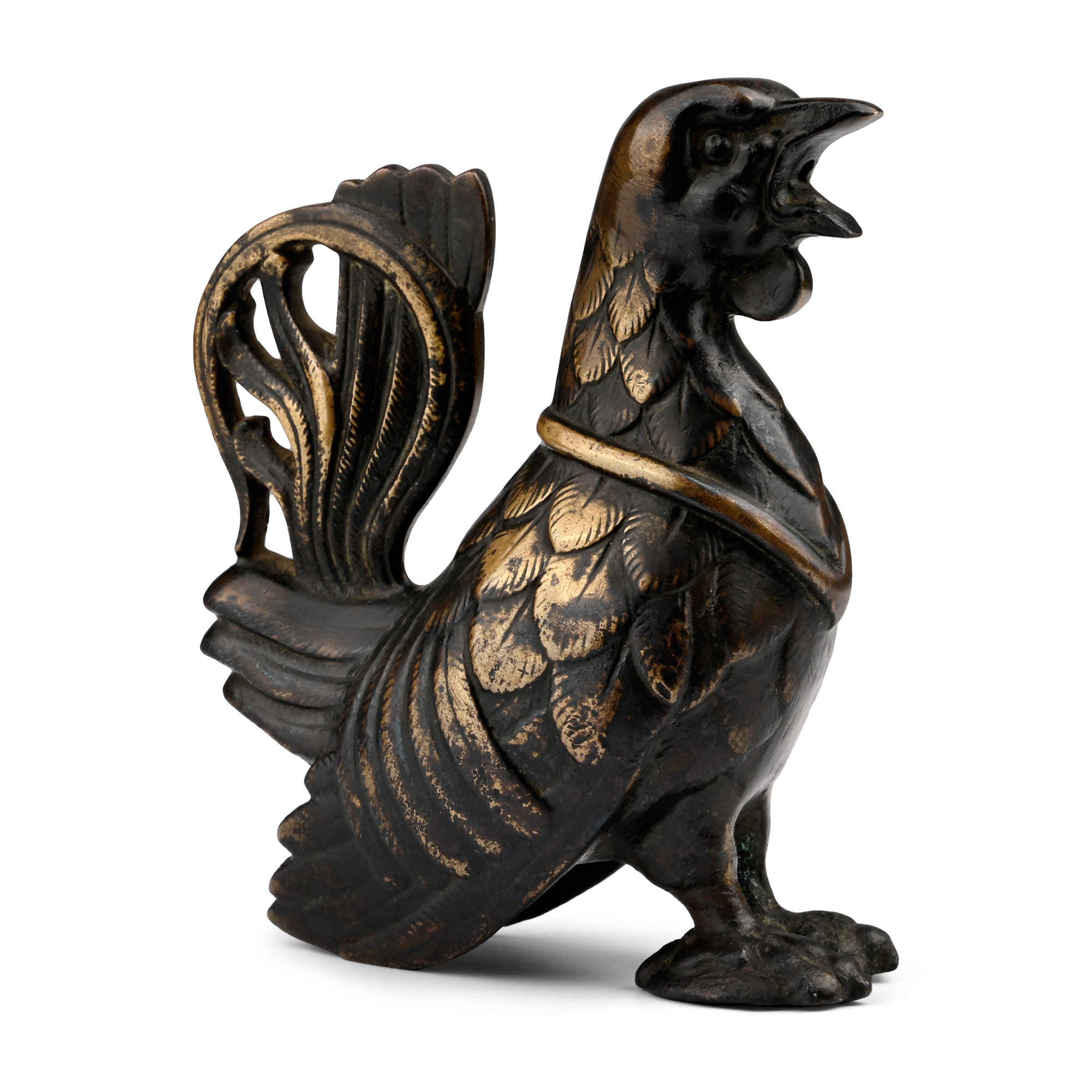
Medieval Bronze Aquamanile in the Shape of a Capercaillie
LOWER SAXONY, 13TH CENTURY A.D.
4 5/8 in. (670 grams, 11.9 cm).
Hollow-formed perching bird filler-hole to top of head and spout in beak; openwork tail with scroll detailing; hatched borders to feathers. [No Reserve]
ProvenanceFrom the Minervino Gabardi collection.
This lot has been checked against the Interpol Database of stolen works of art and is accompanied by a search certificate number no.12837-240227.
This lot has been cleared against the Art Loss Register database, and is accompanied by an illustrated lot declaration signed by the Head of the Antiquities Department, Dr Raffaele D'Amato.
Exhibited at the Museum Für Kunsthandwerk, Frankfurt, Germany.
LiteratureFor comparison see Franco Maria Ricci, Aquamanili: medieval objects for sacred and profane use, fig. 25, for a similar model in the shape of a rooster, Lower Saxony manufacture, mid-13th century,
CONDITIONTimeLine Auctions follows a vetting process to ensure the authenticity and legality of all items, reinforcing our commitment to integrity and responsible trading. Each antiquity, antique, and coin lot undergoes thorough examination by a vetting committee of at least ten external specialists, professional trade association members, scientists, and archaeologists: Our Vetting Process
AUCTIONS:
TimeLine is a leading auction house specialising in antiquities, ancient art, collectables, natural history, coins, medals, and books. Our auctions offer museums, collectors, historians, and enthusiasts the opportunity to acquire unique and historically significant pieces.
LOT 0353
Medieval Bronze Aquamanile in the Shape of a Capercaillie
Sold for (Inc. bp): £10,400
-
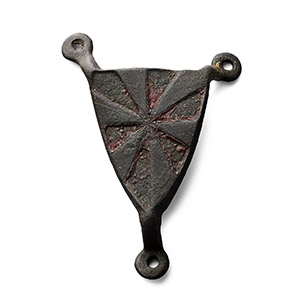
Medieval Knight's Bronze 'Bassingbourn Family' Heraldic Casket Mount
13th-14th century A.D.Sold for (Inc. bp): £85
Heater-shaped with three radiating attachment lugs; reserved heraldic design 'gyronny of twelve' with enamelled interstitial panels to accept enamel fil. 12.56 grams, 56 mm
Found Nutley, Hampshire, UK. Accompanied by a copy of the British Museum's Portable Antiquities Scheme report no.BERK-DFB419. This lot is accompanied by an illustrated lot declaration signed by the Head of the Antiquities Department, Dr Raffaele D'Amato.
The mount may have belonged to members of the Bassingbourn family, who bore arms blazoned 'gyronny of twelve, or and azure' in the 13th century. Possible owners include Warin de Bassingbourn, sheriff of Northants in 1267, who died in 1269; his son, Edmund, of Blyborough, Lincolnshire, who is recorded as active in 1282-1289; and Edmund's probable son, another Warin, who was recorded as serving in the Falkirk campaign of 1298 and was still alive in 1317. -
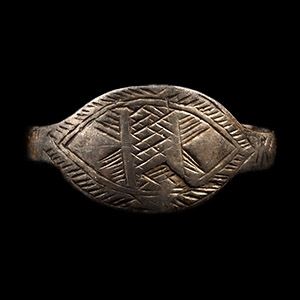
Norman Silver Ring with Engraved Bezel
11th-12th century A.D.Sold for (Inc. bp): £130
Comprising a flat-section hoop with overlapping finials, lentoid bezel with geometric decoration within hatched border. 2.31 grams, 23.04 mm overall, 20.70 mm internal diameter (approximate size British U, USA 10, Europe 22.52, Japan 21)
Acquired on the UK art market in the 1970s-1990s. Property of a Nottinghamshire, UK, gentleman. This lot is accompanied by an illustrated lot declaration signed by the Head of the Antiquities Department, Dr Raffaele D'Amato. -
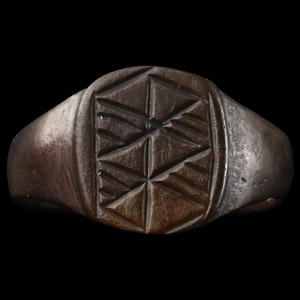
Medieval Bronze Ring with Triangles
14th-16th century A.D.Sold for (Inc. bp): £65
With ellipsoid bezel, incuse pattern of plain and hatched triangles. 4.17 grams, 21.37 mm overall, 18.74 mm internal diameter (approximate size British Q, USA 8, Europe 17.49, Japan 16)
Ex German art market, 2000s. Acquired from an EU collector living in London. From the collection of a Surrey, UK, gentleman. This lot is accompanied by an illustrated lot declaration signed by the Head of the Antiquities Department, Dr Raffaele D'Amato.
