
Loading, please wait...
LOT 1934
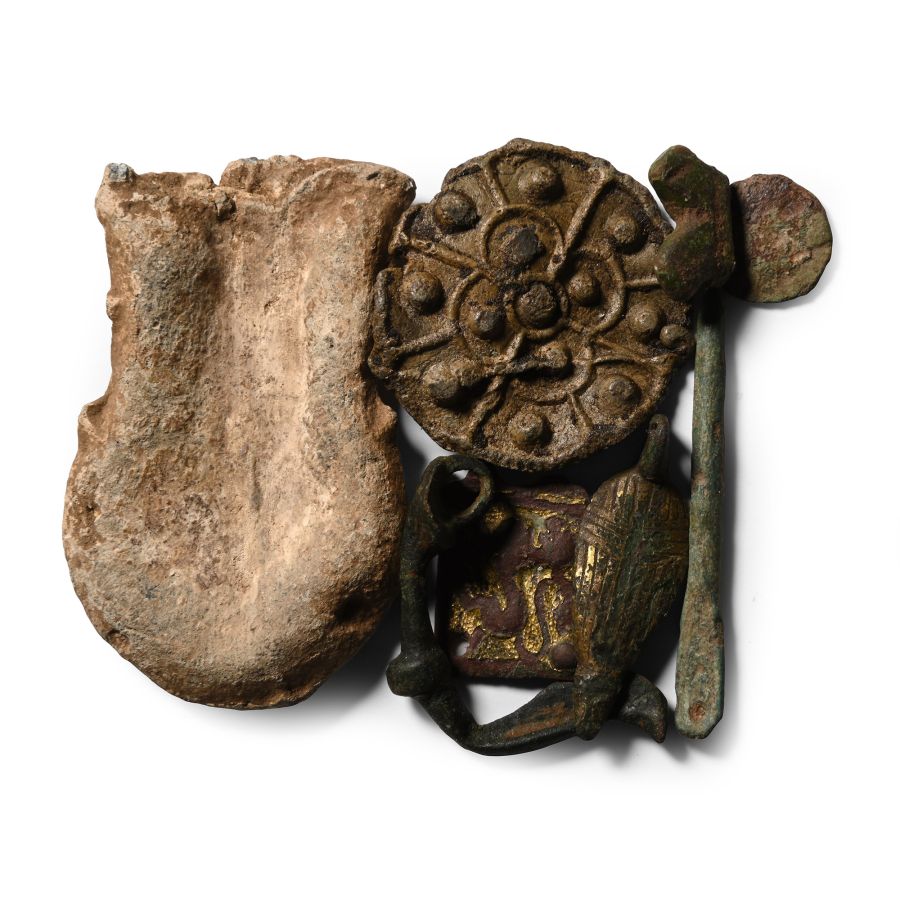
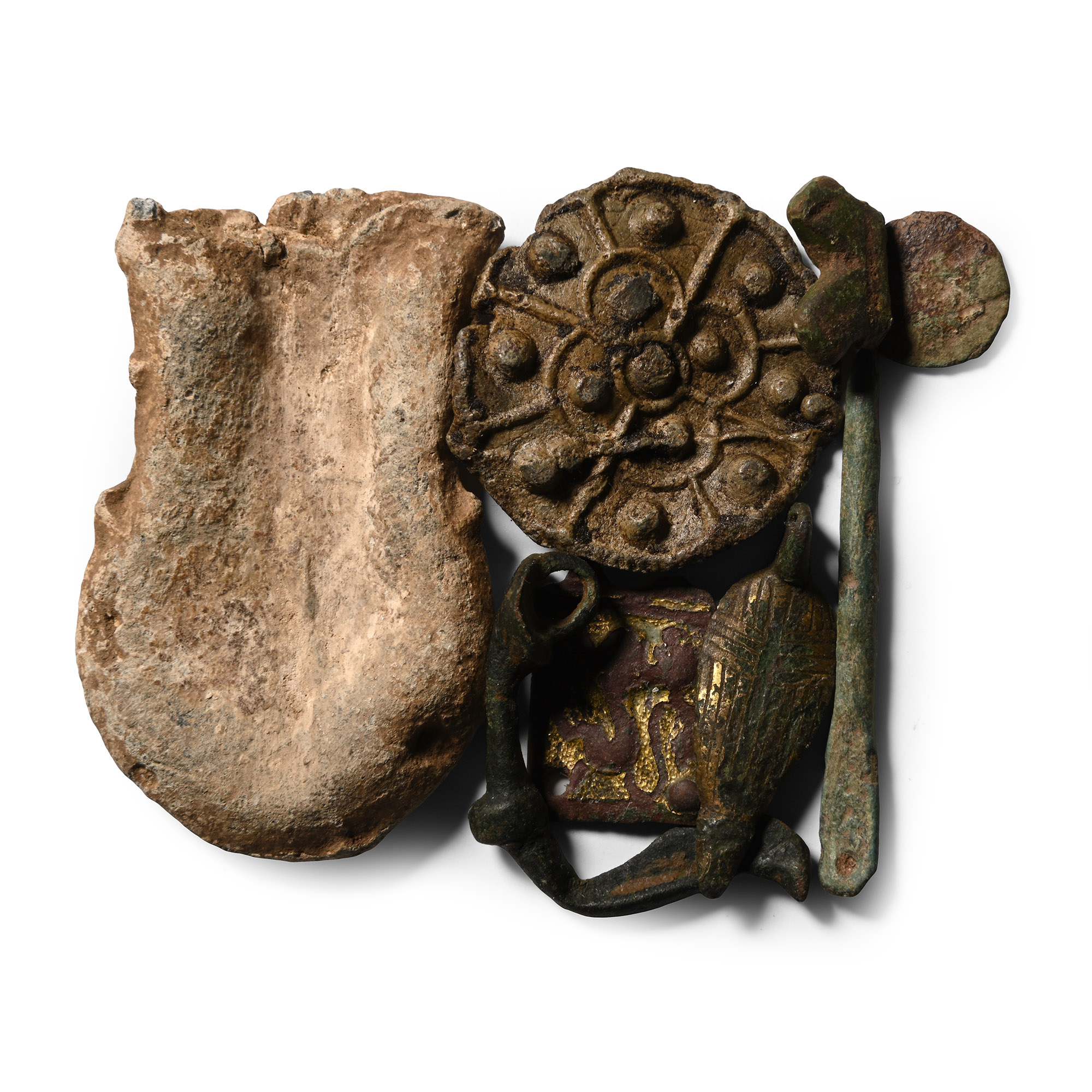
Medieval Bronze and Lead Artefact Collection
CIRCA 14TH-16TH CENTURY A.D.
1/2 - 2 1/8 in. (72.8 grams total, 12-53 mm).
Mixed group including a gilt buckle plate with lion statant; a pilgrim's ampulla; a zoomorphic finial; a gilt pendant; and others. [8, No Reserve]
ProvenanceFound North Yorkshire, UK.
CONDITIONTimeLine Auctions follows a vetting process to ensure the authenticity and legality of all items, reinforcing our commitment to integrity and responsible trading. Each antiquity, antique, and coin lot undergoes thorough examination by a vetting committee of at least ten external specialists, professional trade association members, scientists, and archaeologists: Our Vetting Process
AUCTIONS:
TimeLine is a leading auction house specialising in antiquities, ancient art, collectables, natural history, coins, medals, and books. Our auctions offer museums, collectors, historians, and enthusiasts the opportunity to acquire unique and historically significant pieces.
-
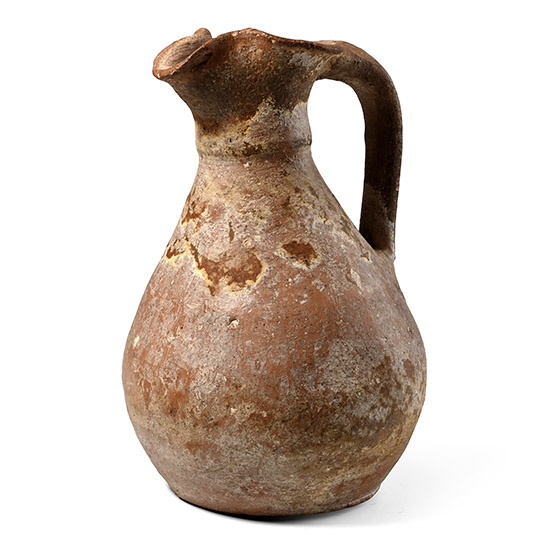
Medieval Terracotta Jug with Handle
Circa 14th-15th century A.D.Sold for (Inc. bp): £156
Comprising a piriform body with a flat base and a narrow neck with a trefoil lip, a strap handle to the rear. 368 grams, 15.5 cm
Previously from the Eileen Lewenstein collection, gifted in the 1970s. From the Ffestiniog pottery collection, Wales, UK. -
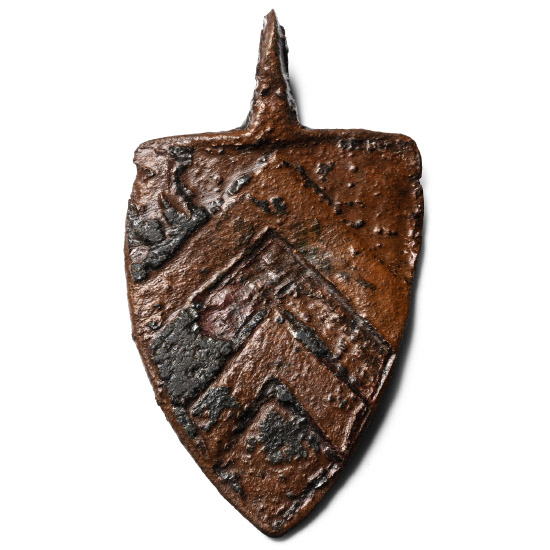
Medieval Knight's Bronze Heraldic Horse Harness Pendant
13th-15th century A.D.Sold for (Inc. bp): £46
Shield-shaped pendant with a double chevron. 8.72 grams, 48 mm
From the private collection of Graham Slater (1927-2024), Cambridge, UK; formed 1980s-1990s. -
.jpg)
Medieval Silver-Gilt Betrothal Ring with Angel Holding a Heart
15th century A.D.Estimate: £800 - 1,000 (+bp*)
Opening Bid: £400
Featuring a flat-section hoop with chevrons set with an openwork bezel formed of a winged angel holding a heart. 3.62 grams, 19.65 mm overall, 17.20 mm internal diameter (approximate size British L 1/2, USA 6, Europe 11.87, Japan 11)
Acquired on the European art market.
