
Loading, please wait...
LOT 1366
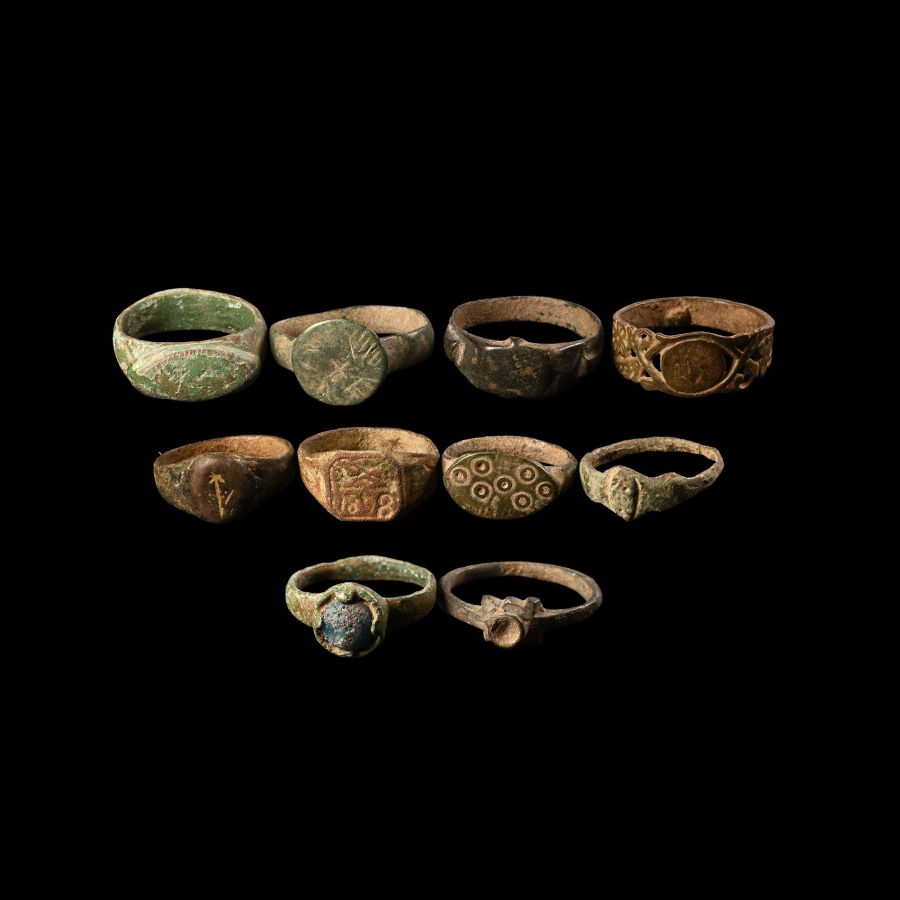
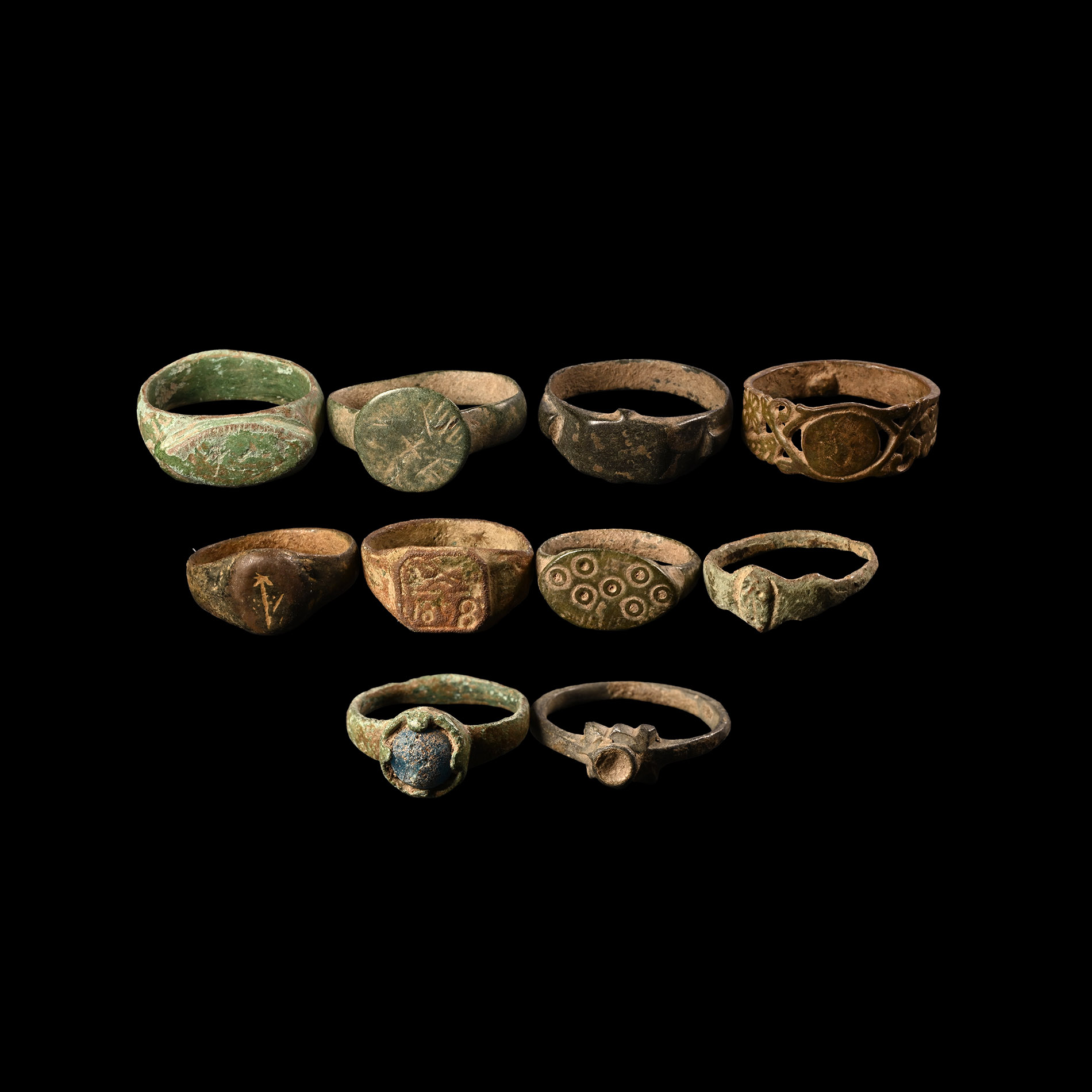
Medieval and Other Ring Collection
15TH CENTURY A.D. AND LATER
3/4 - 1 in. (34.9 grams total, 20-24 mm).
A mixed group of copper-alloy rings of various types and sizes, including examples set with glass cabochons, openwork shoulders, punched and incised geometric motifs, and a bezel dated '1898', amongst others. [10, No Reserve]
ProvenanceAcquired in the late 1990s-2000.
Property of an East London gentleman.
TimeLine Auctions follows a vetting process to ensure the authenticity and legality of all items, reinforcing our commitment to integrity and responsible trading. Each antiquity, antique, and coin lot undergoes thorough examination by a vetting committee of at least ten external specialists, professional trade association members, scientists, and archaeologists: Our Vetting Process
AUCTIONS:
TimeLine is a leading auction house specialising in antiquities, ancient art, collectables, natural history, coins, medals, and books. Our auctions offer museums, collectors, historians, and enthusiasts the opportunity to acquire unique and historically significant pieces.
-
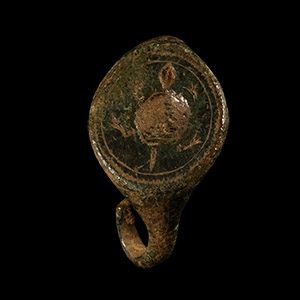
Late Medieval Turtle Seal Ring
15th-16th century A.D.Sold for (Inc. bp): £91
A bronze ring with oval bezel engraved with a turtle with legs and neck outstretched, depicted from above within an incised border; split and squashed hoop with convex cross-section expanding at the shoulders. 10.61 grams, 28.47 mm overall, 19.80 x 5.69 mm internal diameter
Found near Chelsworth, Suffolk, UK, in February 2020. Accompanied by a copy of the British Museum's Portable Antiquities Scheme (PAS) report no.SF-8A4FF7. -
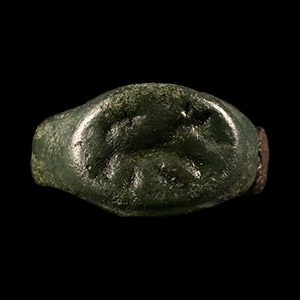
Medieval Ring with Running Dog
12th-14th century A.D.Sold for (Inc. bp): £124
A copper-alloy ring composed of a convex hoop, expanding to an oval-shaped bezel engraved with a stylised 'stick' dog running right; repair to one shoulder. 3.19 grams, 17.80 mm overall, 15.16 mm internal diameter (approximate size British G, USA 3 1/4, Europe 4.92, Japan 4)
Private collection formed since the 1940s. UK art market. Property of an Essex gentleman. -
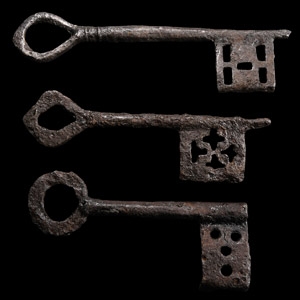
Medieval Large Key Group
Circa 12th-14th century A.D.Sold for (Inc. bp): £247
A mixed group of iron door keys comprising: one with solid shank, lozengiform bow, rectangular bit with elaborate piercings and three wards; one with hollow shank, circular bow, long rectangular pierced bit and two long wards; one with solid shank, ellipsoid bow, rectangular pierced bit and three wards. 126 grams total, 10.5-13.6 cm
Acquired 1971-1972. From the collection of the vendor's father. Property of a London, UK, collector.
