
Loading, please wait...
LOT 1391
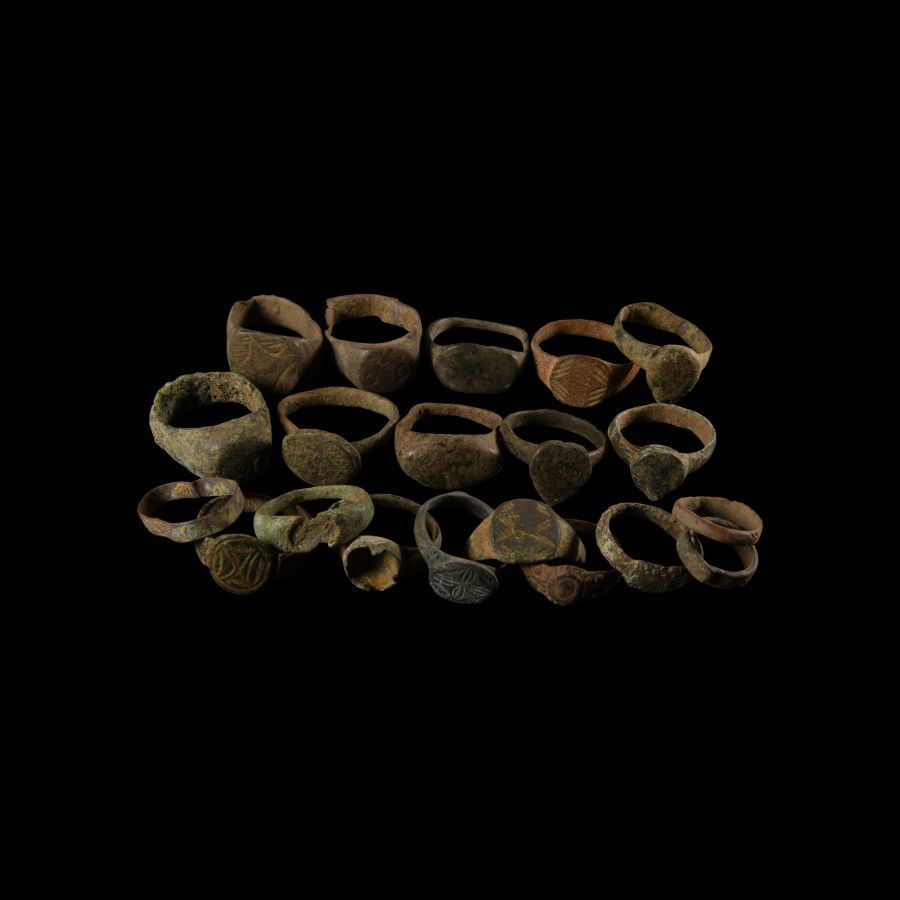
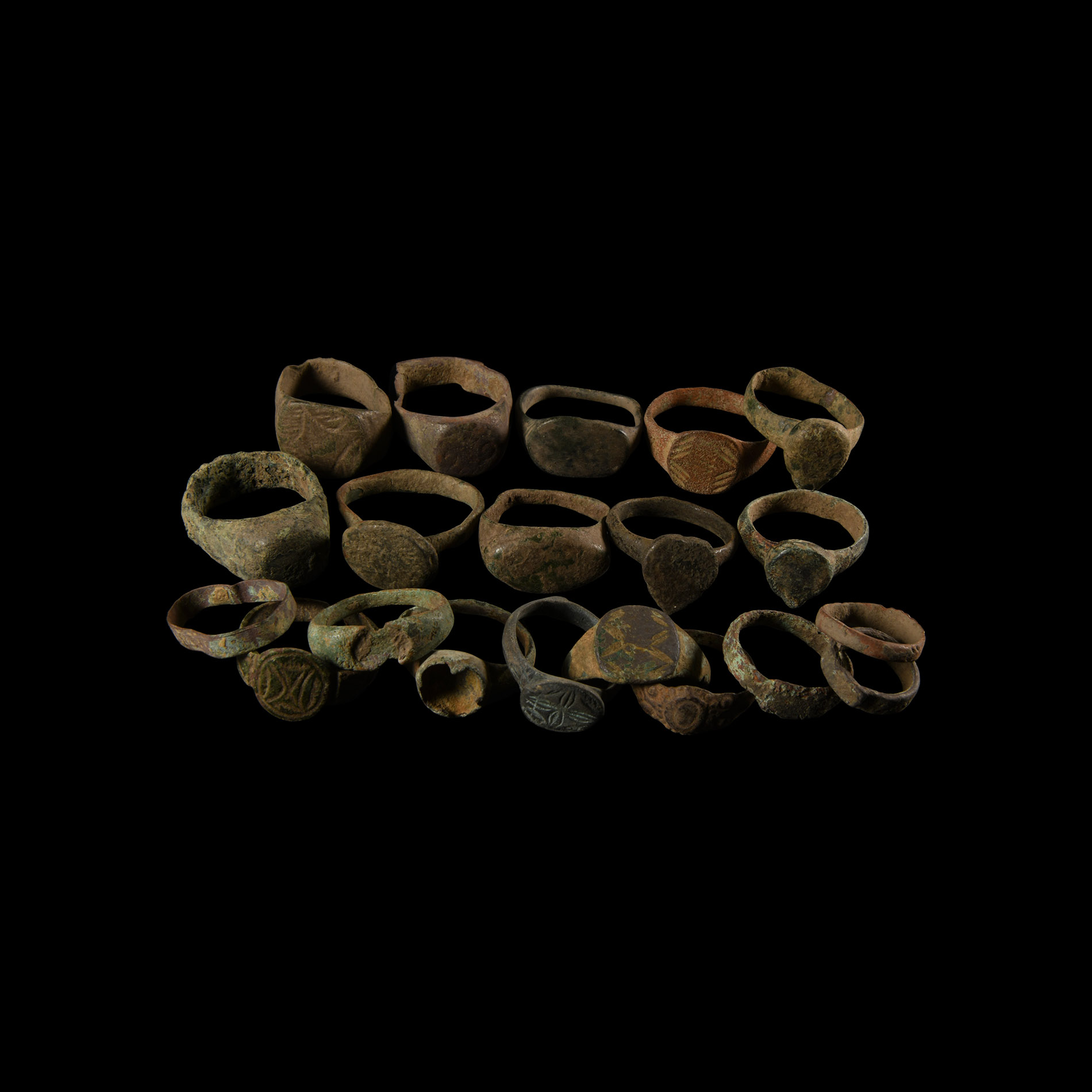
Medieval and Other Bronze Ring Collection
14TH-16TH CENTURY A.D. AND LATER
5/8 - 1 1/4 in. (96 grams total, 16-30 mm).
Mainly composed of finger rings with decorative bezels, including examples with geometric, floral and shaped designs. [20]
ProvenanceAcquired on the London art market, 1980s-1990s.
CONDITIONTimeLine Auctions follows a vetting process to ensure the authenticity and legality of all items, reinforcing our commitment to integrity and responsible trading. Each antiquity, antique, and coin lot undergoes thorough examination by a vetting committee of at least ten external specialists, professional trade association members, scientists, and archaeologists: Our Vetting Process
AUCTIONS:
TimeLine is a leading auction house specialising in antiquities, ancient art, collectables, natural history, coins, medals, and books. Our auctions offer museums, collectors, historians, and enthusiasts the opportunity to acquire unique and historically significant pieces.
-
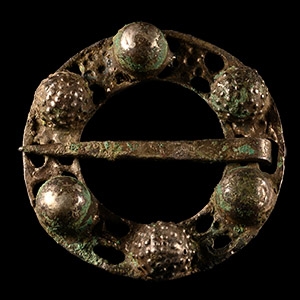
Medieval Large Silver Annular Brooch
Circa 13th-15th century A.D.Sold for (Inc. bp): £52
With openwork frame and six spherical bosses alternating plain and granulated; triangular pin intact. 15 grams, 49 mm
Acquired in the 1990s. Ex private collection, Suffolk, UK. Acquired on the UK art market in 2011. Property of a Kent lady collector. -

Medieval Illuminated Vellum Manuscript Page
England, early 13th century A.D.Sold for (Inc. bp): £546
Text in two columns with versals and illuminated capitals, red and blue linear ornament; Gregorian chant; mounted within a reveal in a glazed wooden frame. 425 grams total, 22 x 27 cm including frame
Acquired in the 1990s or before. From a deceased London, UK, estate. -

Large Medieval Lead Vesica-Shaped Seal Matrix for John son of Andrew
Circa 13th-15th century A.D.Sold for (Inc. bp): £46
With central floral motif, legend to the border '+ S' IONIS . FIL. ANDREE' (seal of John son of Andrew); raised chevrons to the reverse and lobe for piercing. 12.4 grams, 34 mm
Found Southern England. Acquired on the UK art market in the 1980s. From an East Anglian private collection.
The spelling 'Andree' may reflect 'Andreæ' the genitive singular of Andrea, a female name.
