
Loading, please wait...

LOT 1809
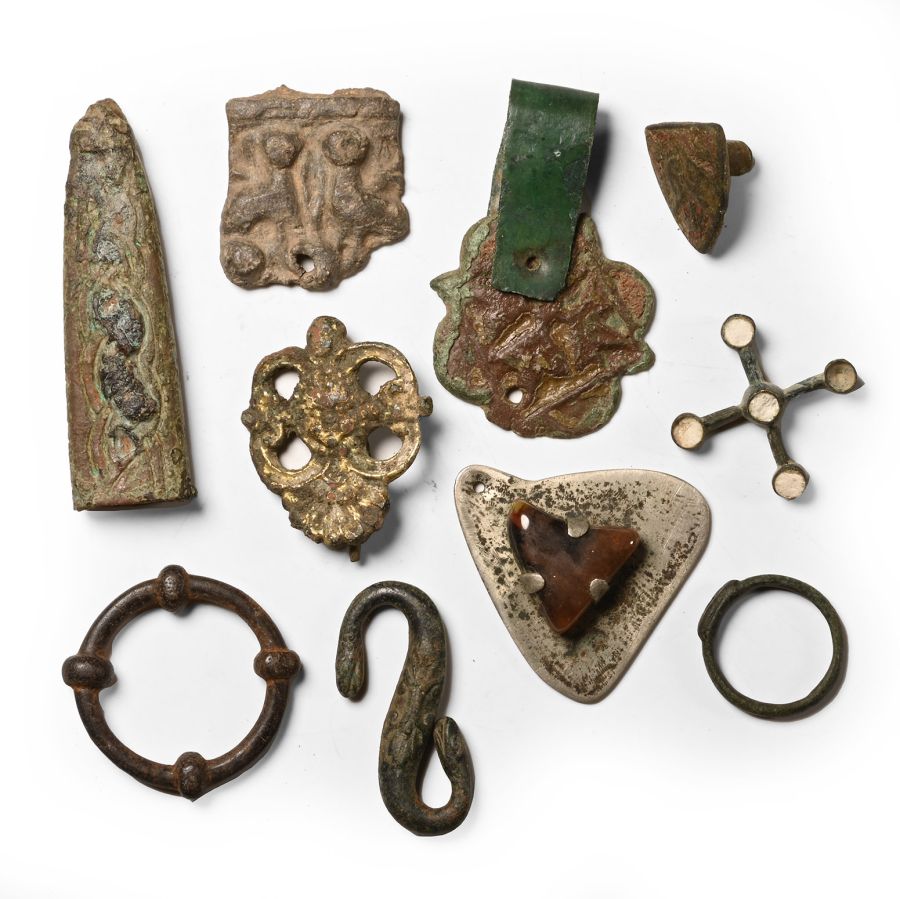
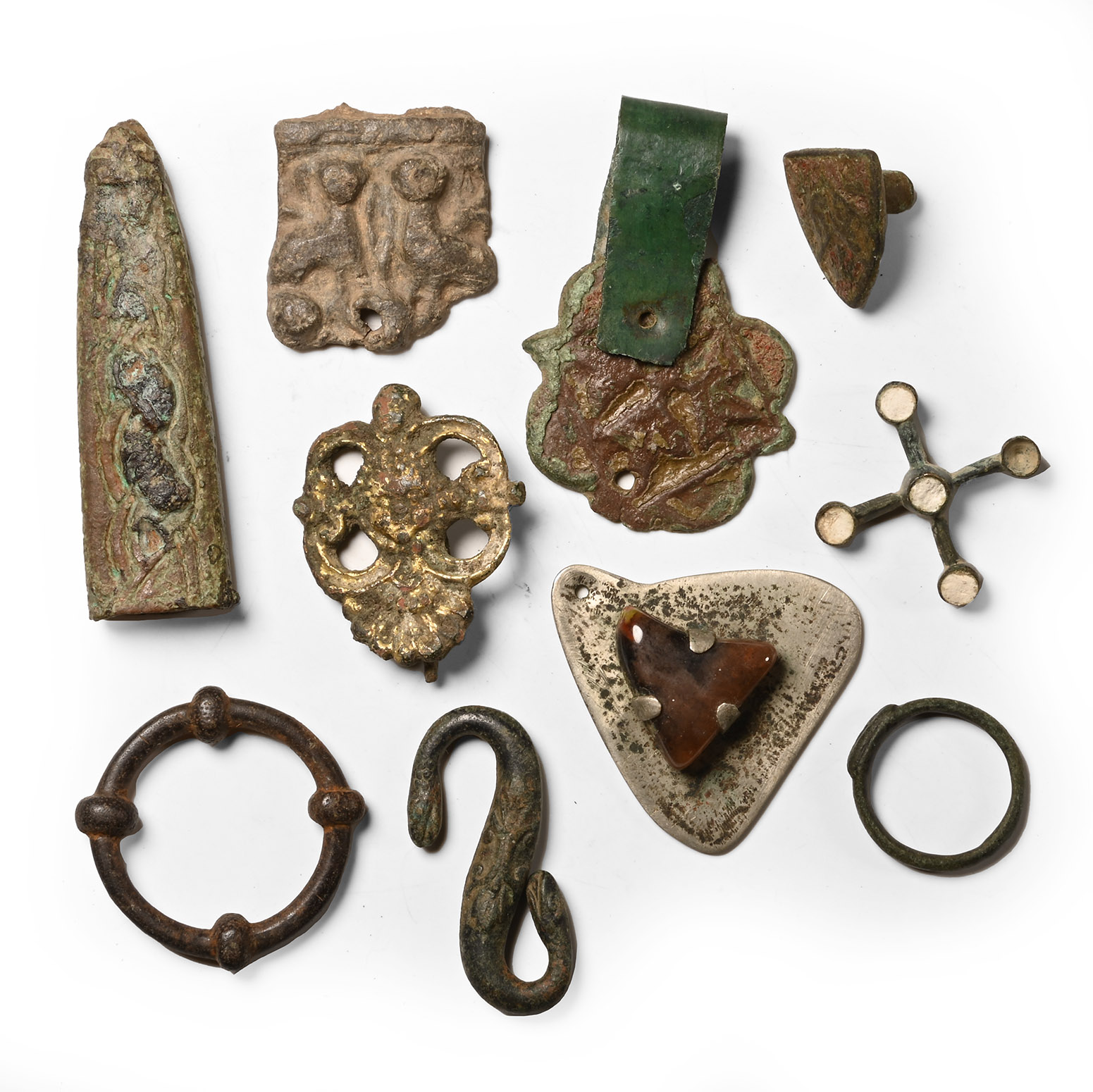
Medieval and Other Bronze Artefact Collection
14TH-19TH CENTURY A.D.
3/4 - 2 1/4 in. (87 grams total, 18-56 mm).
Including a dagger chape, heater-shaped heraldic badge, finger ring and other items. [10, No Reserve]
ProvenanceAcquired on the European art market since the early 2000s.
From the private Northern Ireland collection of R.M.
TimeLine Auctions follows a vetting process to ensure the authenticity and legality of all items, reinforcing our commitment to integrity and responsible trading. Each antiquity, antique, and coin lot undergoes thorough examination by a vetting committee of at least ten external specialists, professional trade association members, scientists, and archaeologists: Our Vetting Process
AUCTIONS:
TimeLine is a leading auction house specialising in antiquities, ancient art, collectables, natural history, coins, medals, and books. Our auctions offer museums, collectors, historians, and enthusiasts the opportunity to acquire unique and historically significant pieces.
-
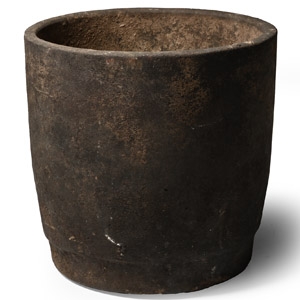
Medieval Bronze Mortar
Circa 15th-16th century A.D.Sold for (Inc. bp): £46
Tubular in profile with squared rim, carination above the base, rounded bottom internally. 5.15 kg, 14 cm
From a collection acquired on the UK art market from various auction houses and collections mostly before 2000. From an important Cambridgeshire estate; thence by descent. -
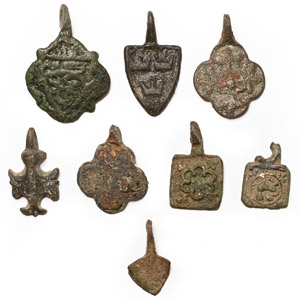
Medieval Knight's Enamelled Bronze Heraldic Horse Harness Pendant Collection
Circa 14th-15th century A.D.Sold for (Inc. bp): £156
Including heater-shaped, quatrefoil, lozengiform and other types with heraldic detailing. 30.8 grams total, 18-33 mm
Acquired on the European art market since the early 2000s. From the private Northern Ireland collection of R.M. -
.jpg)
Medieval Gilt Bronze Lion Finial
14th-15th century A.D.Estimate: £300 - 400 (+bp*)
Opening Bid: £150
Modelled in the half-round standing with head left on a plinth base, rectangular fixing socket to underside. 25.1 grams, 32 mm high
‘The Ancient Menagerie Collection’ formerly the property of a Cambridgeshire lady, collected since the 1990s and acquired from auctions and dealers throughout Europe and the USA, now ex London collection. Accompanied by photographs of the item on display in the Harwich museum.
