
Loading, please wait...

LOT 1906
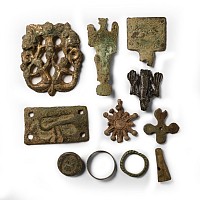
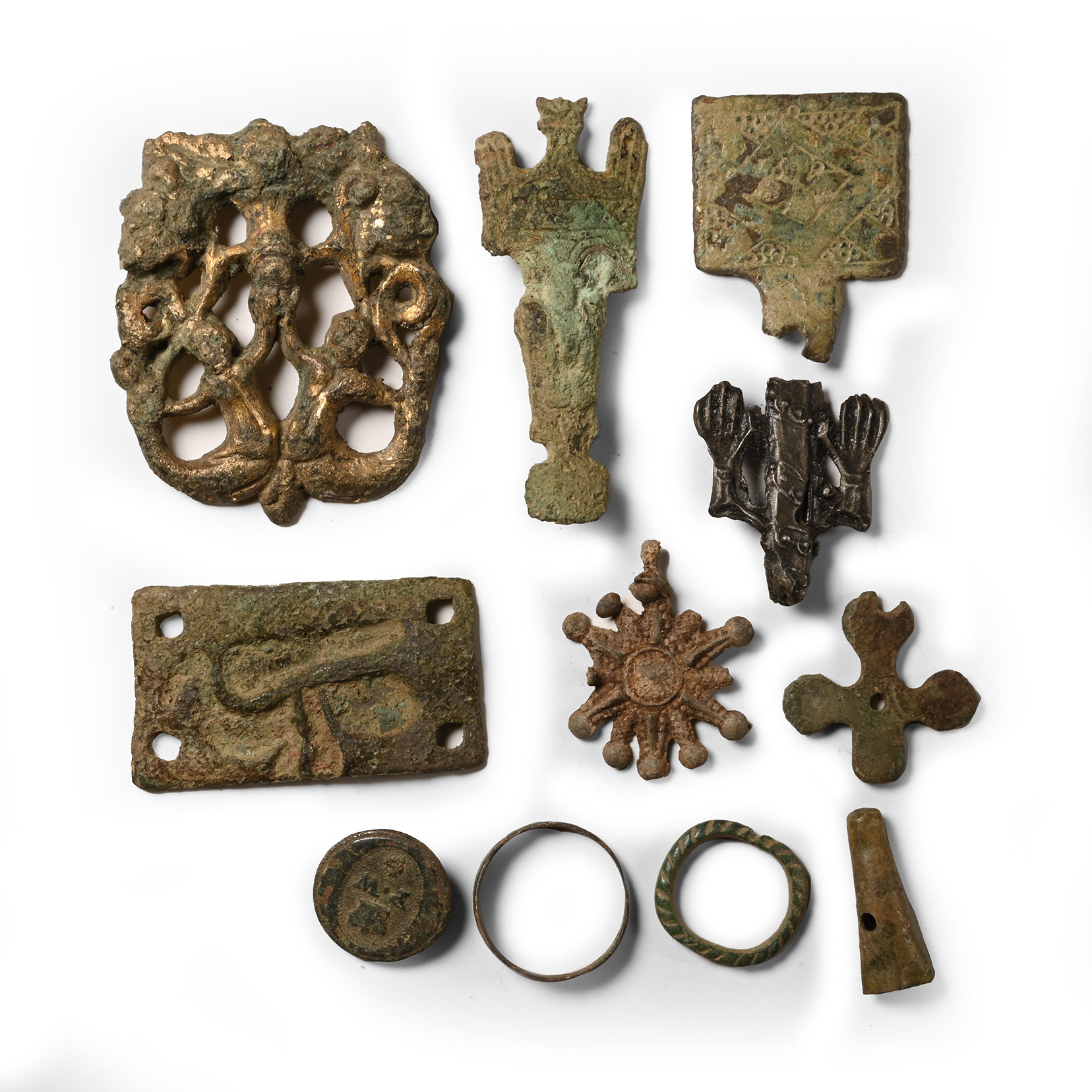
Medieval and Other Bronze Artefact Collection
14TH-19TH CENTURY A.D.
5/8 - 1 3/4 in. (68 grams total, 16-46 mm).
Including pilgrim's badges, finger rings, appliqués and other items. [11, No Reserve]
ProvenanceAcquired on the European art market since the early 2000s.
From the private Northern Ireland collection of R.M.
TimeLine Auctions follows a vetting process to ensure the authenticity and legality of all items, reinforcing our commitment to integrity and responsible trading. Each antiquity, antique, and coin lot undergoes thorough examination by a vetting committee of at least ten external specialists, professional trade association members, scientists, and archaeologists: Our Vetting Process
AUCTIONS:
TimeLine is a leading auction house specialising in antiquities, ancient art, collectables, natural history, coins, medals, and books. Our auctions offer museums, collectors, historians, and enthusiasts the opportunity to acquire unique and historically significant pieces.
-
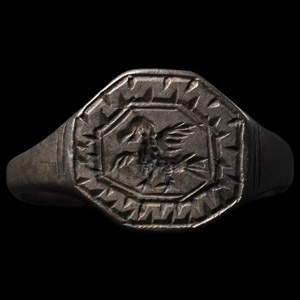
Medieval Silver Ring with Bird
15th-16th century A.D.Sold for (Inc. bp): £111
With chamfered shoulders, octagonal bezel, meander border enclosing a perching bird with wings spread. 5.38 grams, 22.30 mm overall, 19.15 mm internal diameter (approximate size British P 1/2, USA 7 3/4, Europe 16.86, Japan 16)
Acquired on the European art market since the early 2000s. From the private Northern Ireland collection of R.M. -
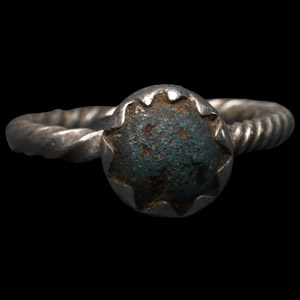
Medieval Silver Ring with Cabochon
15th-16th century A.D.Sold for (Inc. bp): £156
Comprising a twisted hoop supporting a raised bezel set with a glass cabochon. 3.16 grams, 26.08 mm overall, 16.61 mm internal diameter (approximate size British L 1/2, USA 6, Europe 11.87, Japan 11)
Ex German art market, 2000s. Acquired from an EU collector living in London. From the collection of Surrey, UK, gentleman. -
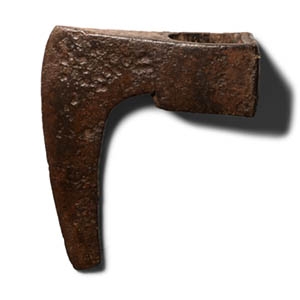
Medieval Iron Bearded Axehead
Circa 14th-16th century A.D. or laterSold for (Inc. bp): £111
With broad curved blade and square chin, broad neck, small socket with square-section hammer to the reverse. 450 grams, 12.5 cm
Ex North American collection, 1970s-1990s.
