
Loading, please wait...
LOT 1308
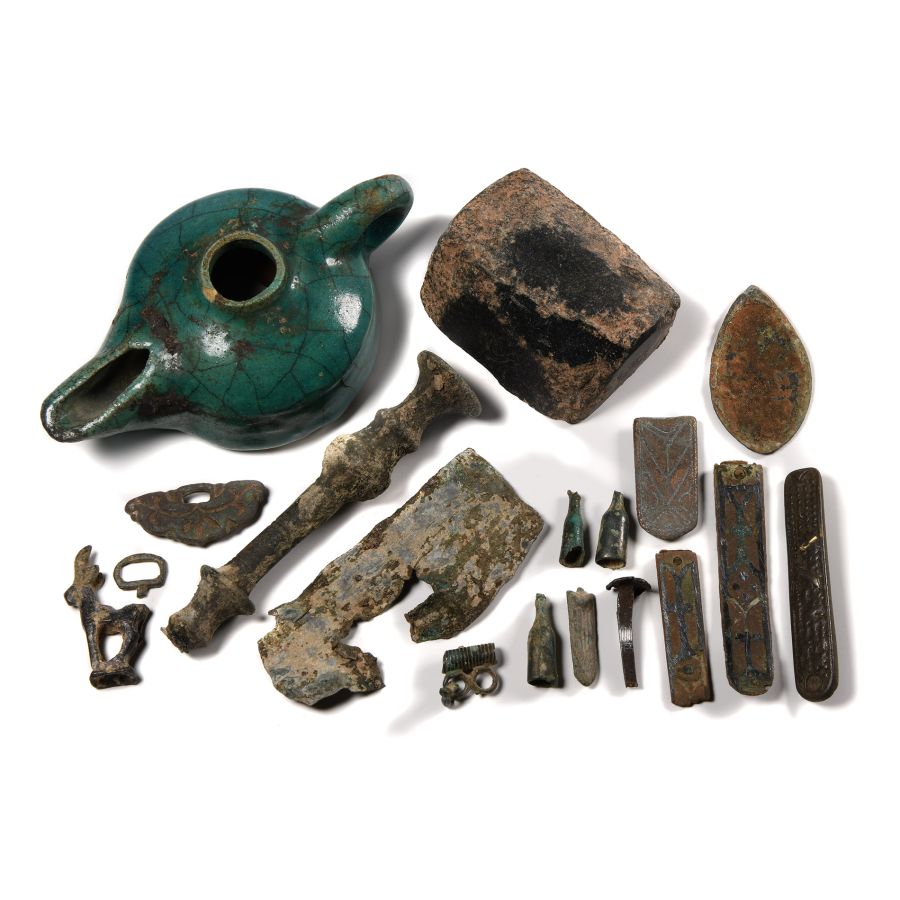
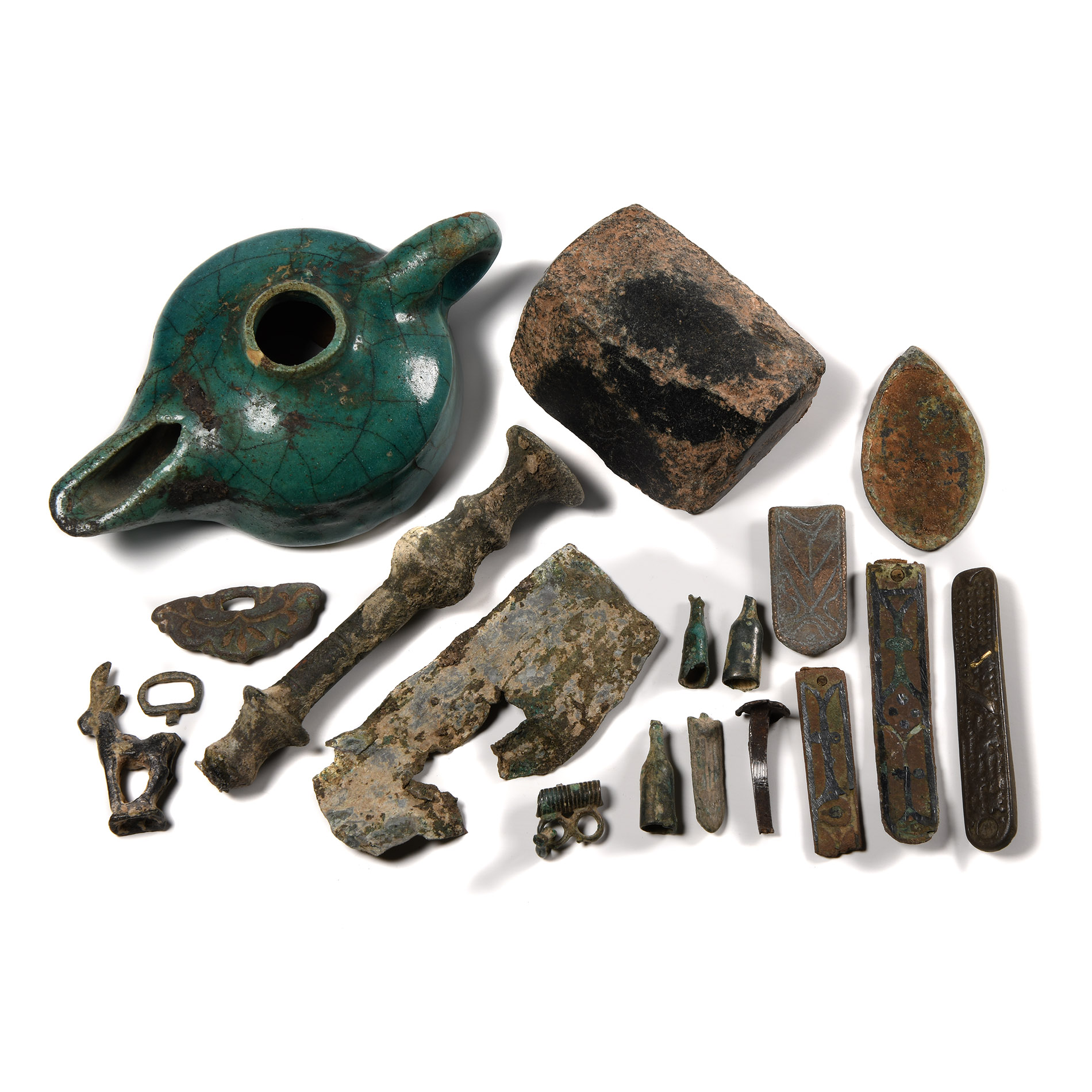
Medieval and Other Artefact Collection
CIRCA 14TH CENTURY A.D. AND LATER
1/2 - 4 3/4 in. (570 grams total, 1.4-12 cm).
A mixed group of artefacts including: a glazed pouring vessel; a balustered finial; standing stag pendant amulet; nail; decorated belt fittings and strap ends; other items. [18, No Reserve]
ProvenanceEssex gallery, early 2000s.
CONDITIONTimeLine Auctions follows a vetting process to ensure the authenticity and legality of all items, reinforcing our commitment to integrity and responsible trading. Each antiquity, antique, and coin lot undergoes thorough examination by a vetting committee of at least ten external specialists, professional trade association members, scientists, and archaeologists: Our Vetting Process
AUCTIONS:
TimeLine is a leading auction house specialising in antiquities, ancient art, collectables, natural history, coins, medals, and books. Our auctions offer museums, collectors, historians, and enthusiasts the opportunity to acquire unique and historically significant pieces.
-
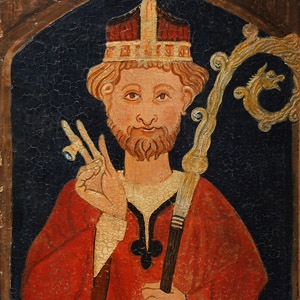
Medieval Icon of Pope Benedict XI
14th century A.D. or laterSold for (Inc. bp): £1,235
A rectangular wooden icon of Pope Benedict XI (papacy: 22 October 1303-7 July 1304) standing facing within an arch; elaborate crozier to the left hand with returned horse-head finial and scrolled spurs to the outer edge; right hand extended in the gesture of benediction with large gem-set finger ring carefully displayed; mitre with jewelled headband, simple red vestment with white undergarment and black trim; heavily overpainted; mounted in a gilt wooden frame with hatched lower panel. 1.6 kg, 50.5 x 37.5 cm
Ex Richard Philp, London, UK. with W.E. Tristram (1882-1952). Acquired from Patrick Reijgerberg, Holland March, 2003. UK private collection. -
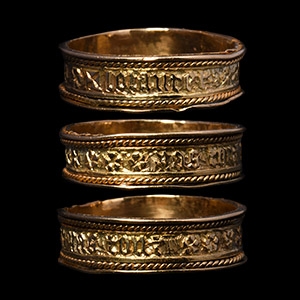
'The Bettiscombe' Medieval Gold 'Loyalty is Everything' Posy Ring
14th-15th century A.D.Sold for (Inc. bp): £4,160
An annular gold band with everted upper and lower lip, filigree ropework above and below each rim, with circumferential inscription to the recessed exterior face; of the five separate bands, the central one accommodating an applied strip of paler gold bearing a Medieval French blackletter inscription in relief, reading: '+loiautet (5 five cinquefoils) pas tout (5 five cinquefoils)', or 'Loyalty Passes All'; the inscription band may once have been enamelled; plain interior; the outer rim and twisted band on one edge are slightly bent; cleaned and repaired. 2.57 grams, 19.60 mm overall,17.39 mm internal diameter (approximate size British M 1/2, USA 6 1/4, Europe 12.46, Japan 12)
Found whilst searching with a metal detector in Bettiscombe, Dorset, UK, on 26th September 2019, and reported as a find of potential treasure to Ciorstaidh Hayward Trevarthen, Finds Liaison Officer. Accompanied by a copy of the British Museum's Portable Antiquities Scheme (PAS) report number DOR-551573. Accompanied by a copy of a letter from the British Museum to H M Senior Coroner for Dorset disclaiming the Crown's interest in the treasure find with reference number 2019 T1075. This lot has been checked against the Interpol Database of stolen works of art and is accompanied by search certificate no.11656-197165.
The PAS report states that Joan Evans notes a similar inscription- 'LOIALTE PASE TO' - found on plate and ornaments in the inventories of Louis d'Anjou and Louis de Valois, duc de Touraine...' in her book English Posies and Posy Rings. -
Medieval and later Mount Group
14th-18th century A.D.Sold for (Inc. bp): £78
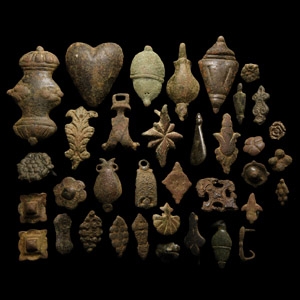
A mixed group of bronze mounts and appliqués of various kinds. 166 grams total, 12-64 mm
Found Suffolk.
