
Loading, please wait...
LOT 1719
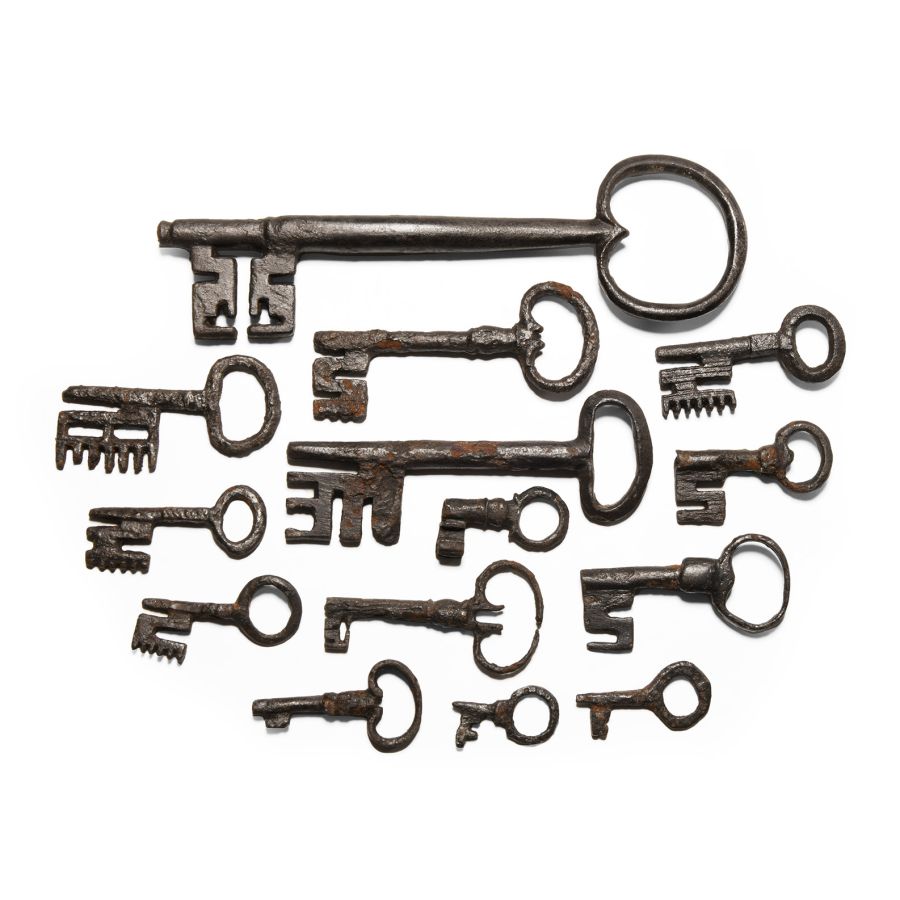
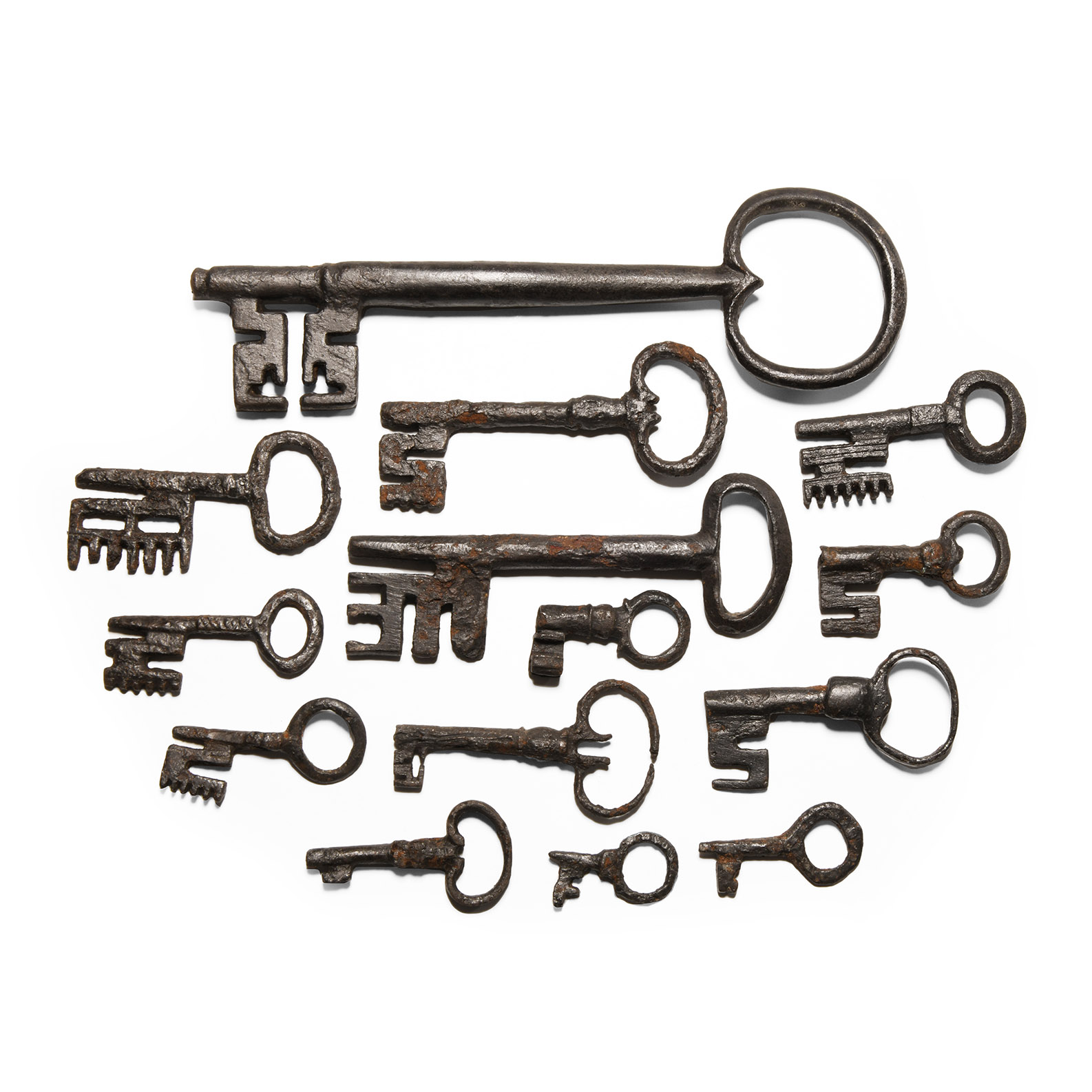
Medieval and Later 'Thames' Iron Key Collection
CIRCA 15TH-17TH CENTURY A.D.
1 1/8 - 6 1/2 in. (290 grams total, 3-16.5 cm).
All complete or very near complete and of different types and sizes, including examples with simple geometric ornament. [14, No Reserve]
ProvenanceFound Billingsgate spoil from the Thames foreshore, London, UK.
CONDITIONTimeLine Auctions follows a vetting process to ensure the authenticity and legality of all items, reinforcing our commitment to integrity and responsible trading. Each antiquity, antique, and coin lot undergoes thorough examination by a vetting committee of at least ten external specialists, professional trade association members, scientists, and archaeologists: Our Vetting Process
AUCTIONS:
TimeLine is a leading auction house specialising in antiquities, ancient art, collectables, natural history, coins, medals, and books. Our auctions offer museums, collectors, historians, and enthusiasts the opportunity to acquire unique and historically significant pieces.
-
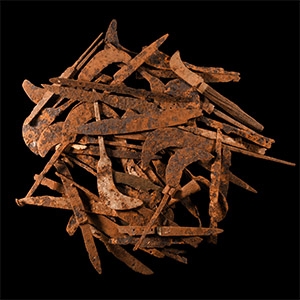
Medieval Iron Artefact Group
14th-16th century A.D.Sold for (Inc. bp): £169
Comprising small scythes and knife blades of various types. 1.75 kg total, 11-24 cm
Acquired 1990s-early 2000s. East Anglian private collection.
A variety of 14th and 15th century forms of knives are represented here including several with stepped backs. In the 14th century the blades of the knives became to be longer and thinner and frequently marked. -
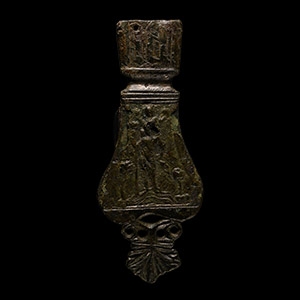
Large Medieval Bronze Strap End with St Christopher
14th-15th century A.D.Estimate: £250 - 350 (+bp*)
Opening Bid: £100
Socket finial to one end, waisted stem, heart-shaped plaque, bar of four rivet holes and shell or leaf-shaped finial, the body displaying Saint Christopher standing on a mound with a young boy on his shoulder and holding a staff in relief, Gothic letters 'ID' to the socket. 45 grams, 90 mm
Acquired early 1990s. From an East Anglian private collection. -

Medieval Ceramic Group
15th century A.D. and laterSold for (Inc. bp): £33
Composed of a range of mainly glazed vessels, including tripod pots, a stoneware jars and a footed pouring bowl; most with chips and cracks. 3.25 kg total, 10-21 cm
Acquired 1990s-early 2000s. East Anglian private collection.
Ceramics from Dundee, Scotland, confirm that the most common vessel type represented was the tripod pipkin, with globular body, rounded base, three legs and a single handle.
