
Loading, please wait...

LOT 1882
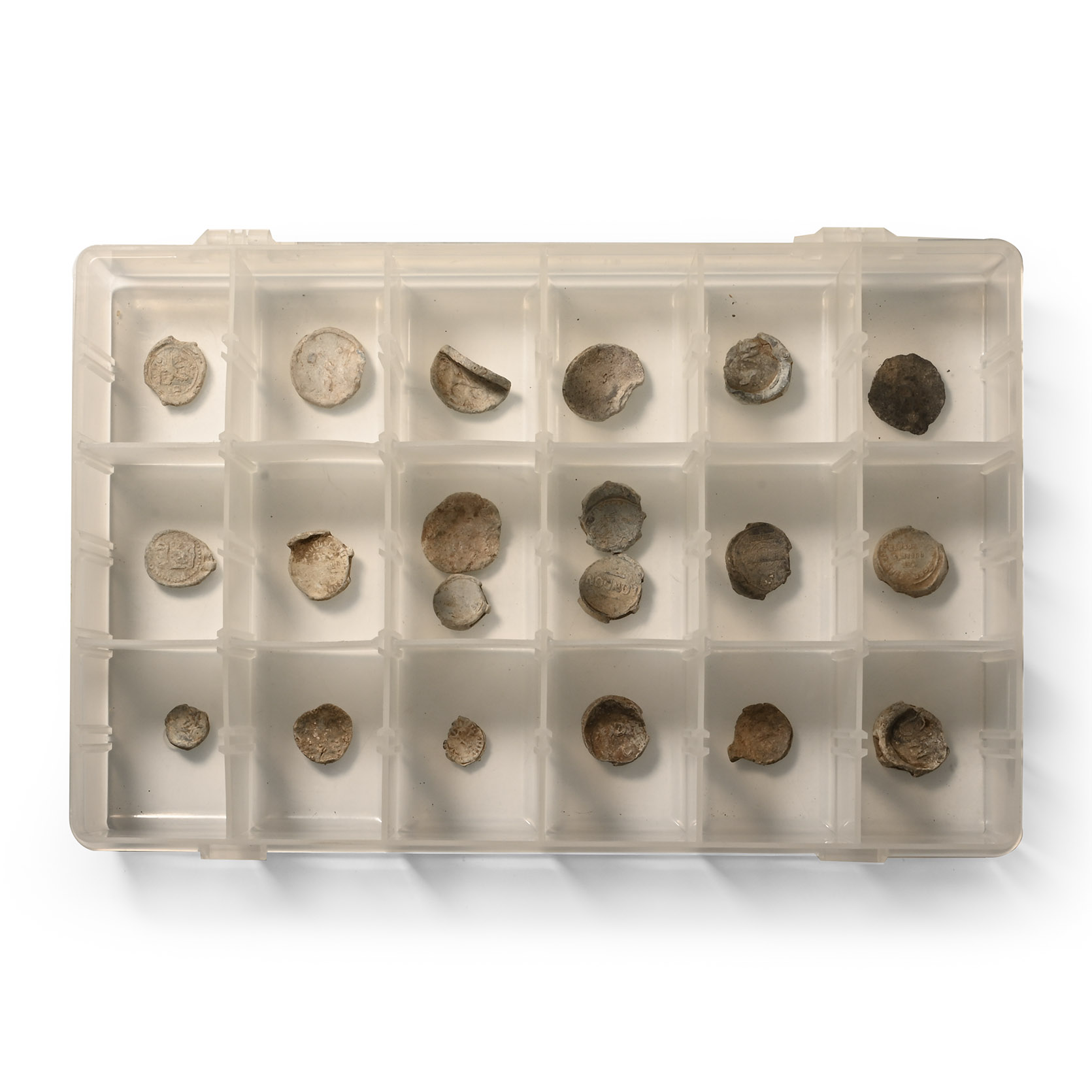
Medieval and Later Lead Seal and Token Collection
CIRCA 15TH-19TH CENTURY A.D.
10 7/8 x 7 1/8 in. (498 grams total, 27.5 x 18 cm including box).
Discoid types with low-relief motifs, cross and legend designs, including a Boy Bishop. [No Reserve]
ProvenanceEx Stocker collection, Kent, UK, 1955-early 2000s.
CONDITIONTimeLine Auctions follows a vetting process to ensure the authenticity and legality of all items, reinforcing our commitment to integrity and responsible trading. Each antiquity, antique, and coin lot undergoes thorough examination by a vetting committee of at least ten external specialists, professional trade association members, scientists, and archaeologists: Our Vetting Process
AUCTIONS:
TimeLine is a leading auction house specialising in antiquities, ancient art, collectables, natural history, coins, medals, and books. Our auctions offer museums, collectors, historians, and enthusiasts the opportunity to acquire unique and historically significant pieces.
-
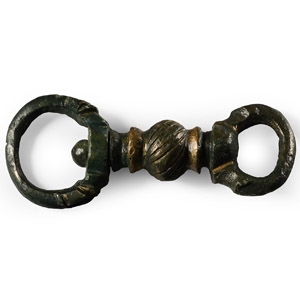
Norman Bronze Hunting Dog Leash Swivel
11th-12th century A.D.Sold for (Inc. bp): £52
Three-part swivel with loop to each end, central bar with notched bulb; still in working order. 32.4 grams, 63 mm
Acquired on the European art market since the early 2000s. From the private Northern Ireland collection of R.M. -
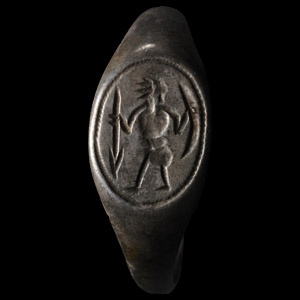
Medieval Silver Ring with Warrior
15th-16th century A.D.Sold for (Inc. bp): £65
With discoid bezel, incised border, incuse standing warrior with helmet, spear and shield. 3.71 grams, 22.10 mm overall, 18.80 mm internal diameter (approximate size British R, USA 8 1/2, Europe 18 3/4, Japan 18)
Acquired on the European art market since the early 2000s. From the private Northern Ireland collection of R.M. -
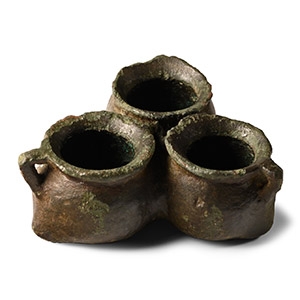
Medieval Bronze Triple Miniature Cauldron Set
15th-16th century A.D.Sold for (Inc. bp): £52
Formed as a fused group of three radiating vessels with flared rim and loop handle. 22.8 grams, 40 mm
Found Stockton-on-the-Forest, Yorkshire, UK. Accompanied by a copy of the British Museum's Portable Antiquities Scheme (PAS) report no.YORYM-4769D5l.
Possibly replicating a 'fuddling' cup - a puzzle drinking vessel.
