
Loading, please wait...
LOT 2102
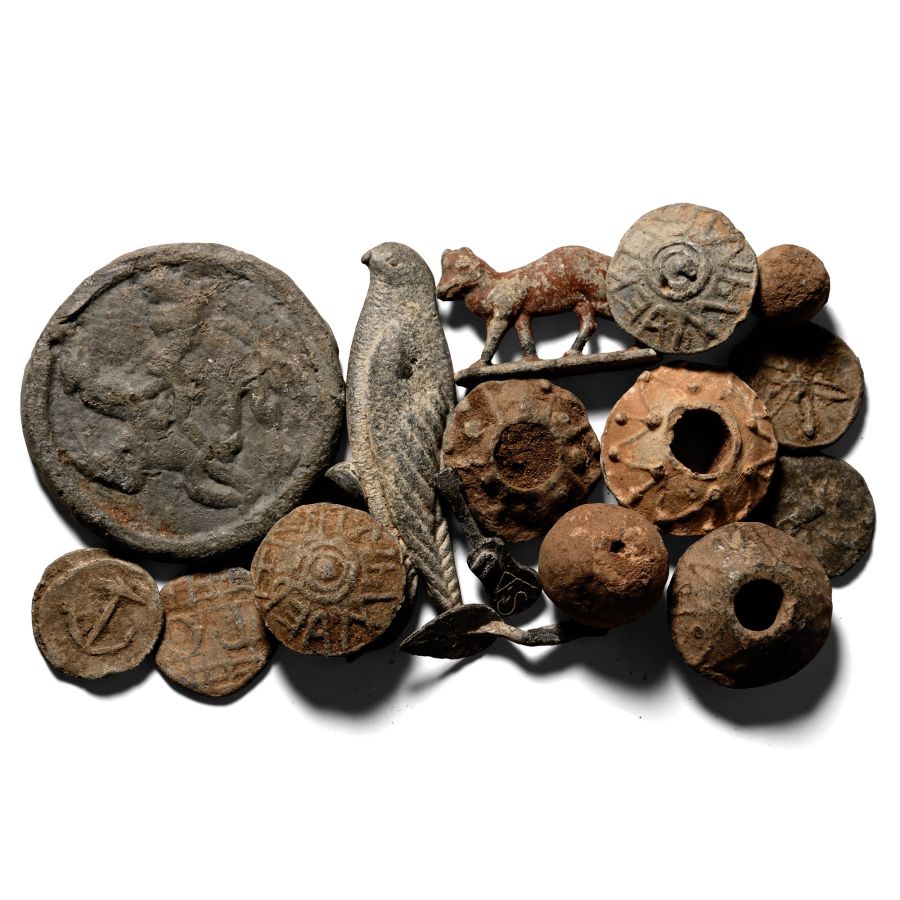
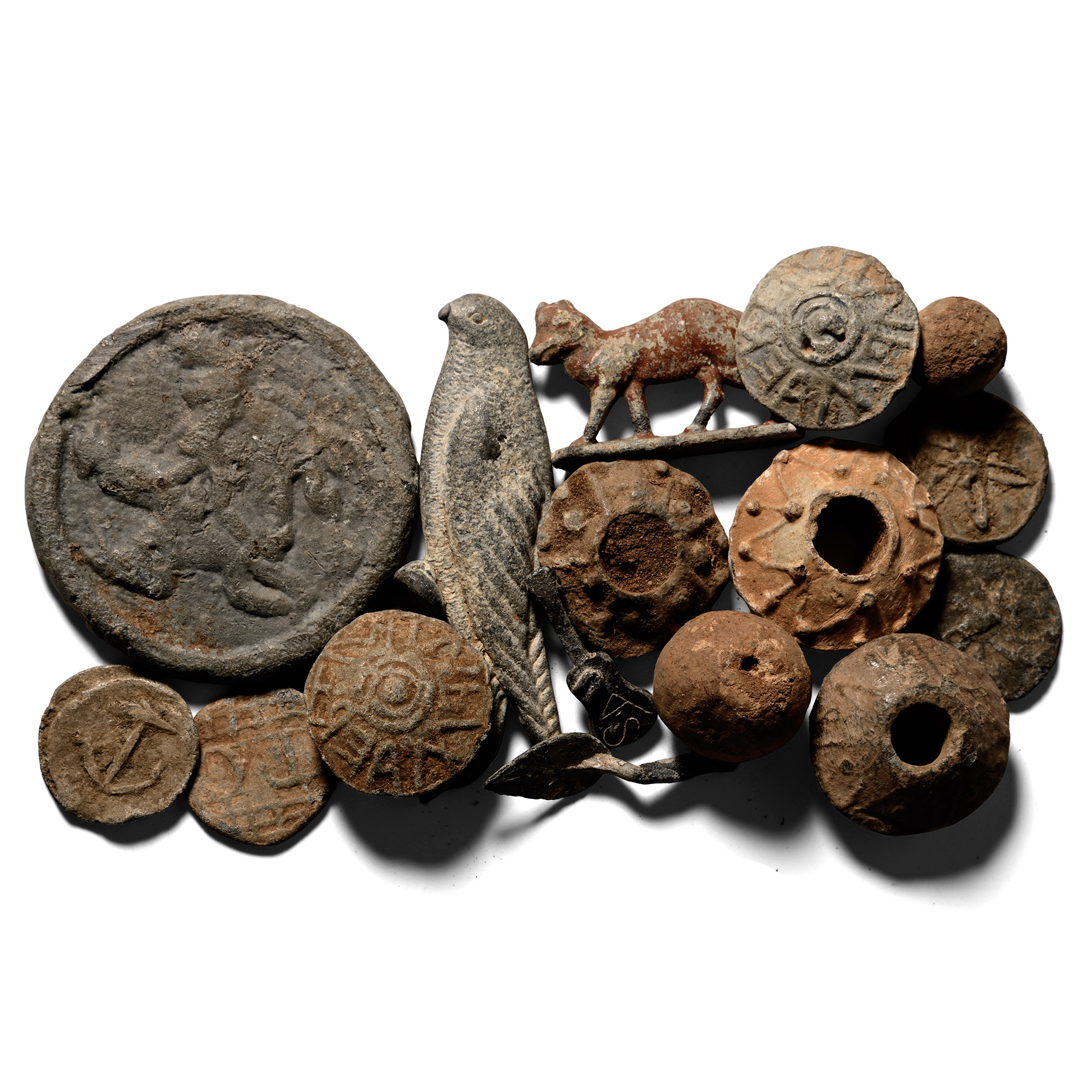
Medieval and Later Lead Artefact Group
15TH-19TH CENTURY A.D.
1/2 - 2 3/4 in. (430 grams total, 14-71 mm).
Including a toy lamb, spindle whorls, a model guitar and other items. [16, No Reserve]
ProvenanceFound Tyne and Wear, UK.
This lot is for UK buyers only, not for export.
TimeLine Auctions follows a vetting process to ensure the authenticity and legality of all items, reinforcing our commitment to integrity and responsible trading. Each antiquity, antique, and coin lot undergoes thorough examination by a vetting committee of at least ten external specialists, professional trade association members, scientists, and archaeologists: Our Vetting Process
AUCTIONS:
TimeLine is a leading auction house specialising in antiquities, ancient art, collectables, natural history, coins, medals, and books. Our auctions offer museums, collectors, historians, and enthusiasts the opportunity to acquire unique and historically significant pieces.
-
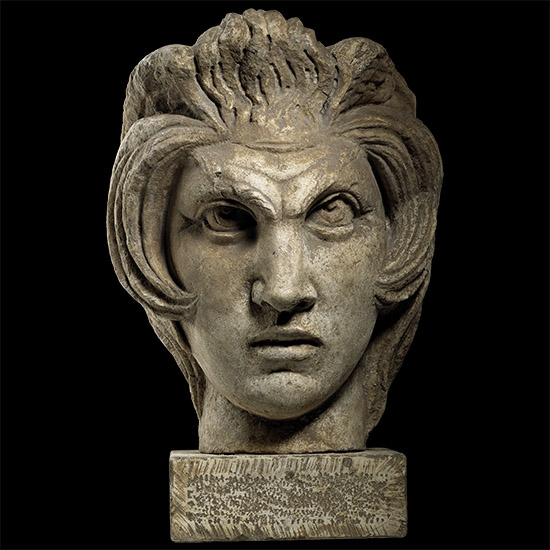
Post Medieval Marble Portrait of a Man
17th-18th century A.D.Estimate: £5,000 - 7,000 (+bp*)
Opening Bid: £2,500
Modelled in the round with a frowning expression, a triangular face with angular features and thick banded hair; recessed to the top of the head. 35.1 kg, 41 cm high including stand
Private collection, England. This lot has been checked against the Interpol Database of stolen works of art and is accompanied by search certificate number no.13082-249677.
From the late 17th century until around the 1760s, classical nostalgia and the viewing and recording of classical remains became major occupations for aristocratic young men who went on the ‘Grand Tour’. In Rome, for example, some British visitors counted and measured the huge number of ancient columns and obelisks still visible in the city. The wealthiest brought back antiquities, including stones with Latin inscriptions, and redesigned their gardens to display them. More significantly, such travels also encouraged those who went to redefine their own origins and native identities within a wider European context. The taste for the reproductions of ancient monuments involved also the sculptures of Middle Age. -
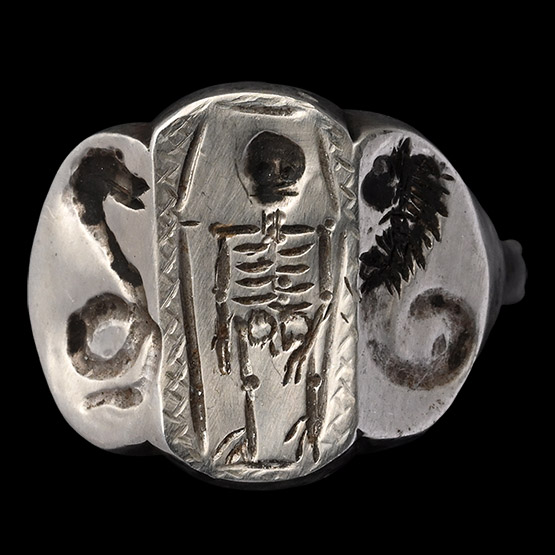
Post Medieval Silver Memento Mori Ring with Skeleton in Coffin Flanked by Rearing Snakes
18th-19th century A.D.Sold for (Inc. bp): £117
With facetted hoop, quatrefoil bezel with serpents flanking a coffin with skeleton inside; italic script legend to reverse 'jeap[...]'. 5.28 grams, 20.97 mm overall, 16.91 mm internal diameter (approximate size British N, USA 6 1/2, Europe 13.72, Japan 13)
Ex East Sussex private collection, 1970s-1980s. -
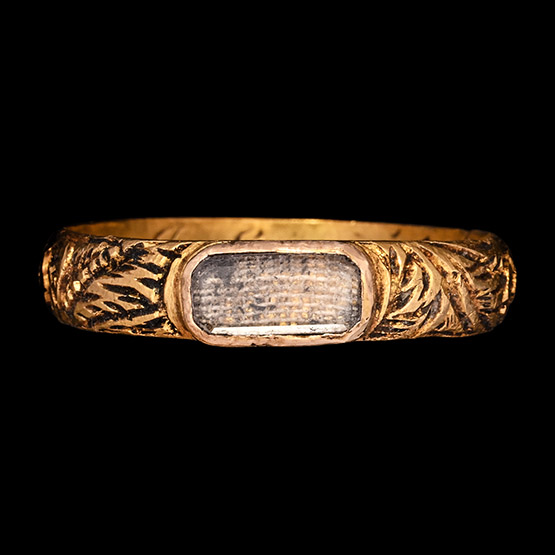
Stuart Period Gold Mourning Ring with Rock Crystal Gemstone
England, 18th century A.D.Sold for (Inc. bp): £2,860
Decorated with black enamelled foliate engraving; bezel set with a table cut rock crystal compartment containing some hair of the deceased; inner face engraved ‘Capt(ain). G Squrritt ob 1 Jan 1724’ and the maker's mark ‘GE’. 3.33 grams, 20.04 mm overall, 17.17 mm internal diameter (approximate size British M, USA 6, Europe 12.46, Japan 12)
Private collection, Europe. Acquired on the English art market. This lot has been checked against the Interpol Database of stolen works of art and is accompanied by search certificate number no.13055-248357.
Mourning rings were made to commemorate the death of an individual. Similar examples are held in the British Museum's collection, including AF.1547; AF.1551; AF.1550; AF.1552; AF.1549. While the majority of mourning rings tend to refer to the deceased by initials and death only, this ring mentions the deceased's family name in full, which is usually the case for people of note/influence.
