
Loading, please wait...
LOT 1638
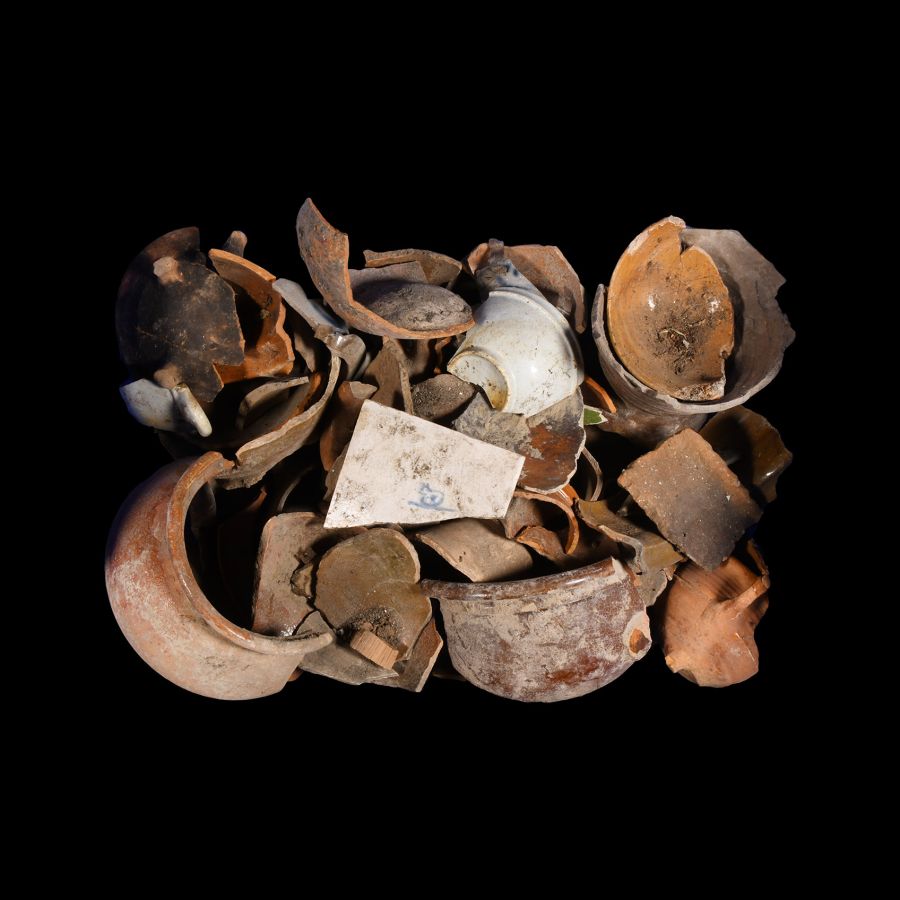
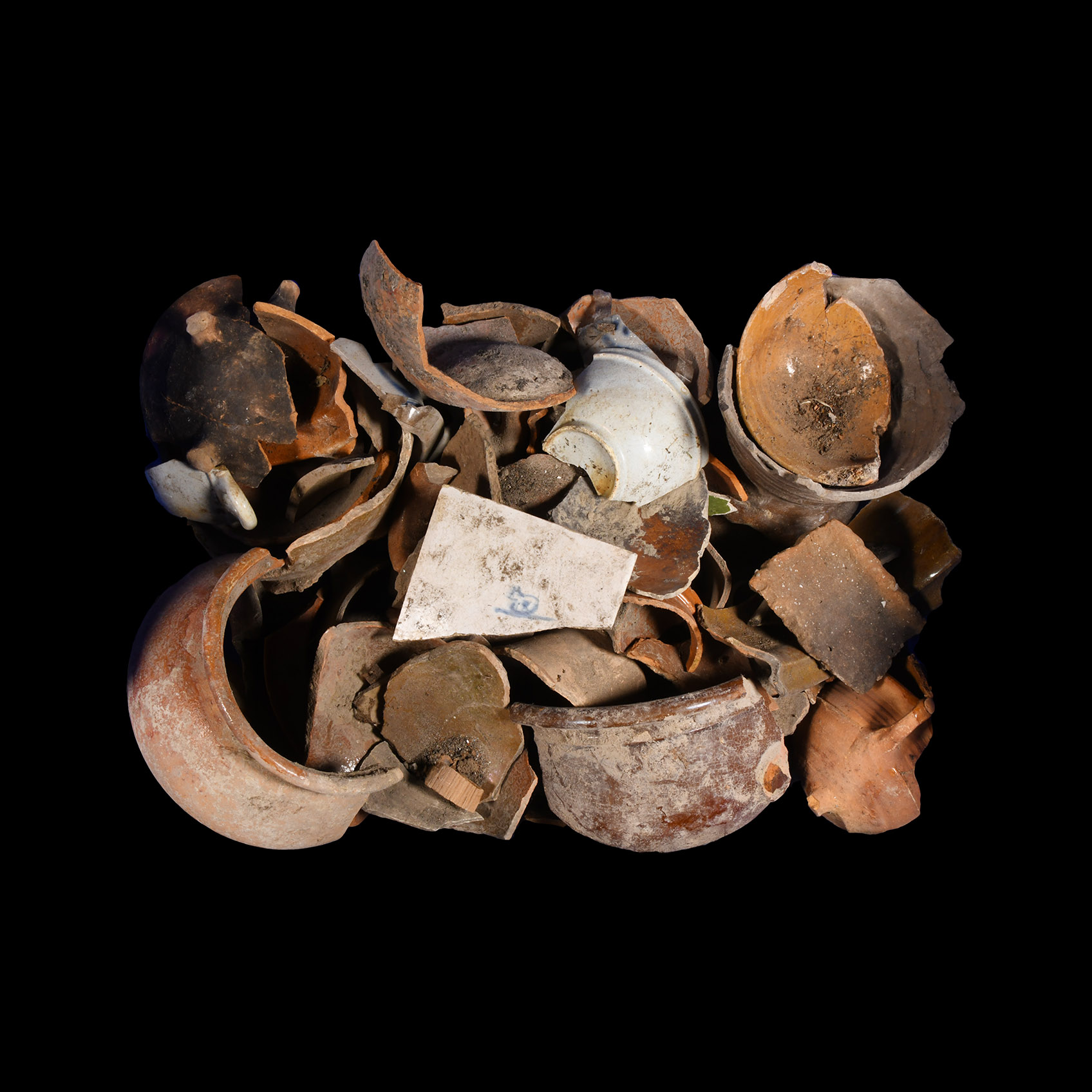
Medieval and Later Dutch Pottery Pit Dug Fragment Group
CIRCA 15TH-17TH CENTURY A.D.
2 - 4 3/4 in. (13 kg total, 3-12 cm).
Most glazed and from various vessel types, including examples with decoration.
ProvenanceAcquired 1990s-early 2000s.
East Anglian private collection.
TimeLine Auctions follows a vetting process to ensure the authenticity and legality of all items, reinforcing our commitment to integrity and responsible trading. Each antiquity, antique, and coin lot undergoes thorough examination by a vetting committee of at least ten external specialists, professional trade association members, scientists, and archaeologists: Our Vetting Process
AUCTIONS:
TimeLine is a leading auction house specialising in antiquities, ancient art, collectables, natural history, coins, medals, and books. Our auctions offer museums, collectors, historians, and enthusiasts the opportunity to acquire unique and historically significant pieces.
-
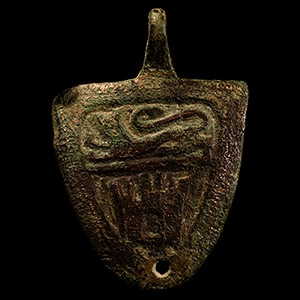
Medieval Large Gilt Bronze Knight's Heraldic Horse Harness Pendant
14th-15th century A.D.Sold for (Inc. bp): £182
Heater-shaped with an integral suspension loop, bearing heraldic device 'gules, a three-towered castle, in chief, a lion passant guardant, or'; the arms attributed by the PAS to the town Newbury, Berkshire; trace remains of gilding; piercing to the lower edge. 14.2 grams, 52 mm
Found Berkshire, UK. Accompanied by a copy of the British Museum's Portable Antiquities Scheme (PAS) report no.BERK-096C9C. -
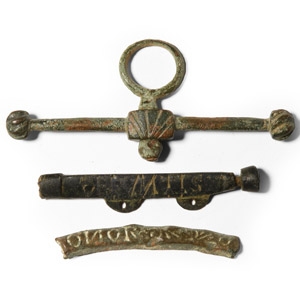
Medieval Purse Bar with 'Praise be to God, peace to the living and rest to the dead' and Fragment Group
14th-15th century A.D.Sold for (Inc. bp): £59
One complete purse bar with linear ornament and swivel hoop; one purse bar arm with attachment lugs and inscription to both faces, part of: 'DEFVNTIS' '[LAVS DEO]'; possibly a version of 'Laus deo pax vivis requies defunctis', or 'Praise be to God, peace to the living and rest to the dead'; a carinated fragment inscribed 'ONOR' (the N retrograde), amidst flowering tendrils, part of the common inscription 'SOLI DEO HONOR ET GLORIA' [Honour and glory be to God only], from 1 Timothy, v.17. 63 grams total, 62-98 mm
Acquired on the UK market, 1990s. Property of a retired academic. -
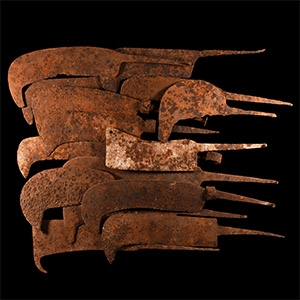
Medieval Iron Cleaver Group
15th-17th century A.D.Estimate: £150 - 200 (+bp*)
Opening Bid: £75
Comprising hook-ended examples together with one square-ended example. 8 kg total, 25-48 cm
Acquired 1990s-early 2000s. East Anglian private collection.
During the Roman period chopping tools such as cleavers were predominantly used whilst during the medieval period knives and cleavers were the preferred tools for butchering carcasses. Cleavers were also often depicted in medieval art as having riveted handles. Such handles made a cleaver more durable, whilst using steel as a component of the blade made it last longer.
