
Loading, please wait...
LOT 1705
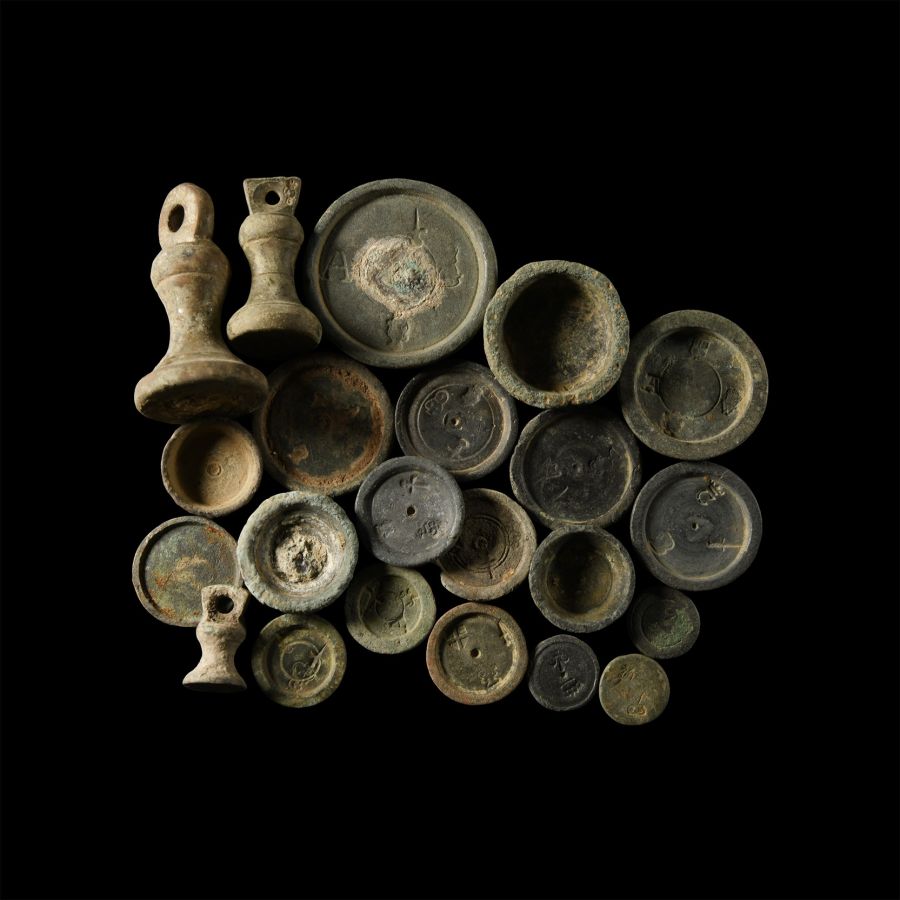
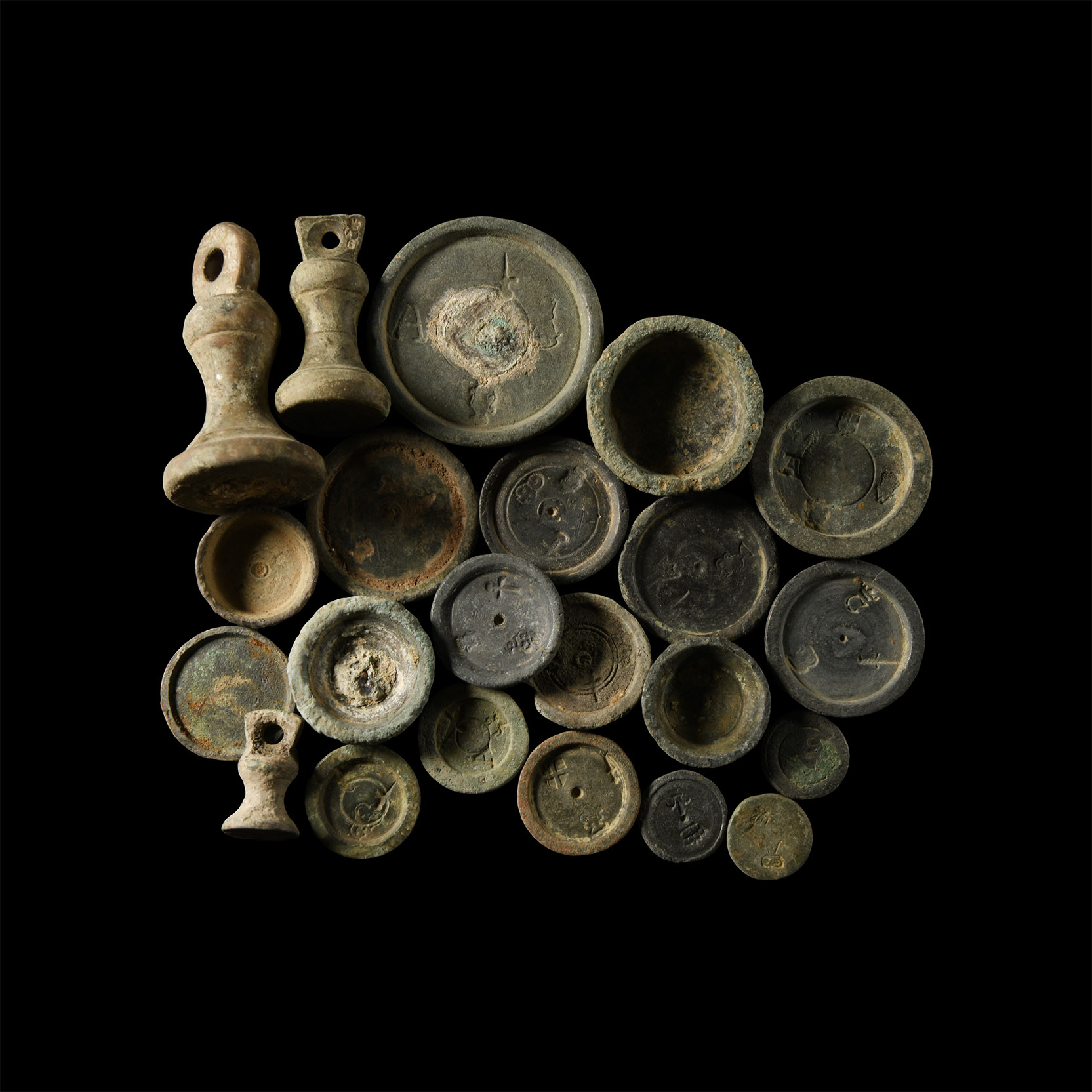
Medieval and Later Bronze Trade Weight Collection
CIRCA 15TH-18TH CENTURY A.D.
1/2 - 1 3/4 in. (330 grams total, 14-45 mm).
Including 'cup', discoid and handled types, some displaying lettering, numerals and symbols. [22, No Reserve]
ProvenanceFound Berkshire, UK.
CONDITIONTimeLine Auctions follows a vetting process to ensure the authenticity and legality of all items, reinforcing our commitment to integrity and responsible trading. Each antiquity, antique, and coin lot undergoes thorough examination by a vetting committee of at least ten external specialists, professional trade association members, scientists, and archaeologists: Our Vetting Process
AUCTIONS:
TimeLine is a leading auction house specialising in antiquities, ancient art, collectables, natural history, coins, medals, and books. Our auctions offer museums, collectors, historians, and enthusiasts the opportunity to acquire unique and historically significant pieces.
-
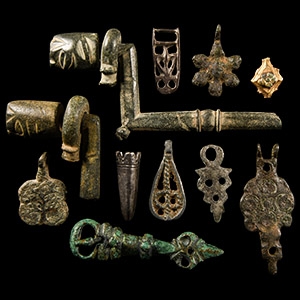
Medieval Bronze and Silver Artefact Group
14th-15th century A.D.Sold for (Inc. bp): £59
Comprising: a number of clothes fasteners, including openwork examples; a gilt fitting; a chape with triangular cross-section, scallopped lip and incised ornament; buckle and zoomorphic terminals. 12.7 grams total, 15-84 mm
From the Sullivan family collection, UK; acquired since 2003. -
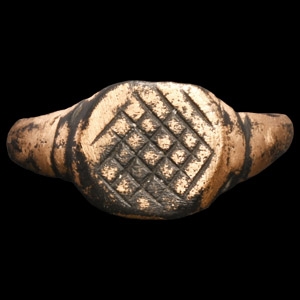
Medieval Bronze Ring with Hatched Bezel
Circa 15th-16th century A.D.Sold for (Inc. bp): £26
With bands to the shoulders and hatching on the bezel. 2.60 grams, 20.87 mm overall, 17.95 mm internal diameter (approximate size British O 1/2, USA 7 1/4, Europe 15.61, Japan 15)
Acquired 1970s-1980s. From the private collection of an Essex, UK, gentleman. Ex private Merseyside, UK, collection. -
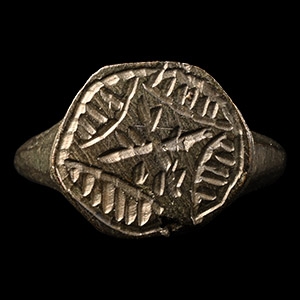
Medieval Bronze Ring with Cross
14th-16th century A.D.Sold for (Inc. bp): £65
The angled hoop with slightly expanded shoulders with facets, six-sided bezel engraved with a central cross within a lozengiform plaque, dashes populating the outer quarters. 8.28 grams, 24.15 mm overall, 18.64 mm internal diameter (approximate size British P, USA 7 1/2, Europe 16.23, Japan 15)
Private collection formed since the 1940s. UK art market. Property of an Essex gentleman.
