
Loading, please wait...
LOT 1753
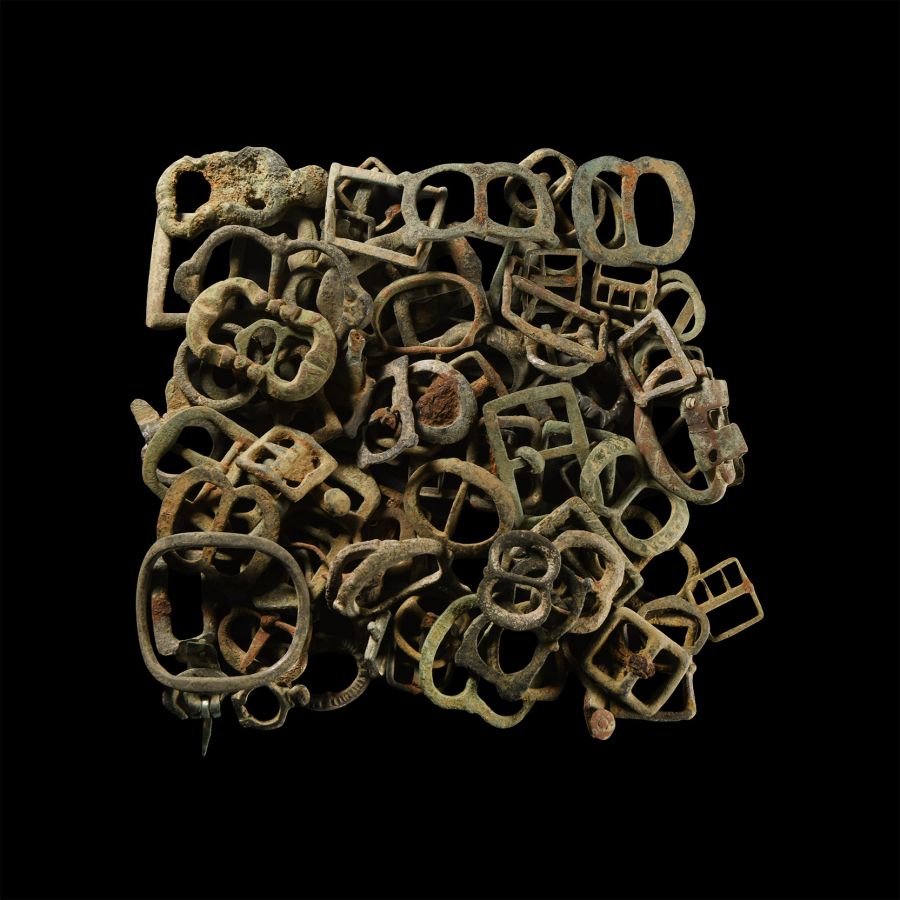
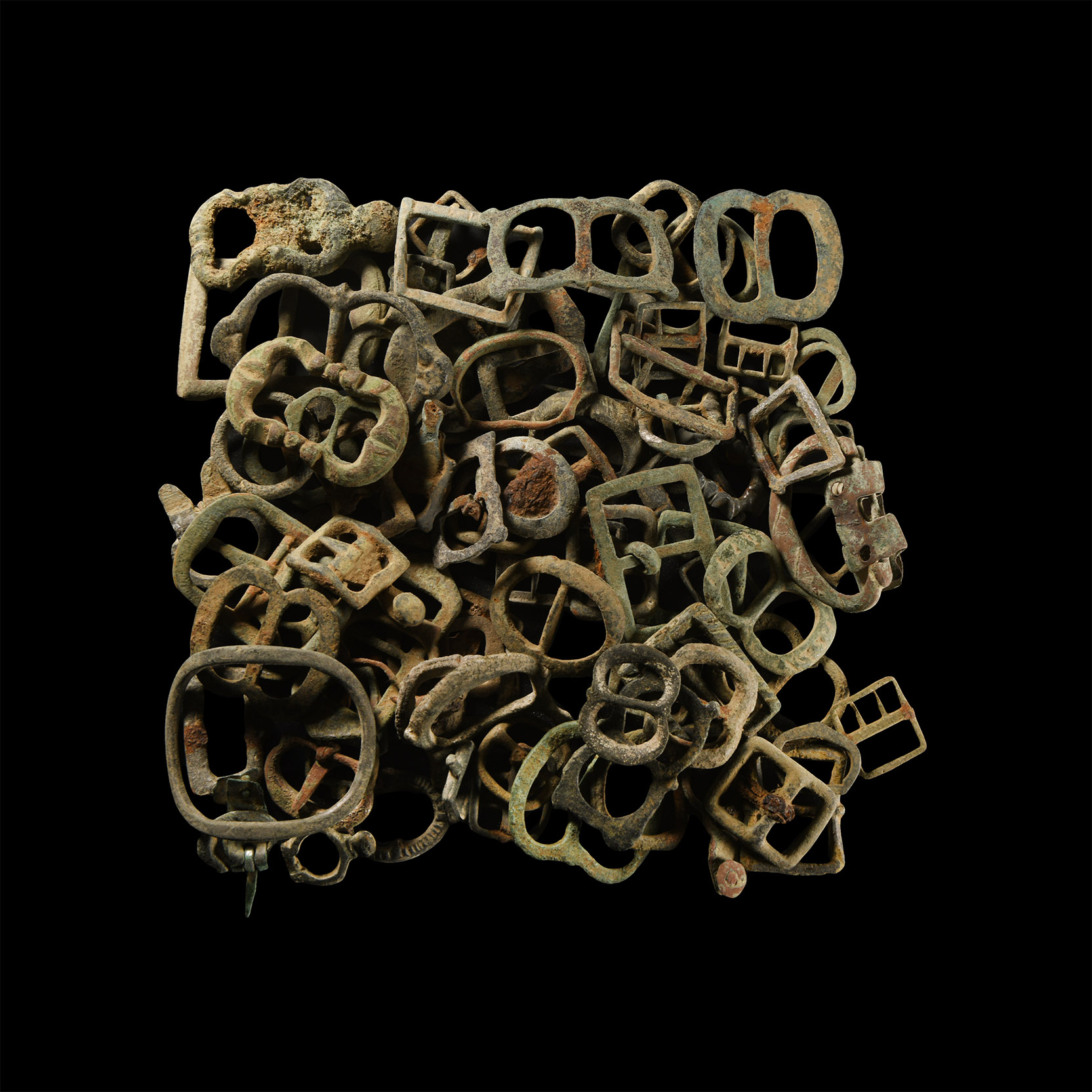
Medieval and Later Bronze Buckle Collection
CIRCA 12TH-20TH CENTURY A.D.
3/8 - 1 5/8 in. (316 grams total, 11-42 mm).
Comprising a variety of types and sizes from various time periods; including decoratively shaped examples. [91, No Reserve]
ProvenanceFound Berkshire, UK.
CONDITIONTimeLine Auctions follows a vetting process to ensure the authenticity and legality of all items, reinforcing our commitment to integrity and responsible trading. Each antiquity, antique, and coin lot undergoes thorough examination by a vetting committee of at least ten external specialists, professional trade association members, scientists, and archaeologists: Our Vetting Process
AUCTIONS:
TimeLine is a leading auction house specialising in antiquities, ancient art, collectables, natural history, coins, medals, and books. Our auctions offer museums, collectors, historians, and enthusiasts the opportunity to acquire unique and historically significant pieces.
-
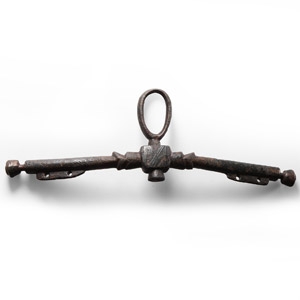
Medieval Niello Inlaid Bronze Purse Bar
15th-16th century A.D.Estimate: £180 - 240 (+bp*)
Opening Bid: £60
Classified as a Williams Class A1 with rectangular central section, two expanding round-section arms with devolved gripping animal heads projecting from the central section; pierced attachment lobes below the arms; articulate central swivel; niello-inlaid double crisscross motif to arms and central section of both faces. 95.9 grams, 17 cm
Ex property of a Kent gentleman; found Romney Marsh area, Kent, UK, 1990-2015. Property of a Buckinghamshire, UK, gentleman. -
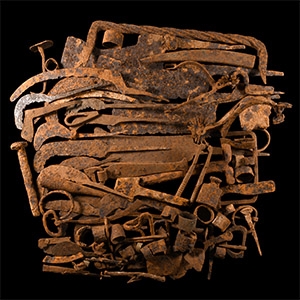
Medieval Iron Artefact Group
14th-16th century A.D.Sold for (Inc. bp): £65
Composed of tools, fittings, cleavers, sickles, spurs, rowels and various other miscellaneous artefacts. 5.9 kg total, 15-35.5 cm
Acquired 1990s-early 2000s. East Anglian private collection.
The spurs in this group can be identified and chronologically dated due to the multipoint rowels, which are typical of mid-late 15th century A.D. The rapid development of the armour in 15th century did not influence the trend for necks of rowel-spurs to considerably increase in length, a style which persisted well into the first half of 16th century A.D. -
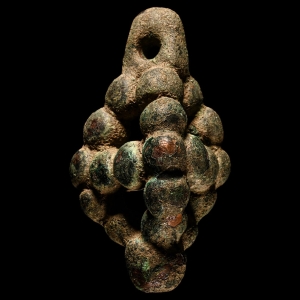
Medieval Bronze Ecclesiastical Cage Pendant
Circa 13th-15th century A.D.Sold for (Inc. bp): £39
Of dipyramid form, a suspension loop to the apex and bulb to the foot, the sides formed from conjoined bulbs. 32.3 grams, 42 mm
Acquired on the UK art market. Property of a Ruislip, UK, gentleman, by inheritance.
