
Loading, please wait...
LOT 1584
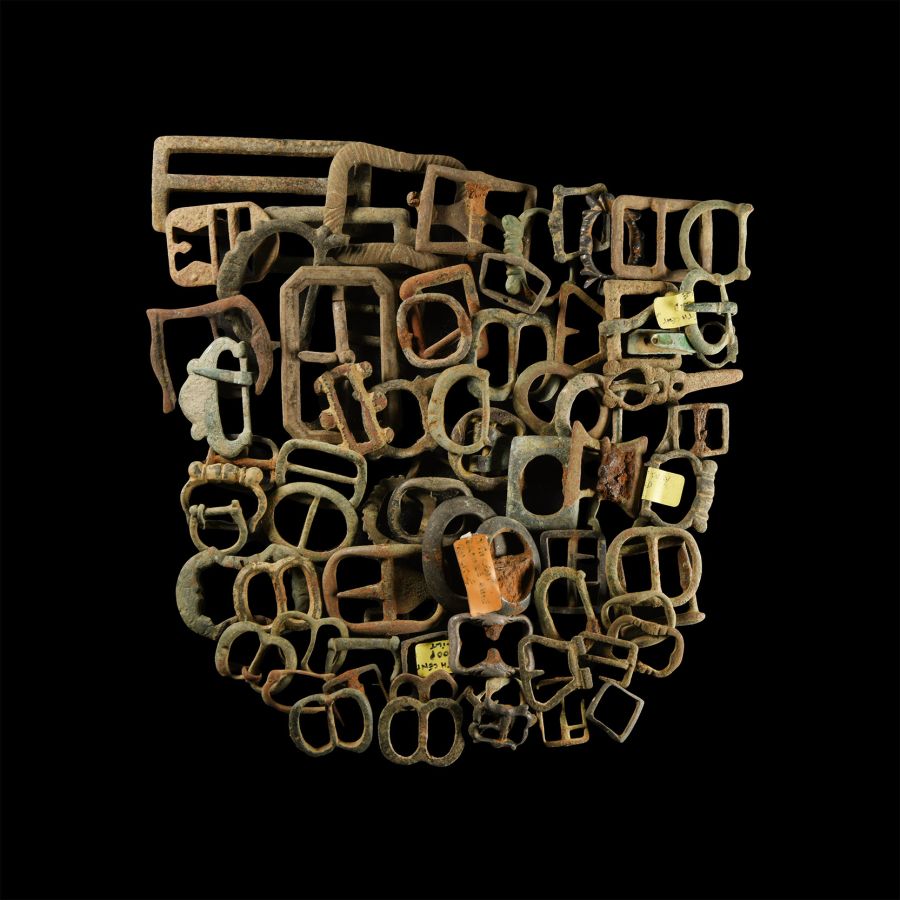
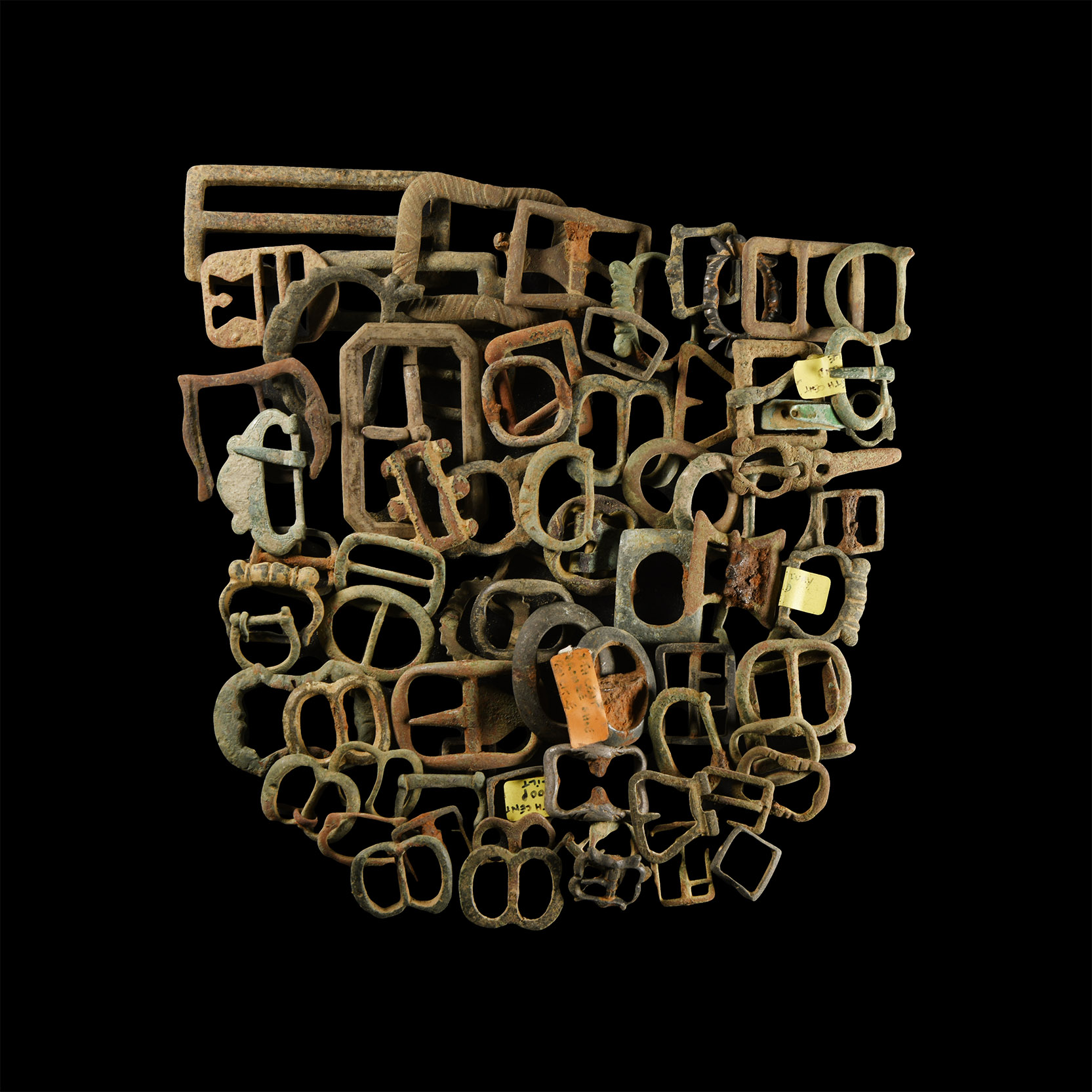
Medieval and Later Bronze Buckle Collection
CIRCA 12TH-20TH CENTURY A.D.
1/2 - 2 3/8 in. (306 grams total, 13-61 mm).
Comprising a variety buckle types and sizes from a broad range of time periods, including examples with trace remains of gilding; decoratively shaped and incised examples; together with a small number retaining their tongues or straps. [72, No Reserve]
ProvenanceFound Berkshire, UK.
CONDITIONTimeLine Auctions follows a vetting process to ensure the authenticity and legality of all items, reinforcing our commitment to integrity and responsible trading. Each antiquity, antique, and coin lot undergoes thorough examination by a vetting committee of at least ten external specialists, professional trade association members, scientists, and archaeologists: Our Vetting Process
AUCTIONS:
TimeLine is a leading auction house specialising in antiquities, ancient art, collectables, natural history, coins, medals, and books. Our auctions offer museums, collectors, historians, and enthusiasts the opportunity to acquire unique and historically significant pieces.
-
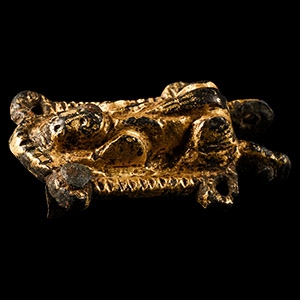
Medieval Gilt Bronze Knight's Horse Harness Hanger with Lion
12th-14th century A.D.Estimate: £200 - 300 (+bp*)
Opening Bid: £80
The lion in high-relief, lying along the pendant with its head resting on its front paws, lug to each corner with rivet hole, two pierced lugs to top edge for suspension bar, decoratively notched edges, extensive remains of gilding. 30 grams, 30 mm
Acquired early 1990s. From an East Anglian private collection. -
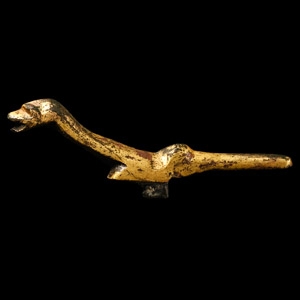
Romanesque Gilt Bronze Beast Mount
11th century A.D.Sold for (Inc. bp): £117
Modelled in the round beast mount with gaping mouth and bulging eyes, attachment lug to underside. 9.2 grams, 51 mm
‘The Ancient Menagerie Collection’ formerly the property of a Cambridgeshire lady, collected since the 1990s and acquired from auctions and dealers throughout Europe and the USA, now ex London collection. -
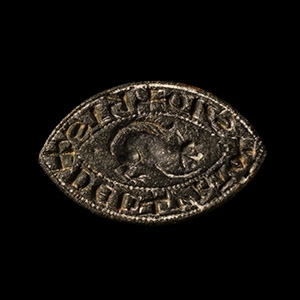
Medieval 'Temple Bruer' Bronze Personal Seal Matrix of John of DUHTO with Templar Crosses
1200-1300 A.D.Sold for (Inc. bp): £1,950
Of vesica shape and bearing the central device of a crouching squirrel with tail raised over its back and inscribed incuse and reversed +S'IO+h'IS+DE D+VhTO which may be interpreted as Seal of John of Duhto [an uncertain place or abbreviation of a place name]; the presence of multiple crosses within the inscription which do not appear to divide words is unusual; with raised loop to the reverse. 5.79 grams, 25 mm
Found whilst searching with a metal detector in the former grounds of the preceptory at Temple Bruer with Temple High Grange, Lincolnshire, UK, by Steve Lane at 1pm on Sunday 5th February 2023. Accompanied by a copy of the British Museum's Portable Antiquities Scheme report reference SWYOR-17DA60.
Vesica-shaped seal matrices are often associated with the clergy or others with religious connections so this matrix could be directly associated with the Knights Templar preceptory at Temple Bruer (founded in reign of Henry II) where it was found, or with a Templar visitor there; the appearance of four crosses to the inscription, in place of the more usual single cross at the start/finish of the wording (in this case at the head of the squirrel), is unusual and may be linked to the particular significance of crosses to the Knights Templar members.
