
Loading, please wait...

LOT 1791
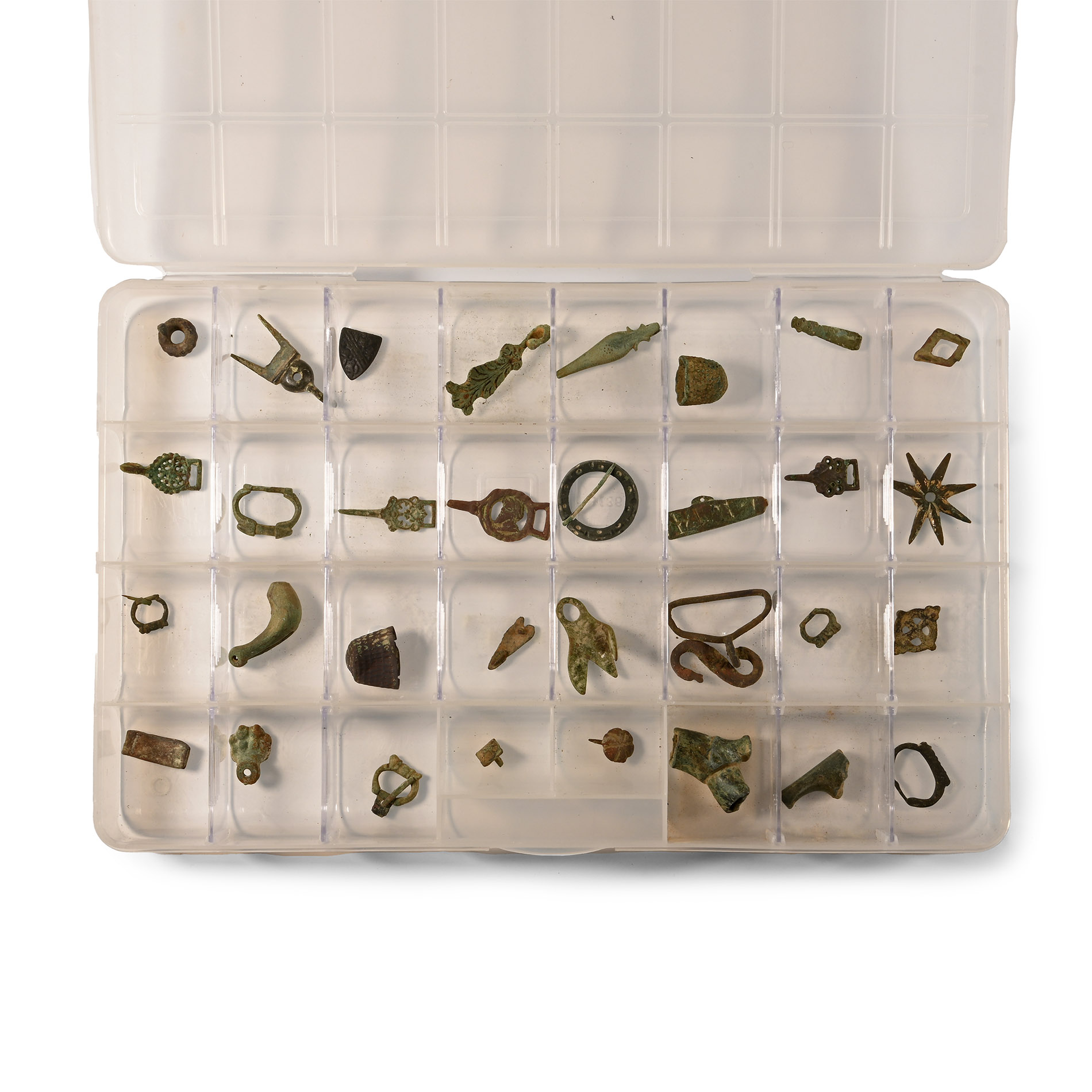
Medieval and Later Bronze Artefact Collection
13TH-16TH CENTURY A.D.
13 3/4 x 8 5/8 in. (583 grams total, 35 x 22 cm including box).
Including bronze hooked tags, spur rowel, buckle frame and other items. [32, No Reserve]
ProvenanceEx Stocker collection, Kent, UK, 1955-early 2000s.
CONDITIONTimeLine Auctions follows a vetting process to ensure the authenticity and legality of all items, reinforcing our commitment to integrity and responsible trading. Each antiquity, antique, and coin lot undergoes thorough examination by a vetting committee of at least ten external specialists, professional trade association members, scientists, and archaeologists: Our Vetting Process
AUCTIONS:
TimeLine is a leading auction house specialising in antiquities, ancient art, collectables, natural history, coins, medals, and books. Our auctions offer museums, collectors, historians, and enthusiasts the opportunity to acquire unique and historically significant pieces.
-
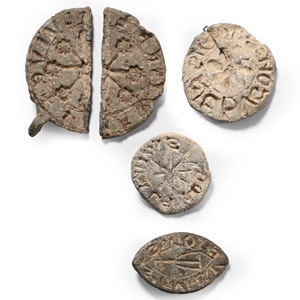
Medieval Lead Seal Matrix Group
12th-14th century A.D.Sold for (Inc. bp): £39
Including disc and vesica types with impressed legends and symbols, the bottom matrix reading 'S’ GVNN’ F’ IOhIS' (seal of Gunnar son of John), possibly of Scandinavian origin based on the first name. 47 grams total, 22-37 mm
Ex Stocker collection, Kent, UK, 1955-early 2000s. -
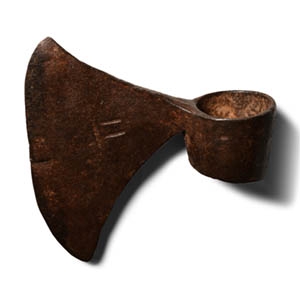
Medieval Iron Broad Axehead
Circa 14th-16th century A.D. or laterSold for (Inc. bp): £26
With circular socket, narrow neck and broad curved blade. 199 grams, 11.5 cm
Ex North American collection, 1970s-1990s. -
.jpg)
Medieval Bronze Seal Matrix of John Neiruit, Judge Serving in King John's Court
13th century A.D.Sold for (Inc. bp): £234
With oval body and suspension loop to the base, central device a running stag, bearing a legend reading '* S'Iohannis Neirnvt' for 'seal of John Neirnuit' of the the royal council. 9.34 grams, 33 mm
Found on Inhust Farm, Baughurst, Hampshire, UK. From the collection of a Caerphilly, UK, gentleman formed since 1990. Accompanied by a copy of a museum report with reference no.NMGWPA 2008 (SU 570 612).
