
Loading, please wait...
LOT 1566
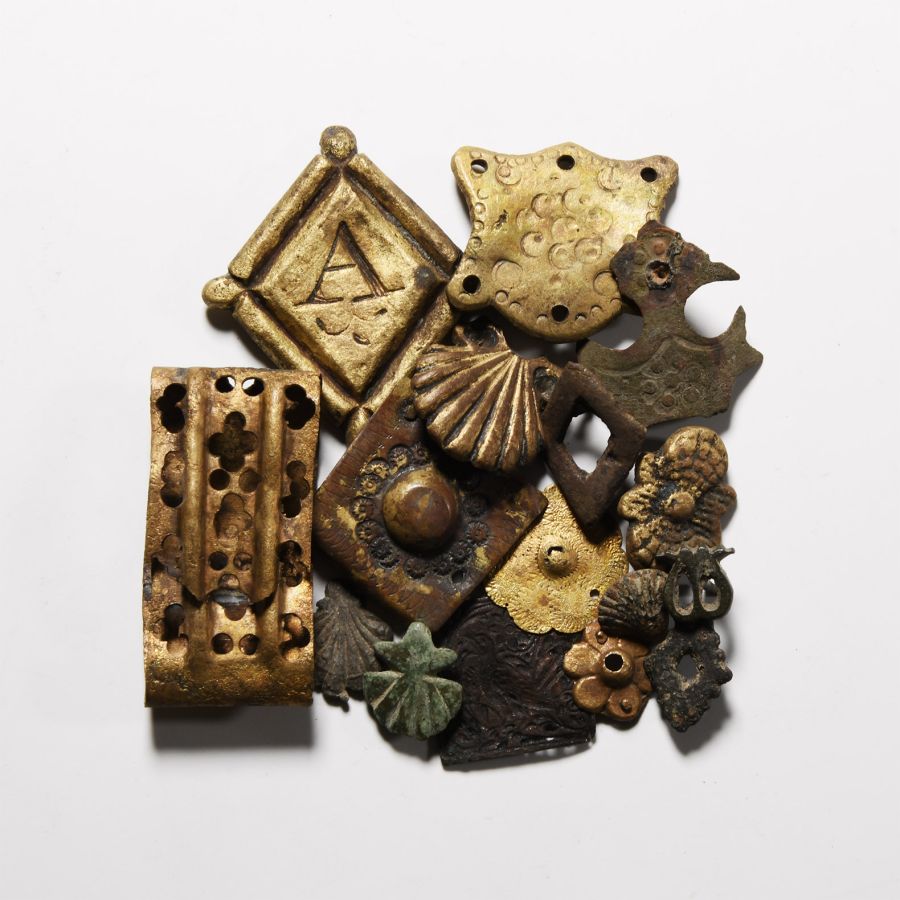
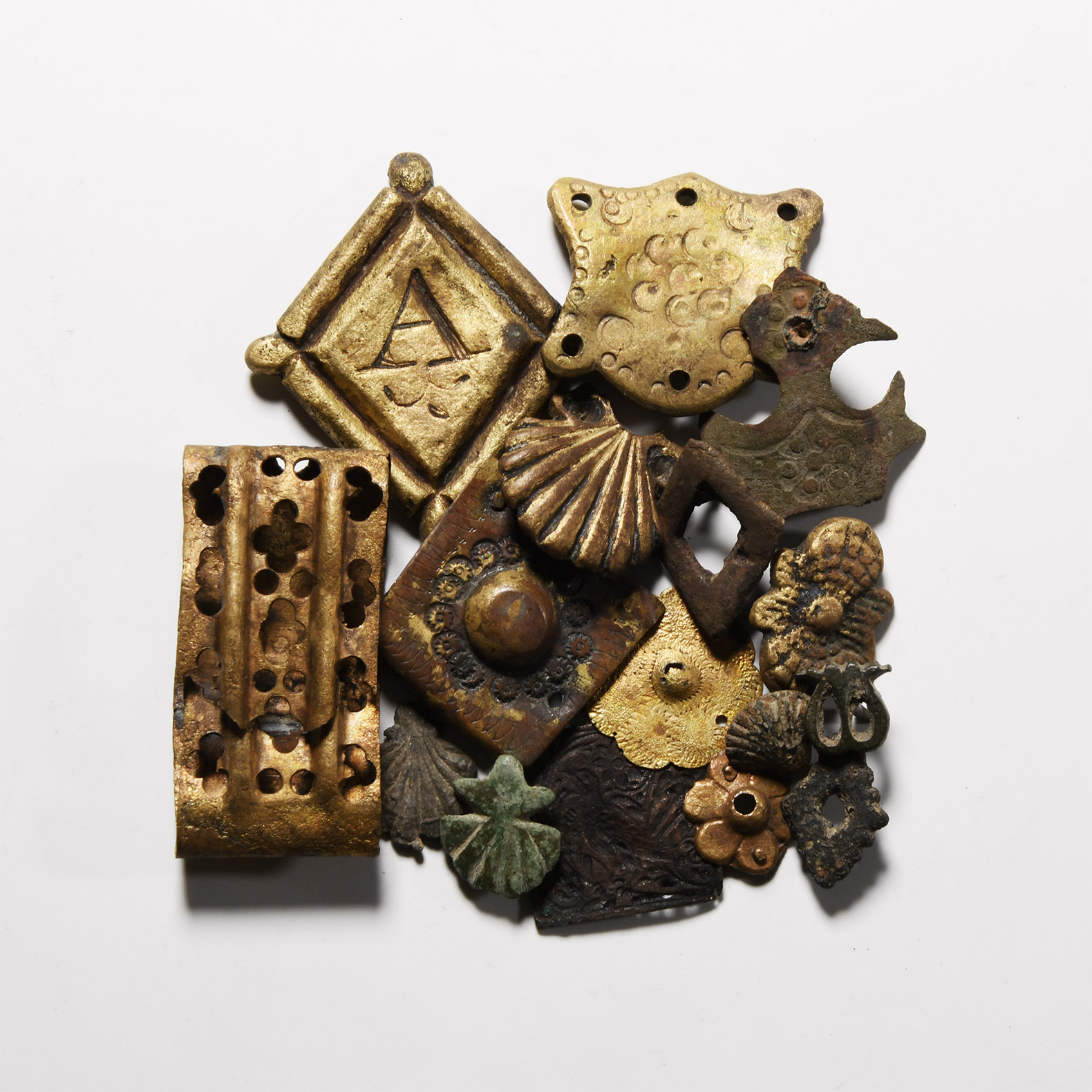
Medieval and Later Belt Mount Group
MAINLY 14TH-18TH CENTURY A.D.
3/8 - 1 7/8 in. (70 grams total, 11-47 mm).
Comprising mounts of various types, including examples retaining gilding: a 13th-15th century Lombardic letter M, for 'Maria'; a 16th-17th century lozenge displaying letter A with floral dashes below; numerous stylised flower-shaped mounts and flower decorated mounts; various shell-shaped mounts, possibly associated with pilgrimage; a squashed 'hoop' with floral piercings to one face; a square plaque displaying a bird amongst flowering tendrils. [16, No Reserve]
ProvenanceFound Thames foreshore, Tower of London, UK.
Accompanied by a copy of the British Museum's Portable Antiquities Scheme (PAS) report numbers LON-33F3F4; LON-45DA48.
TimeLine Auctions follows a vetting process to ensure the authenticity and legality of all items, reinforcing our commitment to integrity and responsible trading. Each antiquity, antique, and coin lot undergoes thorough examination by a vetting committee of at least ten external specialists, professional trade association members, scientists, and archaeologists: Our Vetting Process
AUCTIONS:
TimeLine is a leading auction house specialising in antiquities, ancient art, collectables, natural history, coins, medals, and books. Our auctions offer museums, collectors, historians, and enthusiasts the opportunity to acquire unique and historically significant pieces.
-
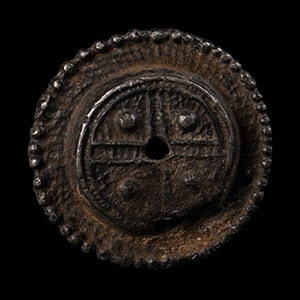
Medieval Pewter Pilgrim's Badge with Voided Cross and Pellets
14th-15th century A.D.Sold for (Inc. bp): £65
Hatched flange rim with border of pellets, raised body pierced at centre and close to rim. 7.31 grams, 31 mm
From the collection of a North American gentleman, formed in the 1990s.
The medallic form of badge appears to develop during the 15th century. The symbols of the straight cross and annulets are already visible in tokens from London. During the medieval period, pewter and leaden tokens probably served a common purpose throughout England, France and the Low Countries. -
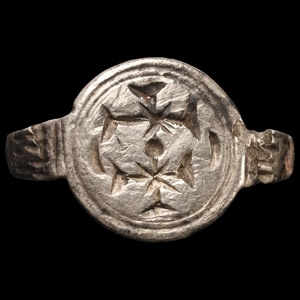
Medieval Silver Ring with Crosses
Circa 14th century A.D.Sold for (Inc. bp): £105
Engraved with two crosses fourchée within a circular frame, flanking crescents. 2.36 grams, 22.74mm overall, 20.30mm internal diameter (approximate size British R 1/2, USA 8 3/4, Europe 19.38, Japan 18)
English collection, 1980s. Acquired on the UK art market. Ex property of an Essex gentleman. Ex private Merseyside, UK, collection.
The use of seals became more and more essential during the time when the majority of the population was illiterate; the use of signet rings continued until after the fall of Rome in the West. With the establishment of heraldry, the armorial signet was generally adopted by all those entitled to bear arms. A considerable proportion of medieval rings were signets, with portraits, names or monograms, and emblems such as the cross, most of these having the designs cut in a metal bezel. -
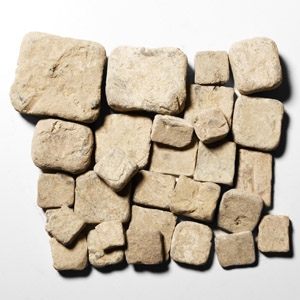
Medieval and Other Lead Tabular Weight Collection
Circa 15th century A.D. and laterSold for (Inc. bp): £20
Weights of various sizes of mainly square, rectangular and cuboid form. 1.16 kg total, 12-47 mm
Acquired on the UK art market. Property of a Ruislip, UK, gentleman, by inheritance.
