
Loading, please wait...
LOT 1395
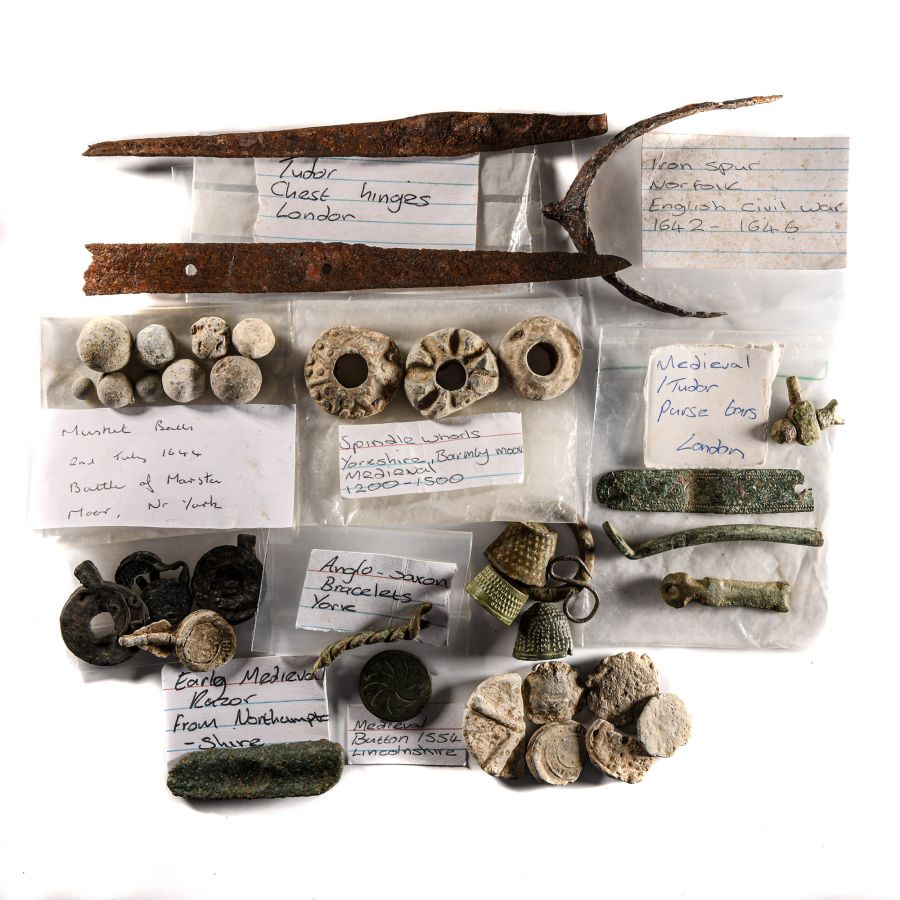
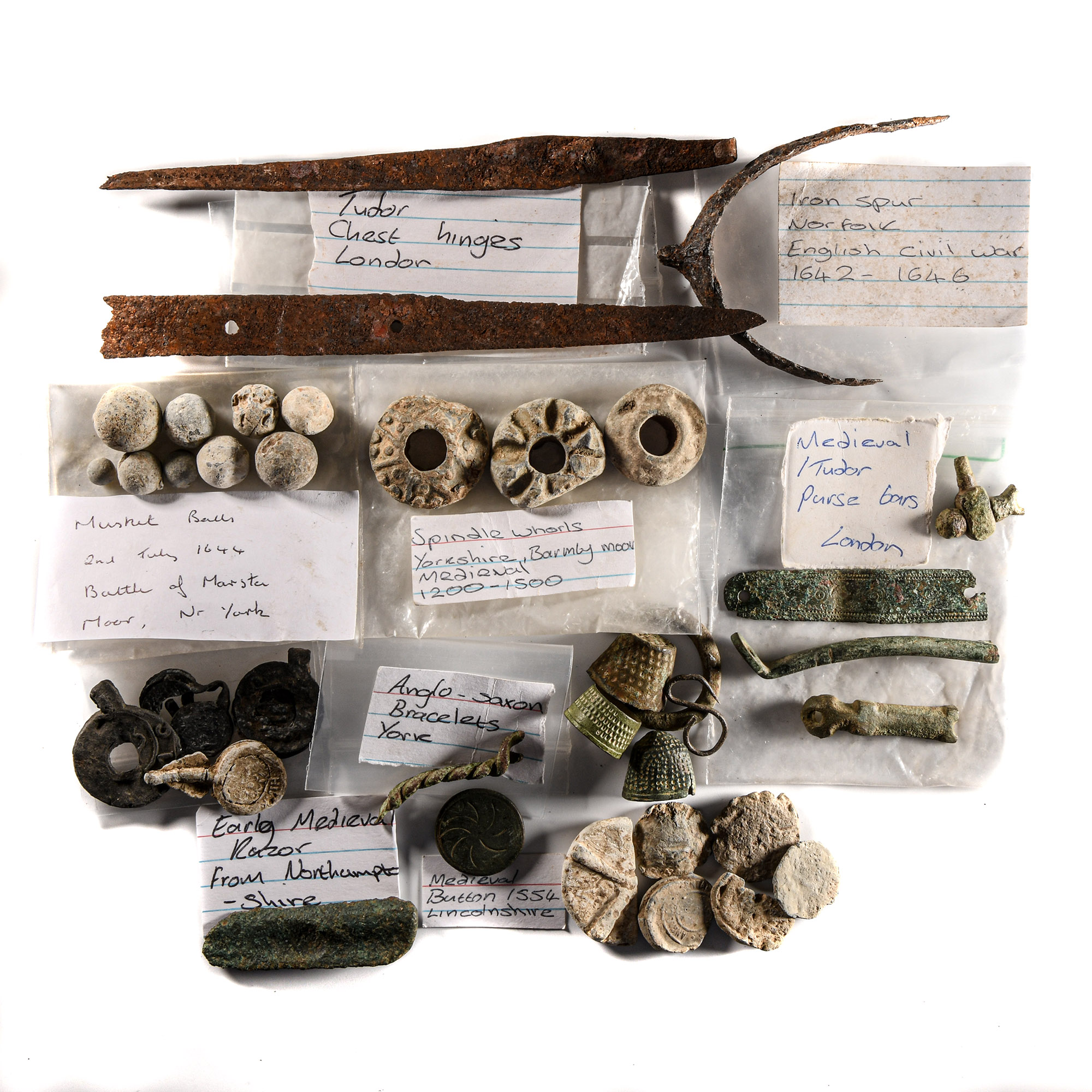
Medieval and Later Artefact Group
CIRCA 15TH-20TH CENTURY A.D.
1/4 - 6 1/2 in. (510 grams total, 0.6-16.5 cm).
Mixed group including lead-alloy spindlewhorls, bag-seals, musket balls, iron knife-blades and other items. [38, No Reserve]
ProvenanceFrom a Northampton, UK, collector.
CONDITIONTimeLine Auctions follows a vetting process to ensure the authenticity and legality of all items, reinforcing our commitment to integrity and responsible trading. Each antiquity, antique, and coin lot undergoes thorough examination by a vetting committee of at least ten external specialists, professional trade association members, scientists, and archaeologists: Our Vetting Process
AUCTIONS:
TimeLine is a leading auction house specialising in antiquities, ancient art, collectables, natural history, coins, medals, and books. Our auctions offer museums, collectors, historians, and enthusiasts the opportunity to acquire unique and historically significant pieces.
-
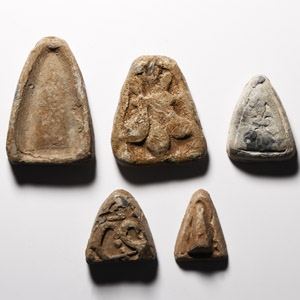
Medieval Lead Weight Collection
13th-15th century A.D.Sold for (Inc. bp): £16
Mixed group of heater-shaped lead-alloy weights, two with fleur-de-lys motif. 774 grams total, 34-62 mm
Ex Simmons Gallery, London E11, UK, in the 1990s. From a North London collection. -
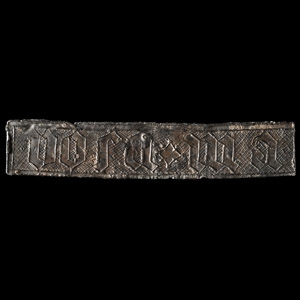
Medieval 'Thames' Pewter Pilgrim's Badge
Circa 14th-15th century A.D.Sold for (Inc. bp): £98
Flat rectangular strip with reserved partial text on a hatched field within a reserved border: 'vora ma[...]'. 2.42 grams, 57 mm
Found Billingsgate spoil from the Thames foreshore, London, UK, circa 1984. Property of an Essex collector. -
.jpg)
Medieval Bronze Round Seal Matrix with I am a Strong Lion
Circa 14th-15th century A.D.Sold for (Inc. bp): £176
Chessman type with tapering shank and trefoil loop above, wire suspension in situ; central lion rampant motif, linear border and legend '* SVM LEO FORTIS' (I am a strong lion). 10.8 grams, 23 mm
Found Southern England. Acquired on the UK art market in the 1980s. From an East Anglian private collection.
