
Loading, please wait...
LOT 1298
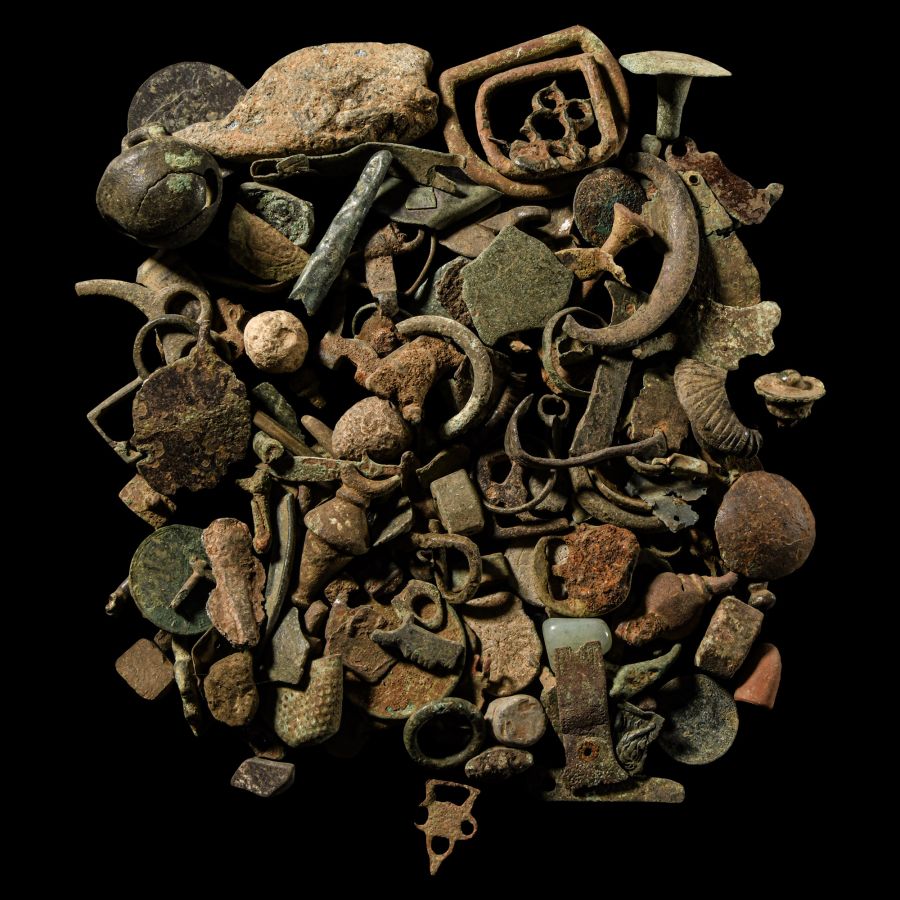
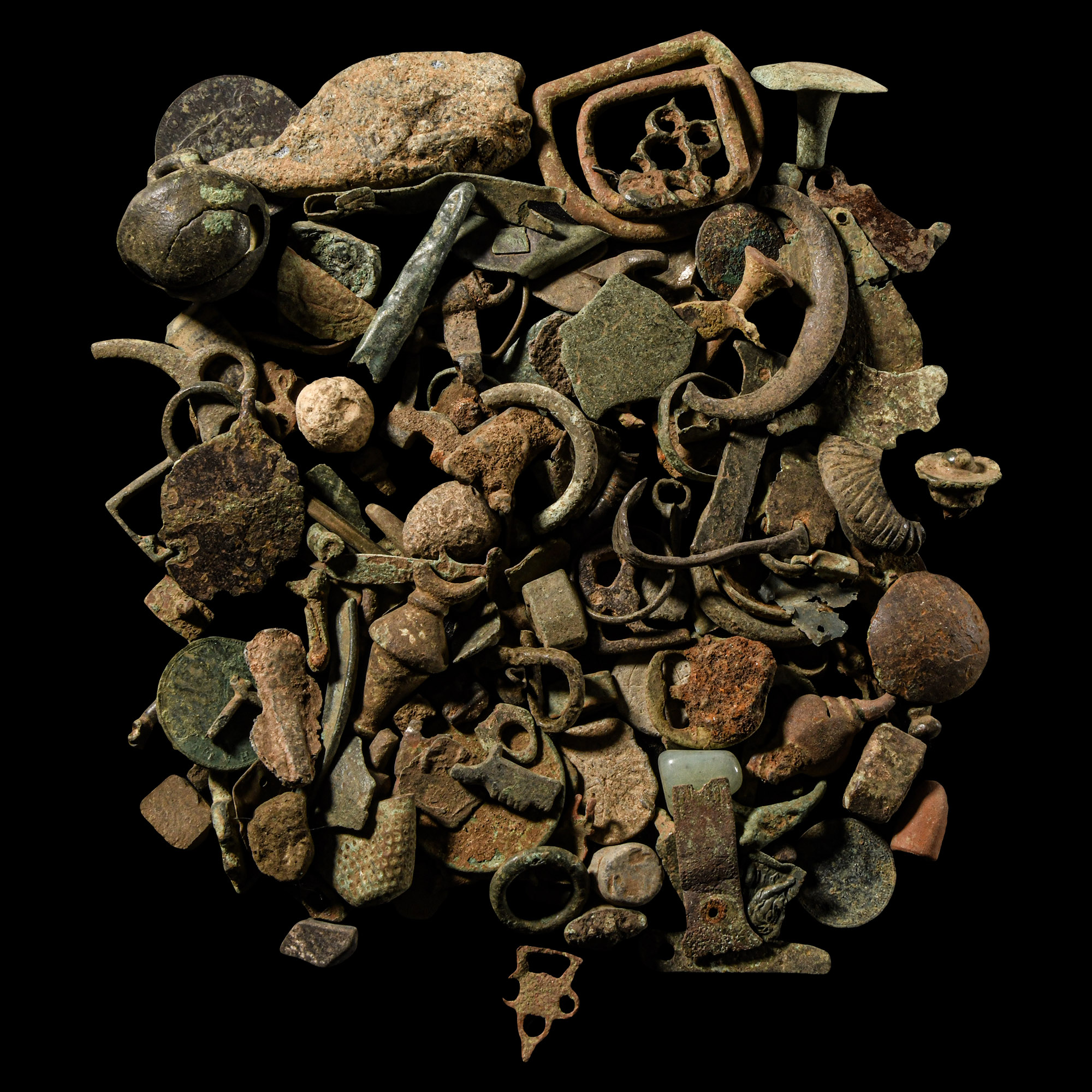
Medieval and Later Artefact Group
CIRCA 12TH-20TH CENTURY A.D.
3/8 - 2 1/2 in. (587 grams total, 11-63 mm).
Comprising a quantity of mixed items, including rings, mounts, thimbles, buttons, coins and other items, most fragmentary. [No Reserve]
ProvenanceFound St Albans, Hertfordshire, UK.
Acquired from the finder in 2008.
Property of a Nottinghamshire gentleman.
TimeLine Auctions follows a vetting process to ensure the authenticity and legality of all items, reinforcing our commitment to integrity and responsible trading. Each antiquity, antique, and coin lot undergoes thorough examination by a vetting committee of at least ten external specialists, professional trade association members, scientists, and archaeologists: Our Vetting Process
AUCTIONS:
TimeLine is a leading auction house specialising in antiquities, ancient art, collectables, natural history, coins, medals, and books. Our auctions offer museums, collectors, historians, and enthusiasts the opportunity to acquire unique and historically significant pieces.
-
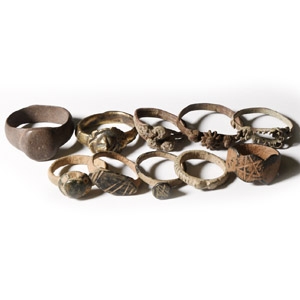
Medieval and Later Bronze Ring Group
Circa 14th-19th century A.D.Sold for (Inc. bp): £130
Mixed group with various decoration including applied rosette, incised pentagram, hatched bands, and other types. 32 grams total, 17-25 mm
Ex North London, UK, gentleman, 1990s-2000s. -
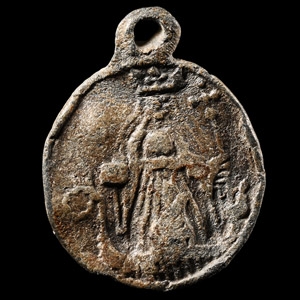
Medieval Lead Pilgrim's Pendant with Saint
Circa 14th-15th century A.D.Sold for (Inc. bp): £117
Obverse with low-relief Christ enthroned holding orb and sceptre, regal crown; reverse with low-relief 'ihs' christogram. 7.21 grams, 32 mm
Found Southern England. Acquired on the UK art market in the 1980s. From an East Anglian private collection. -
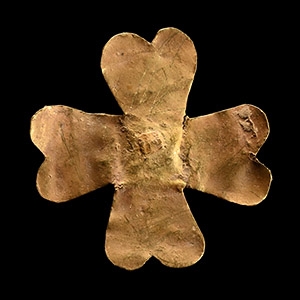
Medieval Gold Floral Cross Pilgrim's Mount
Circa 12th-15th century A.D.Sold for (Inc. bp): £117
In sheet-gold with a loop to the reverse. 0.28 grams, 13 mm
From a late Japanese specialist collector, 1970-2000s.
