
Loading, please wait...
LOT 1406
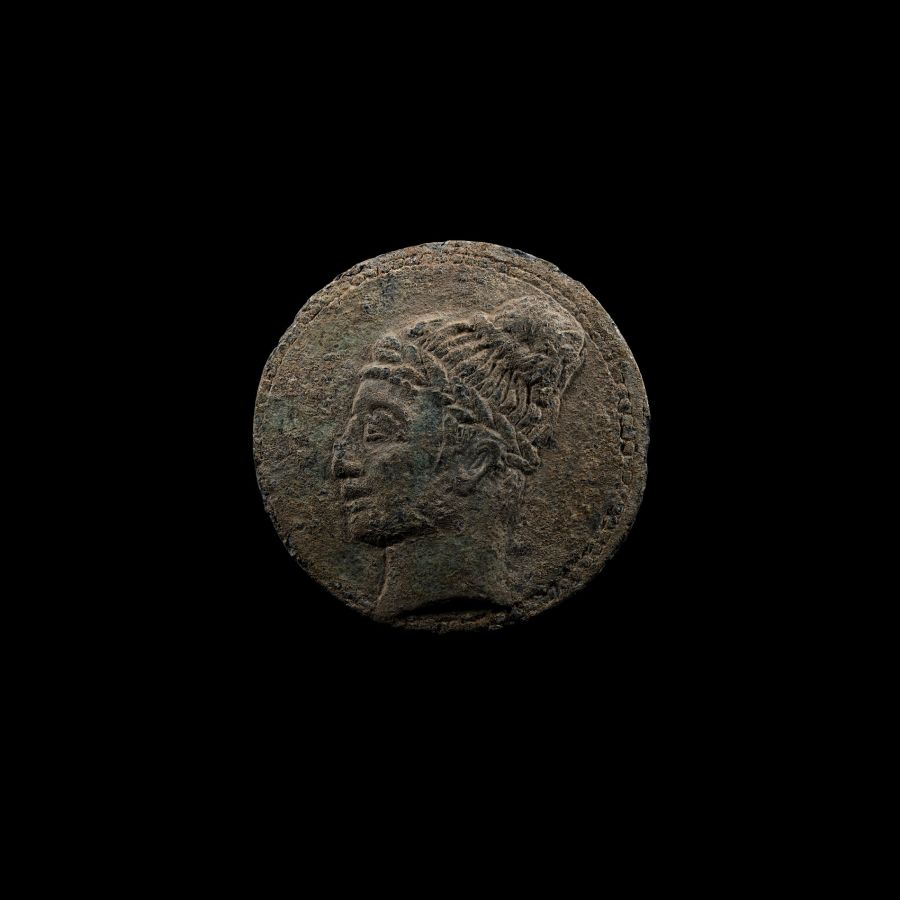
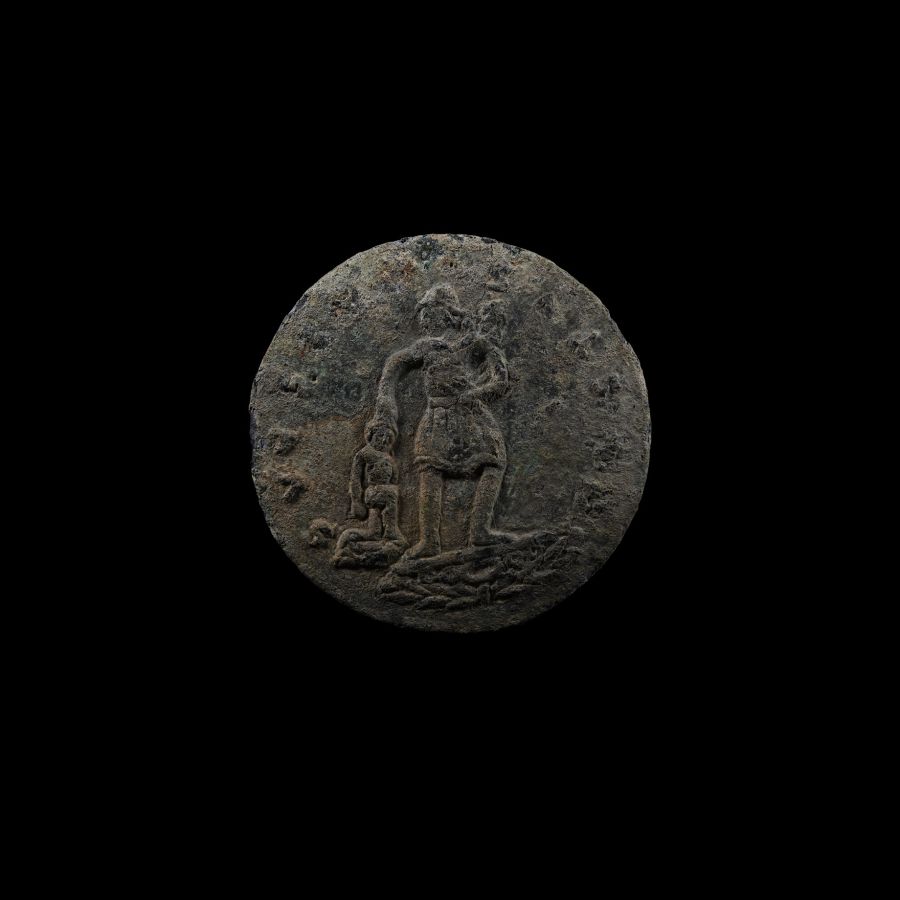
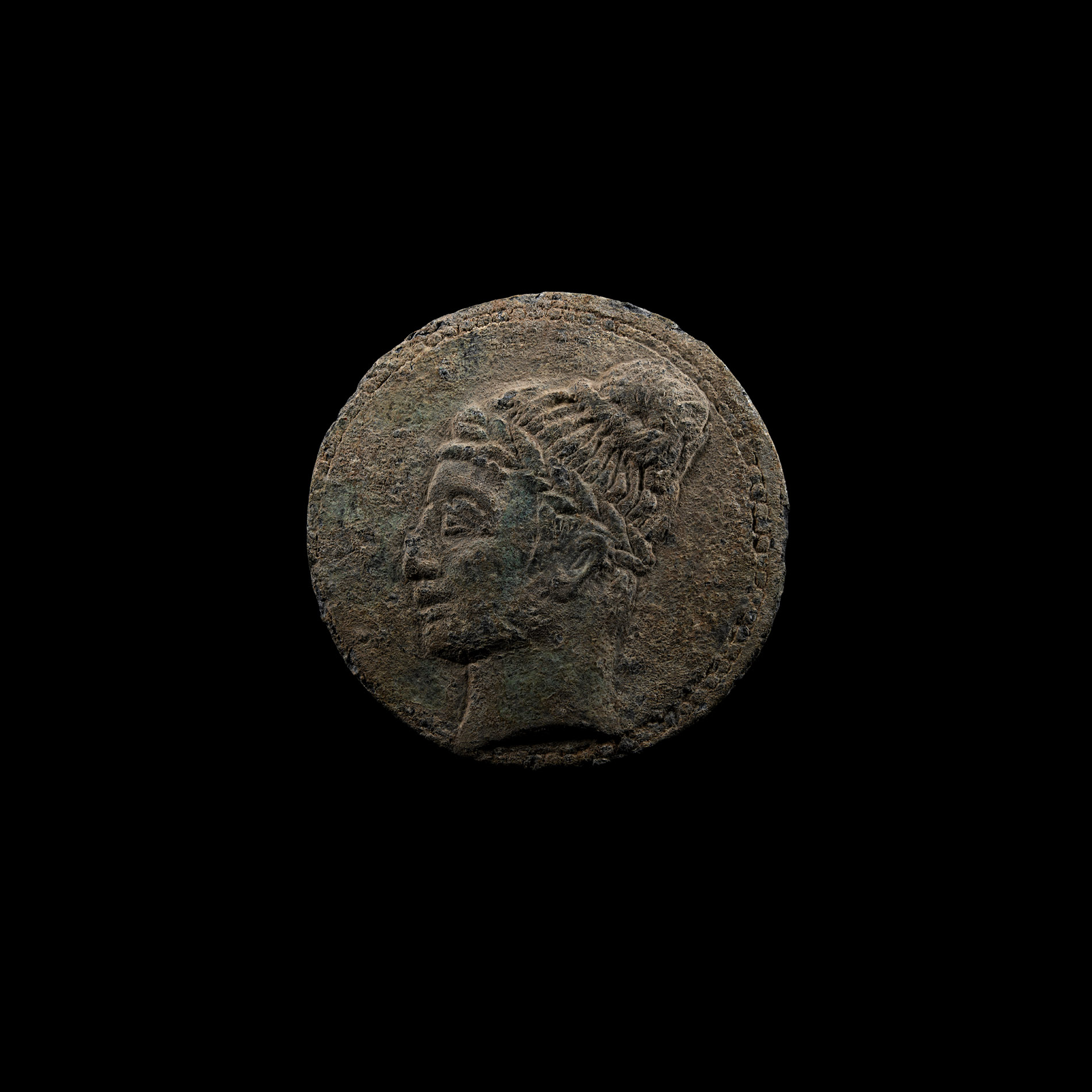
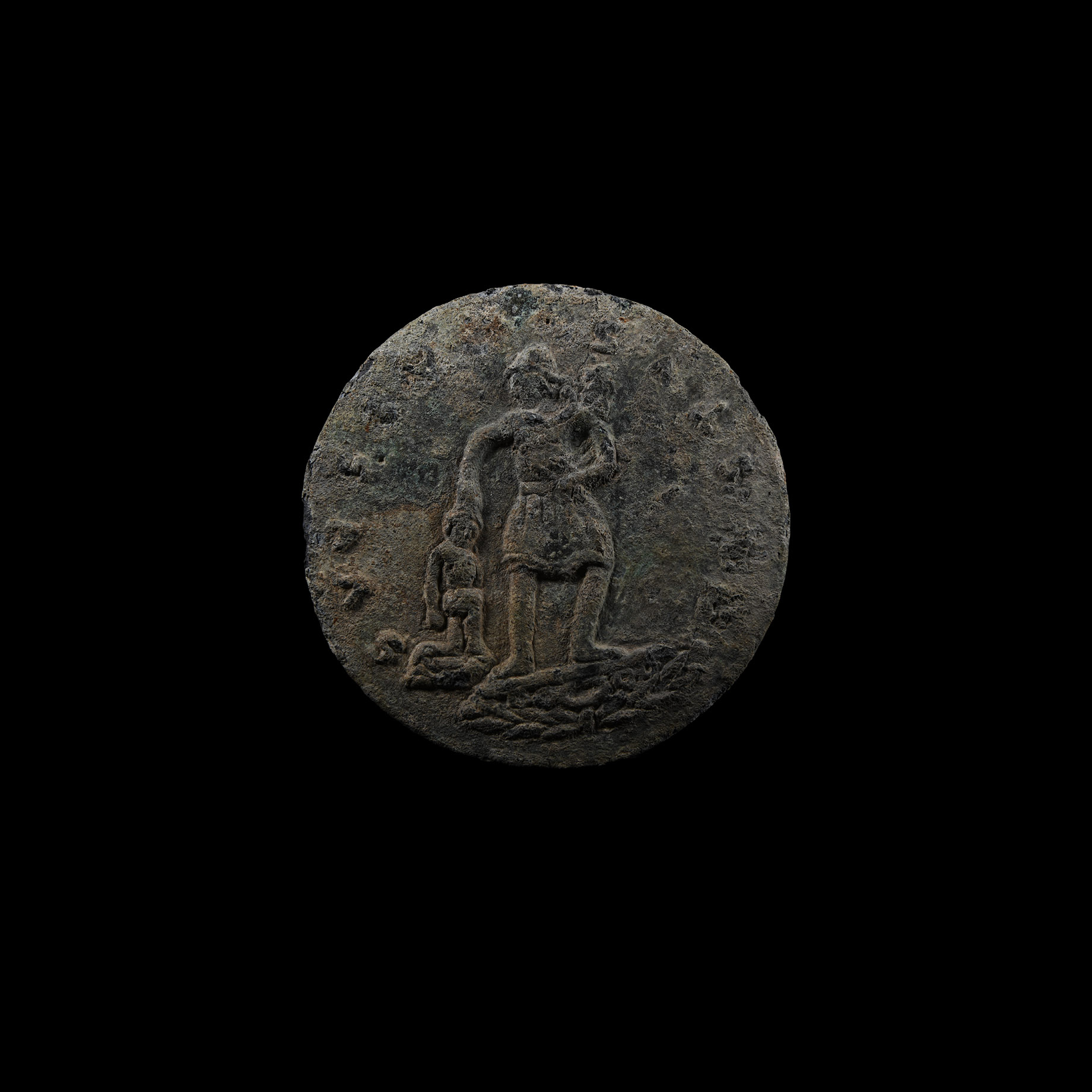
Medallion Featuring a Roman Soldier Dragging a Barbarian
19TH CENTURY A.D.
3 3/4 in. (264 grams, 96 mm wide).
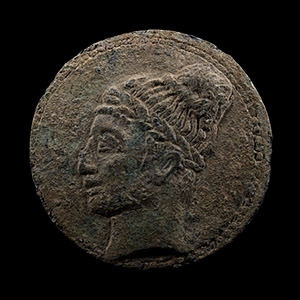
A copper-alloy medallion: obverse depicting a Roman soldier standing on laurel leaves, dragging a barbarian, 'SVVS[ ] SAL S[ ]' legend around; reverse showing bearded male head in profile left, with detailing to hair and face. [No Reserve]
ProvenanceAcquired 1969-1999.
London collection of the late Mr S.M., thence by descent.
TimeLine Auctions follows a vetting process to ensure the authenticity and legality of all items, reinforcing our commitment to integrity and responsible trading. Each antiquity, antique, and coin lot undergoes thorough examination by a vetting committee of at least ten external specialists, professional trade association members, scientists, and archaeologists: Our Vetting Process
AUCTIONS:
TimeLine is a leading auction house specialising in antiquities, ancient art, collectables, natural history, coins, medals, and books. Our auctions offer museums, collectors, historians, and enthusiasts the opportunity to acquire unique and historically significant pieces.
LOT 1406
Medallion Featuring a Roman Soldier Dragging a Barbarian
Sold for (Inc. bp): £111
-
Bronze Head of a Young Male Athlete
19th-20th century A.D.Sold for (Inc. bp): £8,450
A bronze head of a youthful male athlete modelled naturalistically in the round in 1st-2nd century A.D. style. 8.7 kg, 37 cm high
French collection, 1960s-early 2000s. From an important Paris gallery, France. This lot has been checked against the Interpol Database of stolen works of art and is accompanied by search certificate number no.11690-199345. -
Post Medieval Gold 'Let This Vs Tie Vntil We Die' Posy Ring
Circa 18th century A.D.Sold for (Inc. bp): £1,040
A gold posy ring with D-section band, inscribed internally with 'LET THIS VS TI VNTIL WE DI' inscription (let this us tie until we die). 1.66 grams, 17.36 mm overall, 15.61 mm internal diameter (approximate size British I 1/2, USA 4 1/2, Europe 8.07, Japan 7)
Acquired on the UK antiques market between 1974-1985. Albert Ward collection, Essex, UK. -
Medallion Featuring a Roman Soldier Dragging a Barbarian
19th century A.D.Sold for (Inc. bp): £111
A copper-alloy medallion: obverse depicting a Roman soldier standing on laurel leaves, dragging a barbarian, 'SVVS[ ] SAL S[ ]' legend around; reverse showing bearded male head in profile left, with detailing to hair and face. 264 grams, 96 mm wide
Acquired 1969-1999. London collection of the late Mr S.M., thence by descent.
