
Loading, please wait...
LOT 0292
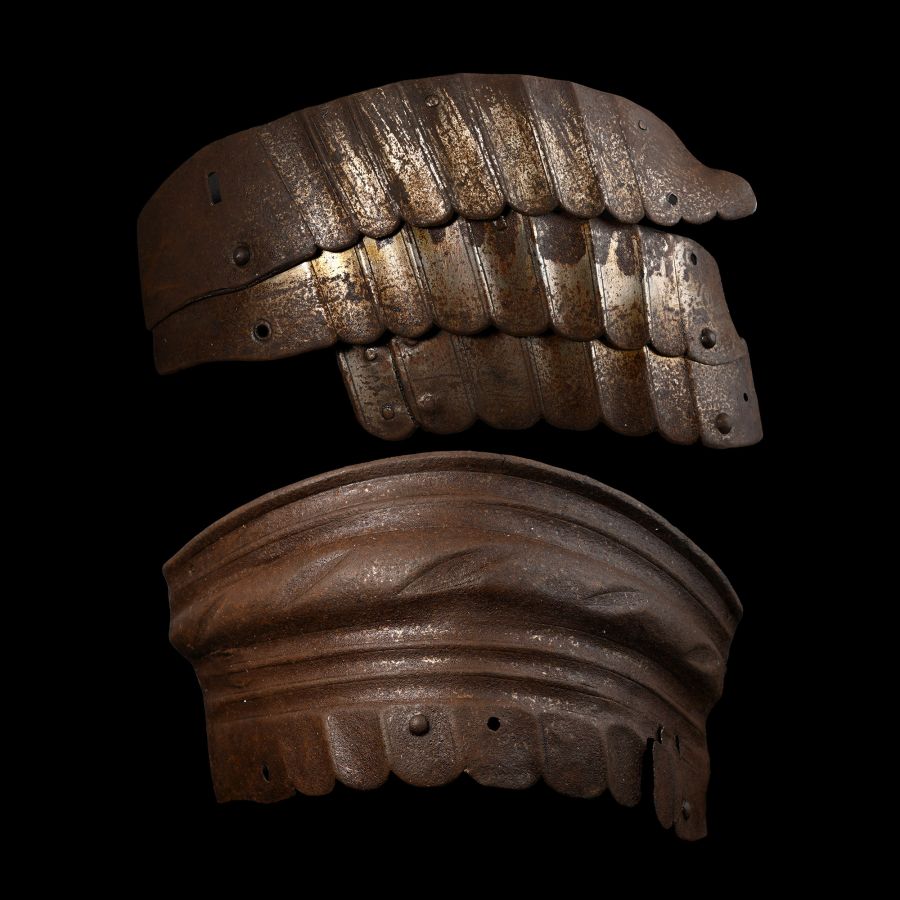
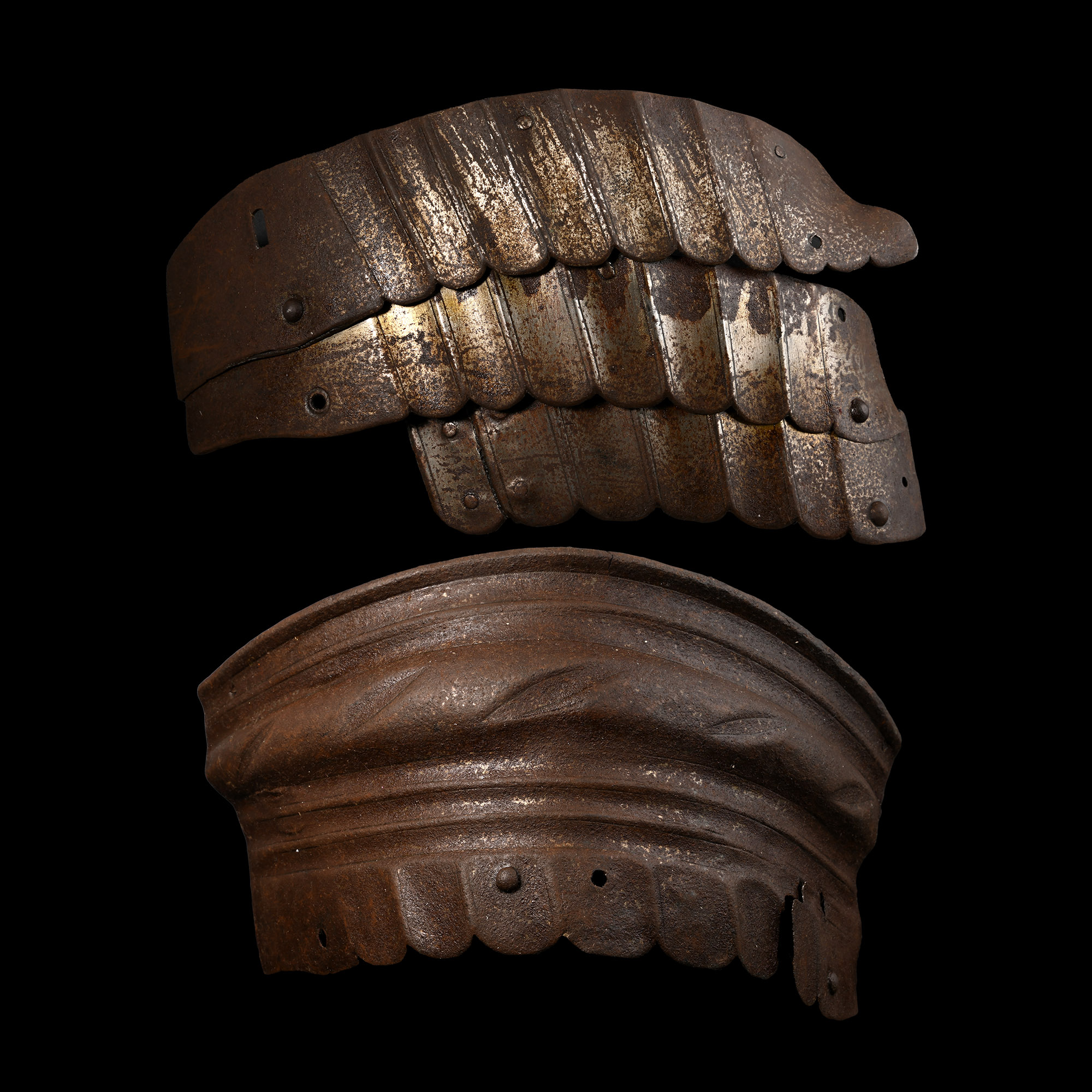
Maximilian Articulated Steel Plate Armour Tassets
GERMANY, CIRCA EARLY 16TH CENTURY A.D.
8 3/4 - 9 5/8 in. (424 grams total, 22.3-24.5 cm).
Comprising: a curved panel with a rolled rim, horizontal carinated bands and median bowed band with diagonal slash detailing, fluted lower edge with holes for articulating rivets; group of three plates with vertical fluting, with sliding rivets providing articulation; with matching '1.306' reference numbers. [2]
ProvenanceAcquired on the UK art market.
From a gentleman's collection from East Sussex, UK.
Cf. Edge, D. & Paddock, J.M., Arms and Armour of the Medieval Knight, London, 1988; Terjanian, P., The Last Knight - The Art, Armor, and Ambition of Maximilian I, New York, 2019; cf. similar pieces of armour in Lanzardo, D., Il convitato di ferro (the iron guest), in Italian, Torino, 1987, figs.47,48,59.
FootnotesThe matched reference numbers could indicate that the pieces came from the same harness. One piece appears to be a piece of a tasset – a thigh defence. The embossed band is imitating the fashionable ‘puffed and slashed’ textile garments seen on 16th-century armour. Sixteenth-century armour often imitated textile fashions in their form and decorative elements. The second piece may be a tasset. The incised lines for the fluting on the exterior surface appear to be of more mechanical manufacture, as do the slot for the sliding rivet and the empty rivet hole on one side.
CONDITIONTimeLine Auctions follows a vetting process to ensure the authenticity and legality of all items, reinforcing our commitment to integrity and responsible trading. Each antiquity, antique, and coin lot undergoes thorough examination by a vetting committee of at least ten external specialists, professional trade association members, scientists, and archaeologists: Our Vetting Process
AUCTIONS:
TimeLine is a leading auction house specialising in antiquities, ancient art, collectables, natural history, coins, medals, and books. Our auctions offer museums, collectors, historians, and enthusiasts the opportunity to acquire unique and historically significant pieces.
LOT 0292
Maximilian Articulated Steel Plate Armour Tassets
Estimate £500 - 700€580 - 810 (for guidance only)$680 - 950 (for guidance only)
Opening Bid
£250 (EUR 290; USD 338) +BP*
-
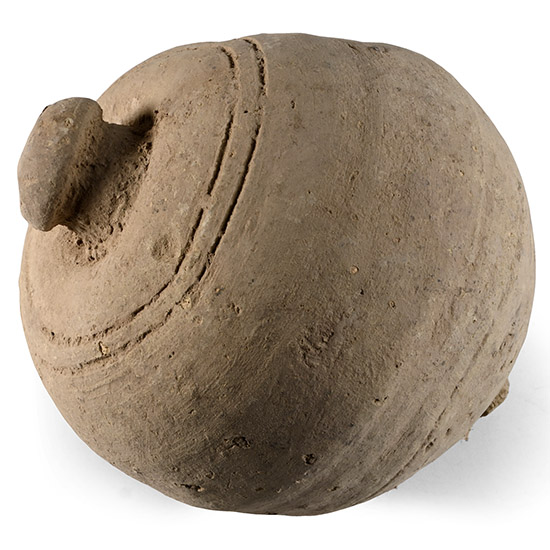
Byzantine 'Greek Fire' Ceramic Fire Bomb or Hand Grenade
9th-11th century A.D.Estimate: £70 - 90 (+bp*)
Bids: 1 | Current Bid: £5
Bulbous body with rounded base and domed filler hole, two circumferential bands above the shoulder; intended to be filled with explosive liquid and a wick, and used as a hand grenade. 772 grams, 12.2 cm
Ex important collection of weaponry, London, UK, 1980-1990s. Accompanied by an academic paper by military specialist Dr Raffaele D'Amato, dated 15 July 2019 and titled 'Eastern Roman Empire - Greek Fire Bomb or Hand Grenade (μεσαίον kακάβιον) 9th-11th century AD'.
Apart from the use of siphons or manual flame-throwers called cheirosiphona, special corps of Roman soldiers employed terracotta grenades, in the form of small jars, abundantly evidenced in archaeological excavations. They were called μεσαία kακαβιά or κυτροκακάβια, where the former had a bulbous shape and the latter a more cylindrical form. -
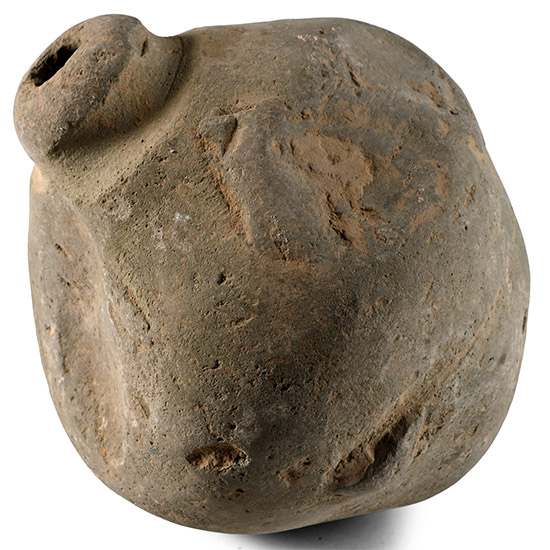
Byzantine 'Greek Fire' Ceramic Fire Bomb or Hand Grenade
9th-11th century A.D.Estimate: £70 - 90 (+bp*)
Bids: 1 | Current Bid: £5
Bulbous body with rounded base and domed filler hole; intended to be filled with explosive liquid and a wick, and used as a hand grenade. 590 grams, 10.3 cm
Ex important collection of weaponry, London, UK, 1980-1990s. Accompanied by an academic paper by military specialist Dr Raffaele D'Amato, dated 15 July 2019 and titled 'Eastern Roman Empire - Greek Fire Bomb or Hand Grenade (μεσαίον kακάβιον) 9th-11th century AD'.
Apart from the use of siphons or manual flame-throwers called cheirosiphona, special corps of Roman soldiers employed terracotta grenades, in the form of small jars, abundantly evidenced in archaeological excavations. They were called μεσαία kακαβιά or κυτροκακάβια, where the former had a bulbous shape and the latter a more cylindrical form. -
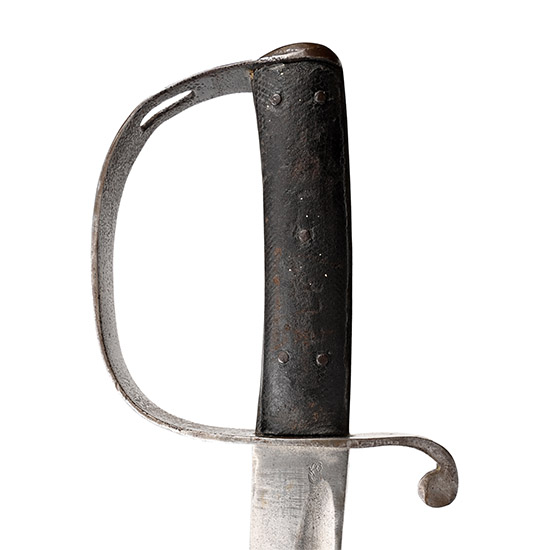
British Victorian Naval Boarding Cutlass
Mid-late 19th century A.D.Estimate: £300 - 400 (+bp*)
Opening Bid: £5
Royal Navy 1845 Pattern cutlass with short single-edged blade with fuller and sturdy back, swept guard and leather-covered scales to the grip; stamped to one face at the ricasso [crown] over '13' and heraldic (?) stamp to the other side; old collector's label 'British Naval Boarding Cutlass, Victorian, crown above 13 mark, and unidentified mark other side'. 791 grams, 70 cm
From the private collection of Peter Clayton, FCILIP, Dip, Arch, FSA, FRNS, Hemel Hempstead, Hertfordshire, UK; formed since the late 1950s.
