
Loading, please wait...


_900x900.jpg "Massive Stone Age Thin-Butted Knapped Axe Head")
_200x200.jpg "Massive Stone Age Thin-Butted Knapped Axe Head")
_900x900.jpg "Massive Stone Age Thin-Butted Knapped Axe Head")
_200x200.jpg "Massive Stone Age Thin-Butted Knapped Axe Head")


.jpg "Massive Stone Age Thin-Butted Knapped Axe Head")
.jpg "Massive Stone Age Thin-Butted Knapped Axe Head")
LOT 0275
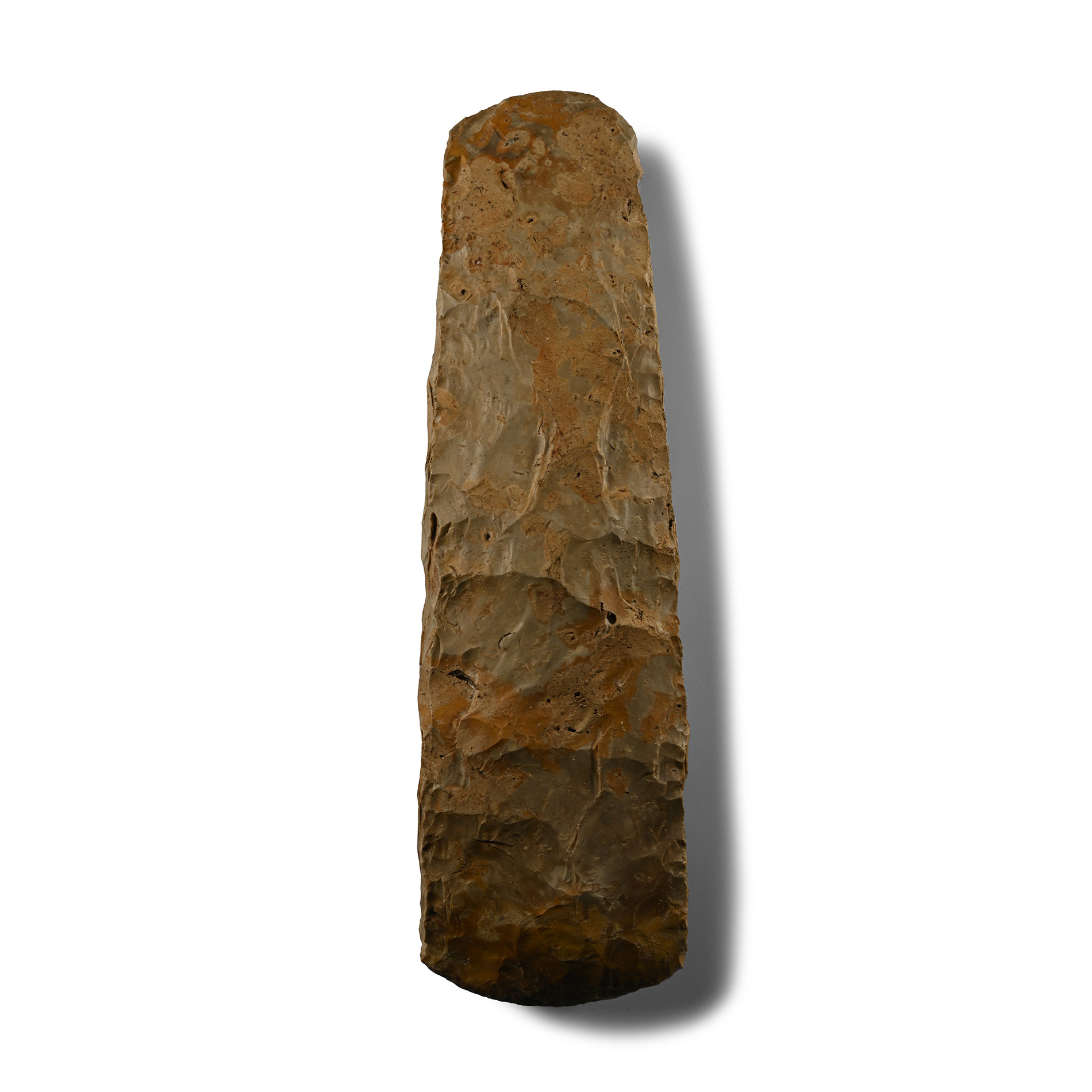
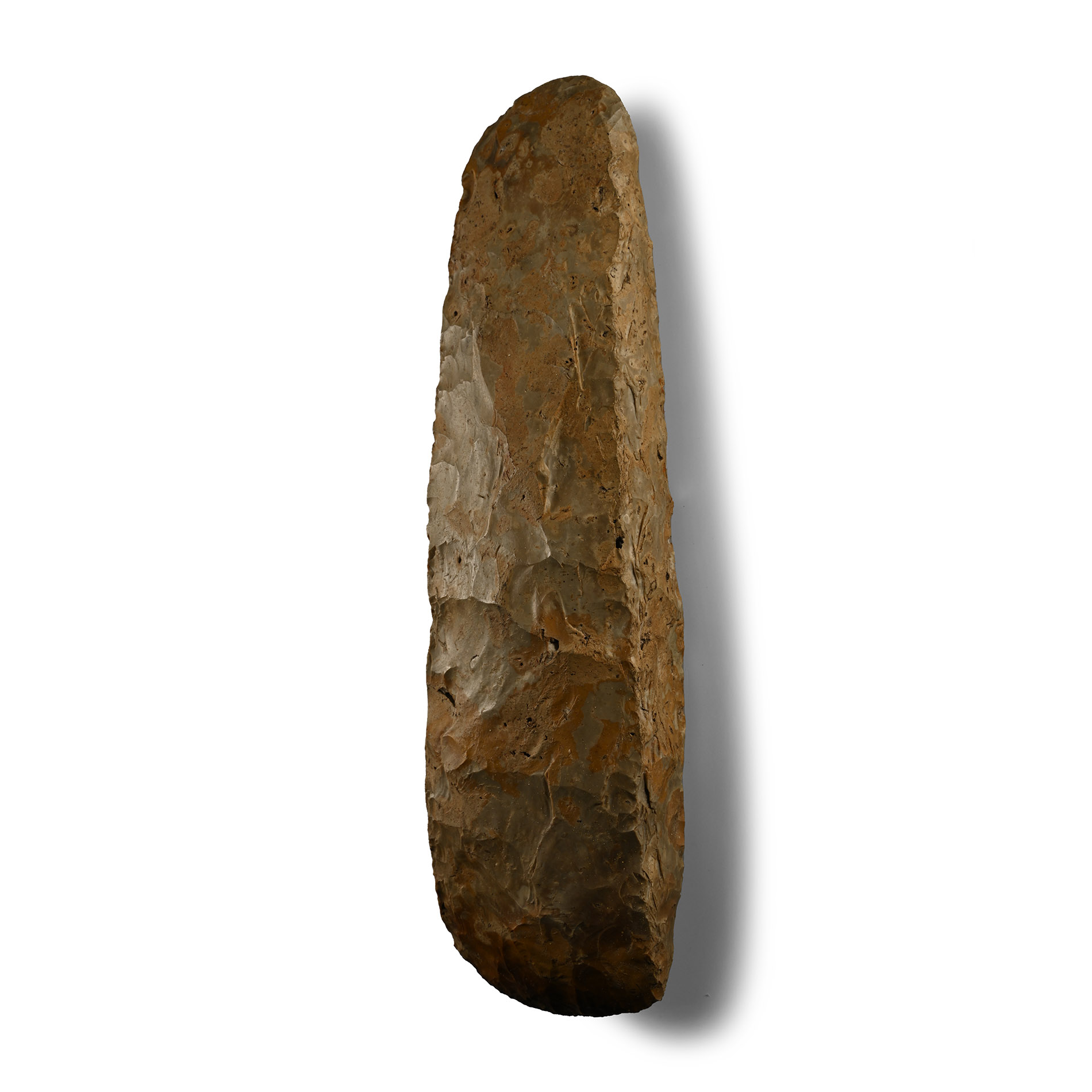
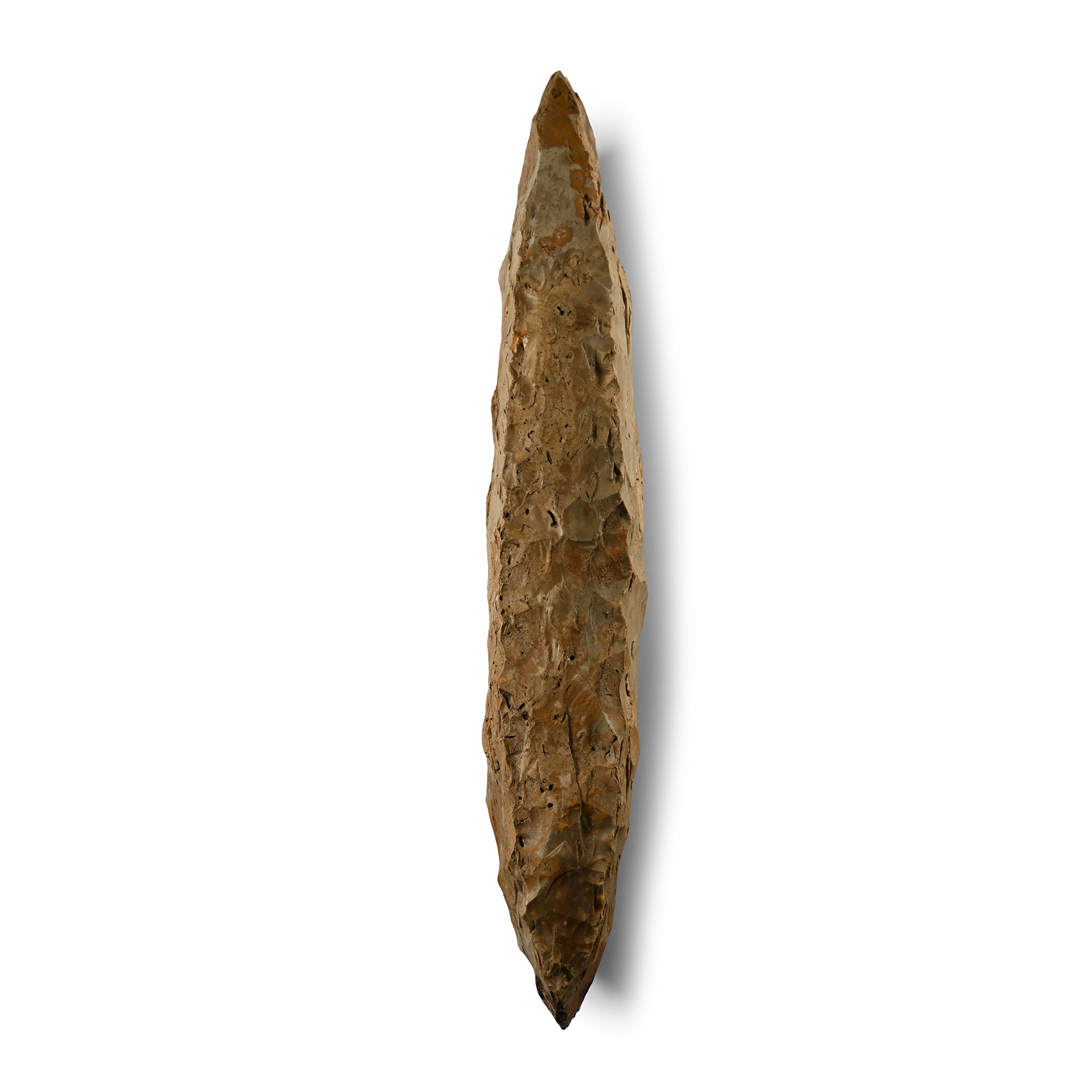
Massive Stone Age Thin-Butted Knapped Axe Head
EARLY-MIDDLE NEOLITHIC PERIOD, CIRCA 3800-3100 B.P.
12 1/2 in. (2.1 kg, 32 cm).
Worked and unpolished on all surfaces and edges, trapezoidal in plan with rectangular cross-section and slightly convex broad sides, straight narrow sides; butt rounded and with reduced thickness; rounded cutting edge; grey to beige 'marbled' flint with inclusions.
ProvenanceDanish private collection, T.H. Denmark.
This lot has been checked against the Interpol Database of stolen works of art and is accompanied by search certificate number no.12472-228694.
This lot has been cleared against the Art Loss Register database, and is accompanied by an illustrated lot declaration signed by the Head of the Antiquities Department, Dr Raffaele D’Amato.
Cf. MacGregor, A. (ed.), Antiquities from Europe and the Near East in the Collection of Lord McAlpine of West Green, Oxford, 1987, item 4.76, for type.
FootnotesThe unpolished so-called “flat” or “rectangular axe” was in widespread use in the 4th millennium B.C. in Southern Scandinavia and North Germany.
CONDITIONTimeLine Auctions follows a vetting process to ensure the authenticity and legality of all items, reinforcing our commitment to integrity and responsible trading. Each antiquity, antique, and coin lot undergoes thorough examination by a vetting committee of at least ten external specialists, professional trade association members, scientists, and archaeologists: Our Vetting Process
AUCTIONS:
TimeLine is a leading auction house specialising in antiquities, ancient art, collectables, natural history, coins, medals, and books. Our auctions offer museums, collectors, historians, and enthusiasts the opportunity to acquire unique and historically significant pieces.
-
Stone Age Long French Gravettian Thick-Crested Knife Blade
Upper Palaeolithic Period, circa 35,000-25,000 B.P.Sold for (Inc. bp): £130
D-shaped in section with re-touch around most of the circumference; inked findspot to underside' Soucy sur Vercoulon'. 30.5 grams, 11.2 cm
Found Sougy, Loiret France. Acquired in the 1970s-1990s. From the collections of J.R Vircoulon and of the famous UK musician and amateur archaeologist, Victor Brox (1941-2023). Acquired on the UK art market. From the private collection of an East Anglian, UK, specialist collector. This lot is accompanied by an illustrated lot declaration signed by the Head of the Antiquities Department, Dr Raffaele D’Amato. -
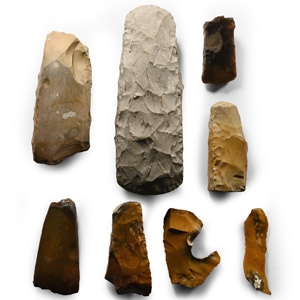
Stone Age Danish Flint Tool and Fragmentary Axe Head Group
Neolithic Period, 3500-2200 B.P.Sold for (Inc. bp): £195
The largest piece a superbly flaked axehead worked from a grey chert (known as Danien flint); various scrapers and blades. 1.48 kg total, 6.7-19 cm
From a British private collection, collected during the 1990s. From the collection of a South West London, UK, specialist Stone Age collector. This lot is accompanied by an illustrated lot declaration signed by the Head of the Antiquities Department, Dr Raffaele D’Amato. -
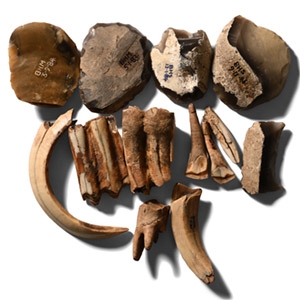
Collection of Stone Age Tools with Animal Teeth
Neolithic Period, circa 6000 B.P.Sold for (Inc. bp): £111
Possibly from organised archaeology digs: five flint scrapers marked 'BHM' and 'BHS' with dates in the 1980s; two boar tusks marked 'BHM' with dates in the 1980s; quantity of mammal teeth, some marked 'BHM' or 'BHS' 224 grams total, 35-77 mm
Probably found in the 1980s. From an old large English collection from Lincolnshire. Acquired on the UK art market. From the private collection of an East Anglian, UK, collector. This lot is accompanied by an illustrated lot declaration signed by the Head of the Antiquities Department, Dr Raffaele D’Amato.
