
Loading, please wait...

LOT 0837
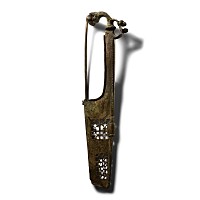
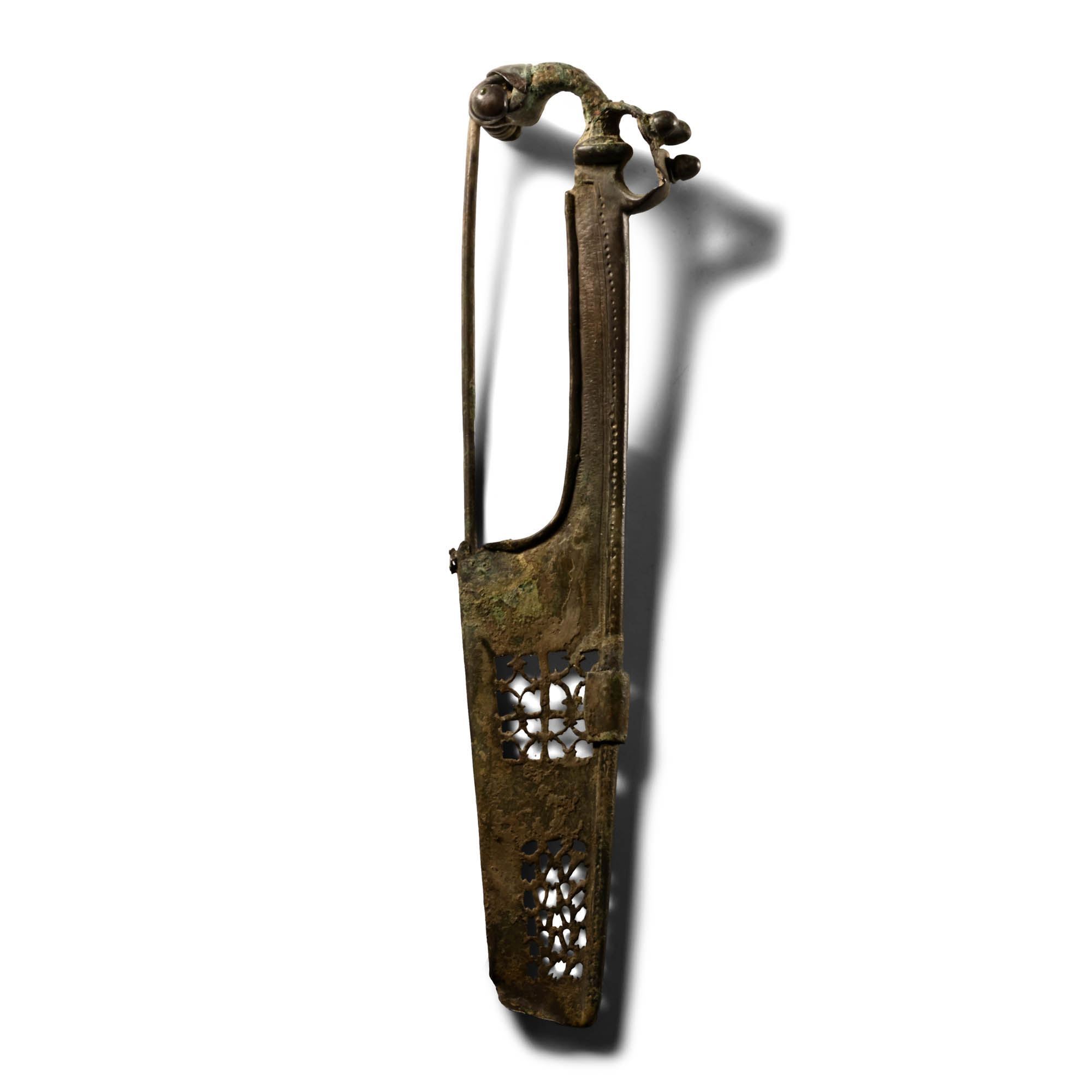
Massive Roman Pannonian Bronze Bow Brooch
1ST CENTURY A.D.
7 1/2 in. (73 grams, 19 cm).
Flügelfibeln type bow-brooch with spring and pin, trumpet-shaped finial with opposed knops on the curved horns, pointilé detailing to the spine. long catchplate with pierced tracery; reinforcing strip applied in antiquity.
ProvenanceAcquired on the UK art market before 2000.
Property of an Essex, UK, gentleman.
Cf. Hattatt, R., Brooches of Antiquity, Oxbow, 1987, fig.14f and no.765, for similar types.
CONDITIONTimeLine Auctions follows a vetting process to ensure the authenticity and legality of all items, reinforcing our commitment to integrity and responsible trading. Each antiquity, antique, and coin lot undergoes thorough examination by a vetting committee of at least ten external specialists, professional trade association members, scientists, and archaeologists: Our Vetting Process
AUCTIONS:
TimeLine is a leading auction house specialising in antiquities, ancient art, collectables, natural history, coins, medals, and books. Our auctions offer museums, collectors, historians, and enthusiasts the opportunity to acquire unique and historically significant pieces.
-
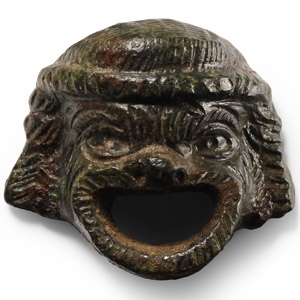
Roman Bronze Comic Actor's Mask
2nd century A.D.Sold for (Inc. bp): £221
Mount formed as a comic actor's mask with braided wig, exaggerated scooped mouth and grotesque features, hollow to the reverse. 32.1 grams, 33 mm
From the private collection of Mr K.A., acquired in the 1990s-early 2000s. -
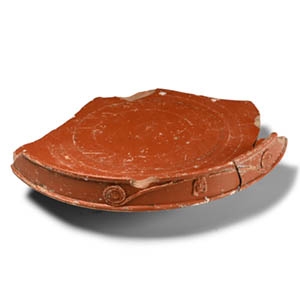
Roman Redware Footed Dish Fragment with Maker's Mark
4th century A.D.Estimate: £100 - 140 (+bp*)
Opening Bid: £50
Comprising a large portion of a shallow round dish with ring foot, a shoe-shaped maker's mark 'GELLI' to the centre. 220 grams, 17.6 cm
Ex German art market, 2000s. Acquired from an EU collector living in London. From the collection of Surrey, UK, gentleman. -
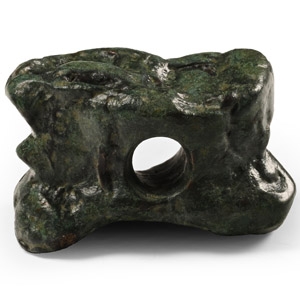
Roman Bronze Knuckle Bone Gaming Piece
1st-2nd century A.D.Sold for (Inc. bp): £78
Model of a bovine astragalus with lead infill and a large central hole. 48.6 grams, 32 mm
Ex German art market, 2000s. Acquired from an EU collector living in London. From the collection of Surrey, UK, gentleman.
