
Loading, please wait...
LOT 0305
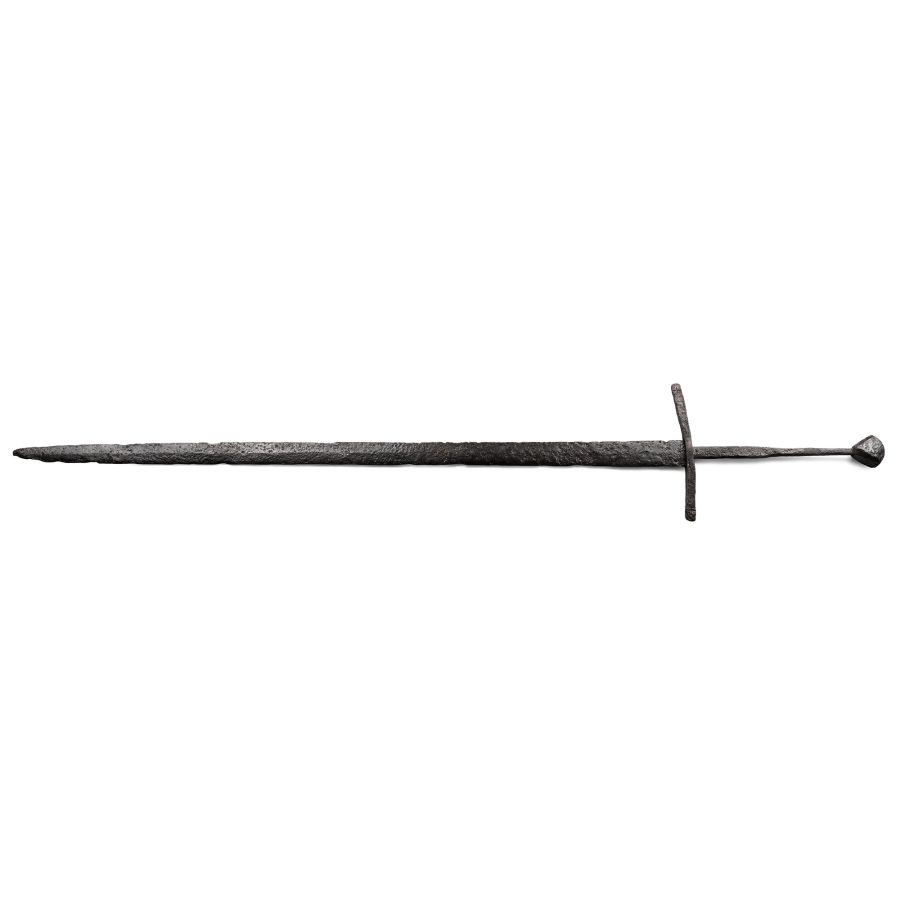
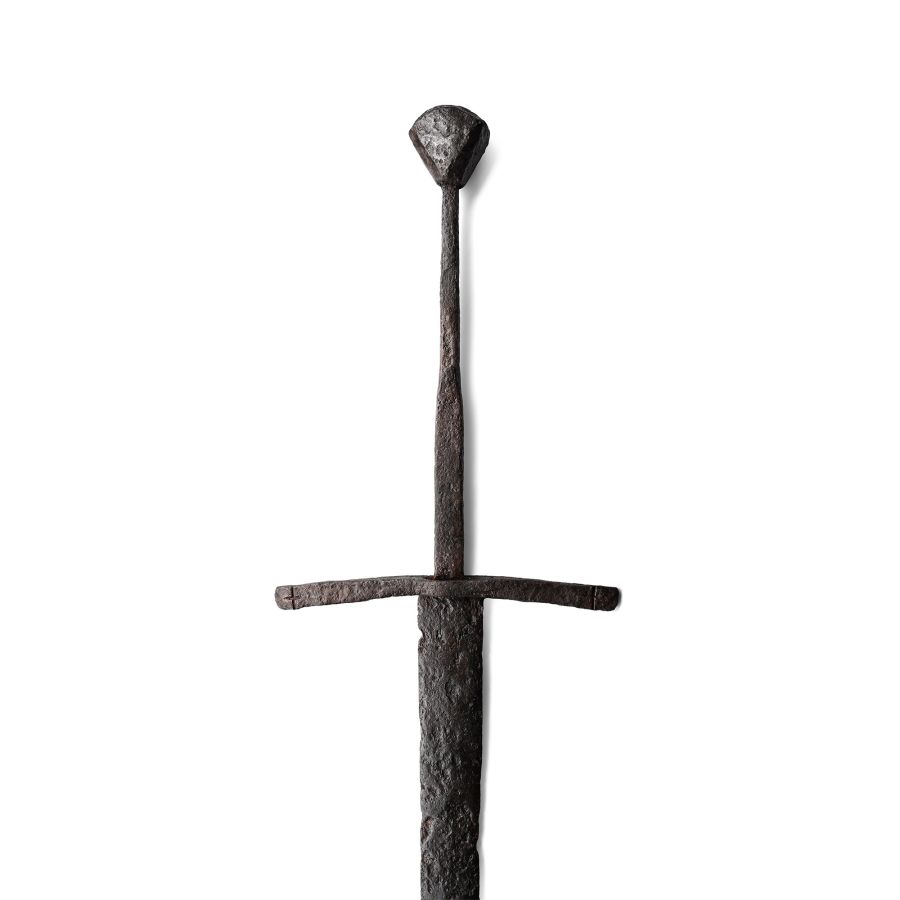
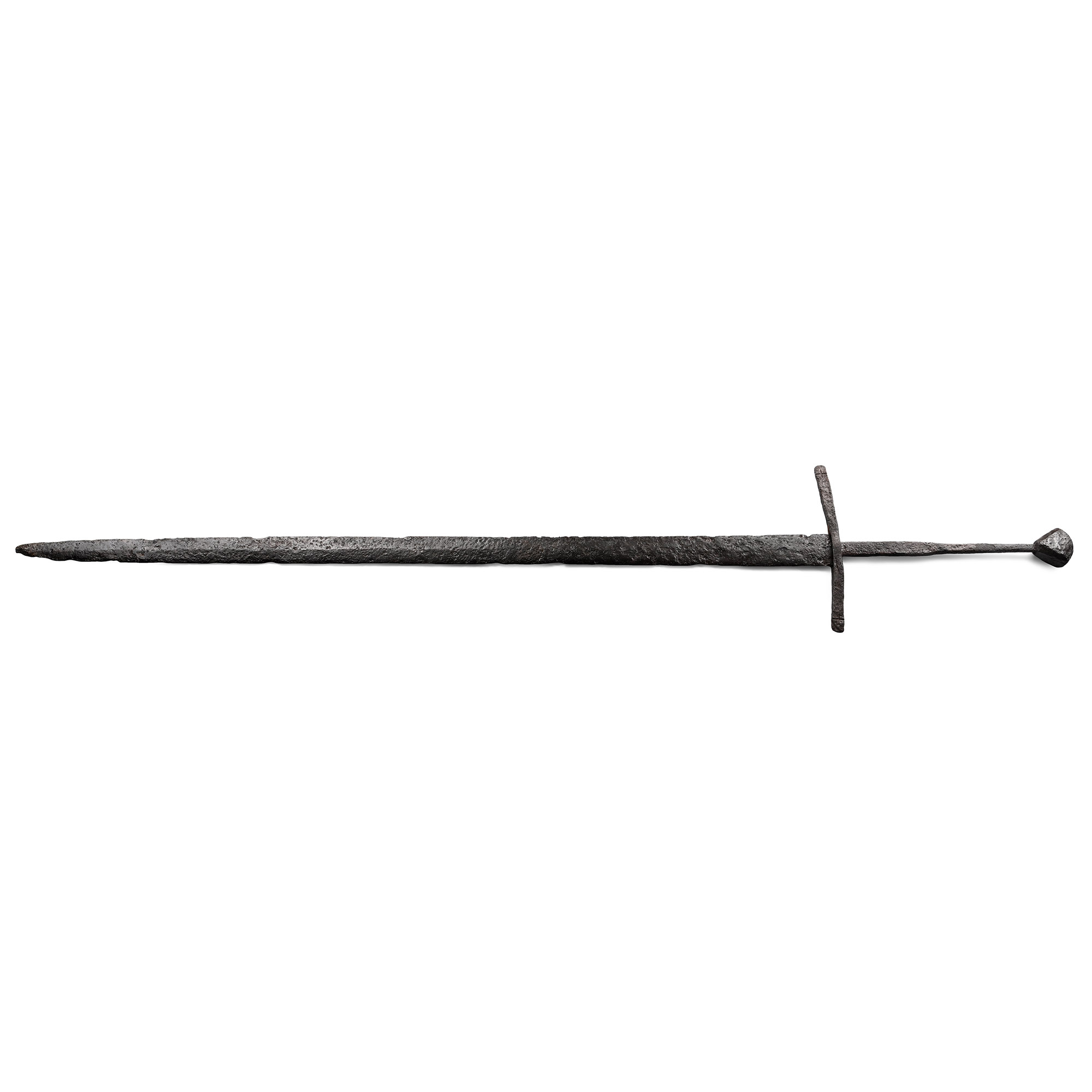
Massive Medieval Iron Two-Handed Knight's Sword with Crosses on Guard
GERMANY, CIRCA 14TH CENTURY A.D.
56 in. (1.94 kg, 1.42 m).
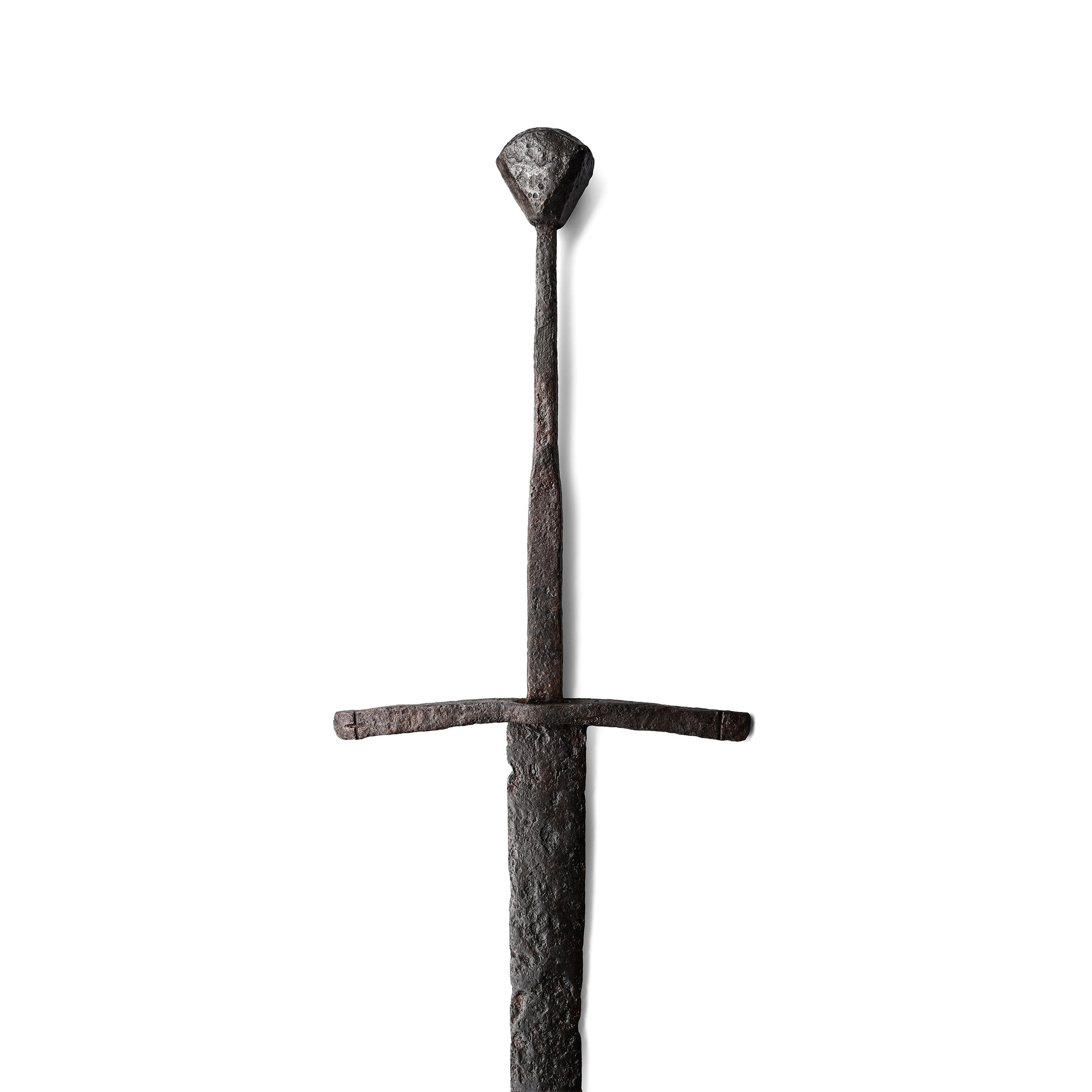
Tapering blade with a shallow fuller, long and narrow tang with a pear-shaped pommel and a curved cross-guard of Oakeshott Style 6 with incised crosses; professionally conserved.
ProvenanceFrom the private family collection of a lady, UK; acquired in Germany mid 20th century.
Accompanied by an academic report by Dr Raffaele D’Amato.
This lot has been checked against the Interpol Database of stolen works of art and is accompanied by search certificate number no.12788-240330.
This lot has been cleared against the Art Loss Register database, and is accompanied by an illustrated lot declaration signed by the Head of the Antiquities Department, Dr Raffaele D'Amato.
See Oakeshott, R.E., The Archaeology of the weapons, London, 1960; Oakeshott, E., Sword in hand, London, 2001; Oakeshott, E., Records of the Medieval Sword, Woodbridge, 1991; see also Aleksić, M., Mediaeval Swords from Southeastern Europe, material from 12th to 15th century AD, Beograd, 2007, cat. nos.260, pl.16,3.
FootnotesThe noteworthy element of this sword is its guard with the engraved crosses. The presence of the cross suggests that the sword once belonged to person belonging to a military order of chivalry. Considering that the Templars were already destroyed when the sword was made, the main candidates could be the Hospitallers or, most probably, the Teutonic Knights.
CONDITIONTimeLine Auctions follows a vetting process to ensure the authenticity and legality of all items, reinforcing our commitment to integrity and responsible trading. Each antiquity, antique, and coin lot undergoes thorough examination by a vetting committee of at least ten external specialists, professional trade association members, scientists, and archaeologists: Our Vetting Process
AUCTIONS:
TimeLine is a leading auction house specialising in antiquities, ancient art, collectables, natural history, coins, medals, and books. Our auctions offer museums, collectors, historians, and enthusiasts the opportunity to acquire unique and historically significant pieces.
LOT 0305
Massive Medieval Iron Two-Handed Knight's Sword with Crosses on Guard
Sold for (Inc. bp): £3,380
-
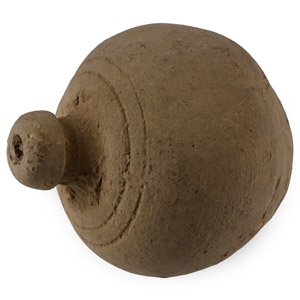
Byzantine 'Greek Fire' Ceramic Fire Bomb or Hand Grenade
9th-11th century A.D.Sold for (Inc. bp): £169
Bulbous body with pointed tip and domed mouth, impressed circumferential bands above the shoulder; intended to be filled with explosive liquid and a wick, and used as a hand grenade. 379 grams, 10.4 cm
From an important specialist collection, London, UK, 1990s onwards. Accompanied by an academic paper by military specialist Dr Raffaele D'Amato, dated 15 July 2019 and titled 'Eastern Roman Empire - Greek Fire Bomb or Hand Grenade (μεσαίον kακάβιον) 9th-11th century AD'. This lot is accompanied by an illustrated lot declaration signed by the Head of the Antiquities Department, Dr Raffaele D'Amato.
Apart from the use of siphons or manual flame-throwers called cheirosiphona, special corps of Roman soldiers employed terracotta grenades, in the form of small jars, abundantly evidenced in archaeological excavations. They were called μεσαία kακαβιά or κυτροκακάβια where the former had a bulbous shape and the latter a more cylindrical form. -
Massive Medieval Iron Two-Handed Knight's Sword with Crosses on Guard
Germany, circa 14th century A.D.Sold for (Inc. bp): £3,380
Tapering blade with a shallow fuller, long and narrow tang with a pear-shaped pommel and a curved cross-guard of Oakeshott Style 6 with incised crosses; professionally conserved. 1.94 kg, 1.42 m
From the private family collection of a lady, UK; acquired in Germany mid 20th century. Accompanied by an academic report by Dr Raffaele D’Amato. This lot has been checked against the Interpol Database of stolen works of art and is accompanied by search certificate number no.12788-240330. This lot has been cleared against the Art Loss Register database, and is accompanied by an illustrated lot declaration signed by the Head of the Antiquities Department, Dr Raffaele D'Amato.
The noteworthy element of this sword is its guard with the engraved crosses. The presence of the cross suggests that the sword once belonged to person belonging to a military order of chivalry. Considering that the Templars were already destroyed when the sword was made, the main candidates could be the Hospitallers or, most probably, the Teutonic Knights. -
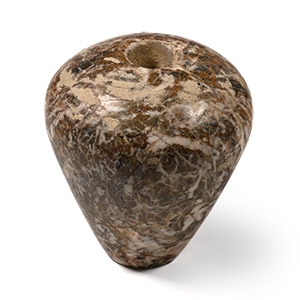
Western Asiatic Stone Macehead
3rd-2nd millennium B.C.Sold for (Inc. bp): £117
Piriform with vertical socket expanding towards the narrower end. 550 grams, 82 mm
Ex London, UK, collection, 1990-2000s. This lot is accompanied by an illustrated lot declaration signed by the Head of the Antiquities Department, Dr Raffaele D'Amato.
