
Loading, please wait...


LOT 2700
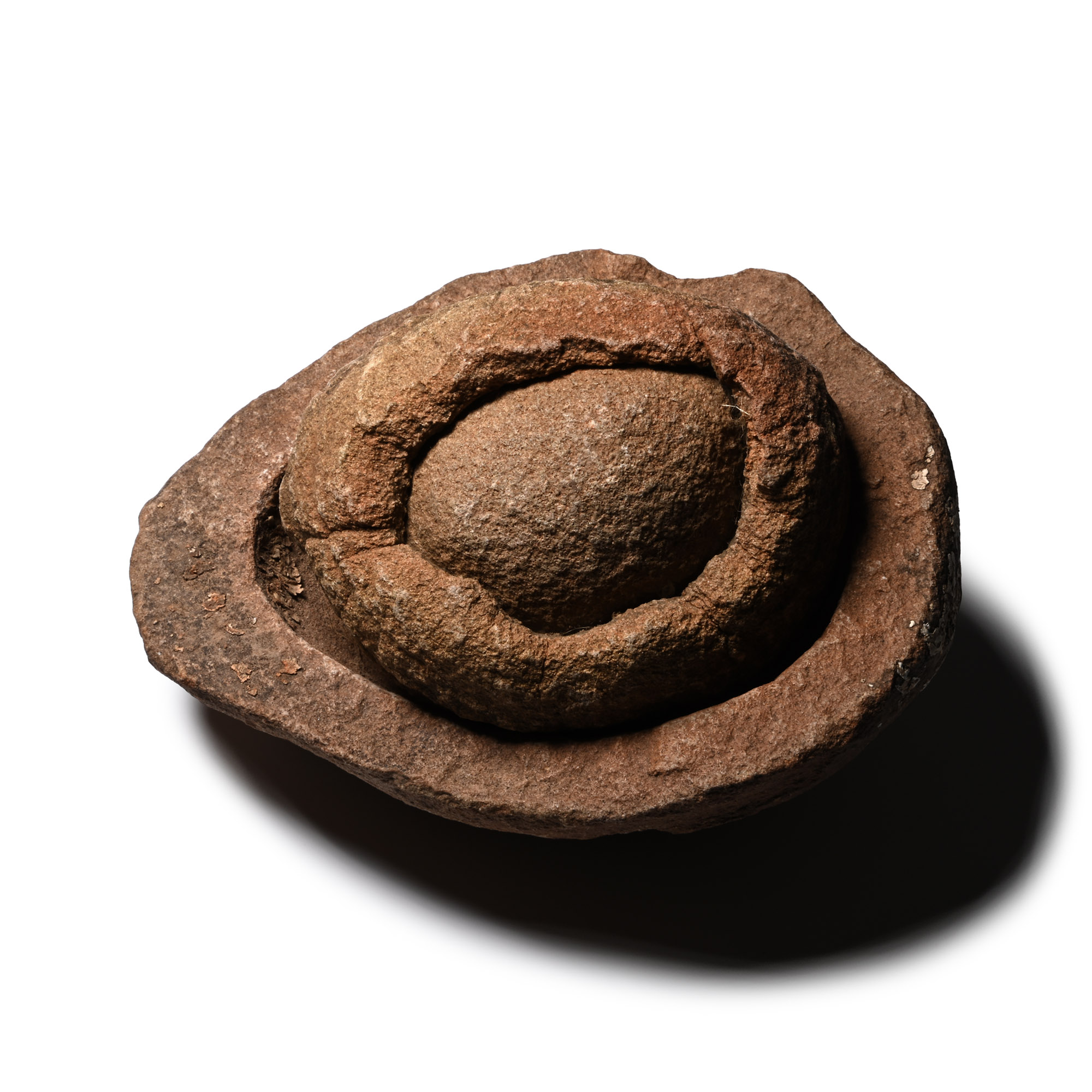
Massive Kalahari Desert Double-Nested Wind Stone
5 1/8 in. (970 grams total,13 cm).
A rare wind-rounded pebble in a hollowed out 'nest', nestled within a larger nest; in a hessian draw-ribbon gift pouch. [No Reserve]
ProvenanceFrom the Kalahari Desert, Southern Africa.
Ex Mineral Imports, London, UK.
Gregory, Bottley & Lloyd (Gregory's), Harwich, UK.
TimeLine Auctions follows a vetting process to ensure the authenticity and legality of all items, reinforcing our commitment to integrity and responsible trading. Each antiquity, antique, and coin lot undergoes thorough examination by a vetting committee of at least ten external specialists, professional trade association members, scientists, and archaeologists: Our Vetting Process
AUCTIONS:
TimeLine is a leading auction house specialising in antiquities, ancient art, collectables, natural history, coins, medals, and books. Our auctions offer museums, collectors, historians, and enthusiasts the opportunity to acquire unique and historically significant pieces.
-
![Amber Topaz Crystal Specimen Group [20]](https://timelineauctions.com/upload/images/items/small/227955-s.jpg)
Amber Topaz Crystal Specimen Group [20]
Sold for (Inc. bp): £78
Comprising twenty amber-coloured pebbles. 223 grams total, 17-37 mm
Ex Mineral Imports, London, UK. Gregory, Bottley & Lloyd (Gregory's), Harwich, UK. -
![Polished Citrine Crystal Specimen Group [47]](https://timelineauctions.com/upload/images/items/small/227902-s.jpg)
Polished Citrine Crystal Specimen Group [47]
Sold for (Inc. bp): £20
A large group of light coloured citrine pebbles. 514 grams total, 18-34 mm
Ex Mineral Imports, London, UK. Gregory, Bottley & Lloyd (Gregory's), Harwich, UK. -
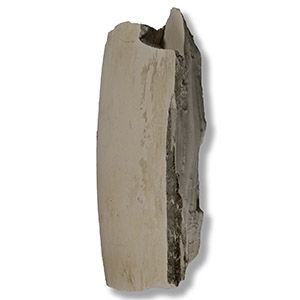
British Woolly Mammoth Fossil Tusk Section
Pleistocene Period, circa 40,000 years B.P.Sold for (Inc. bp): £33
Mammuthus primigenius tusk section. 112 grams, 10.8 cm
From the North Sea, UK. Ian Wilkinson collection, Nottinghamshire, UK, formed since 1985.
