
Loading, please wait...

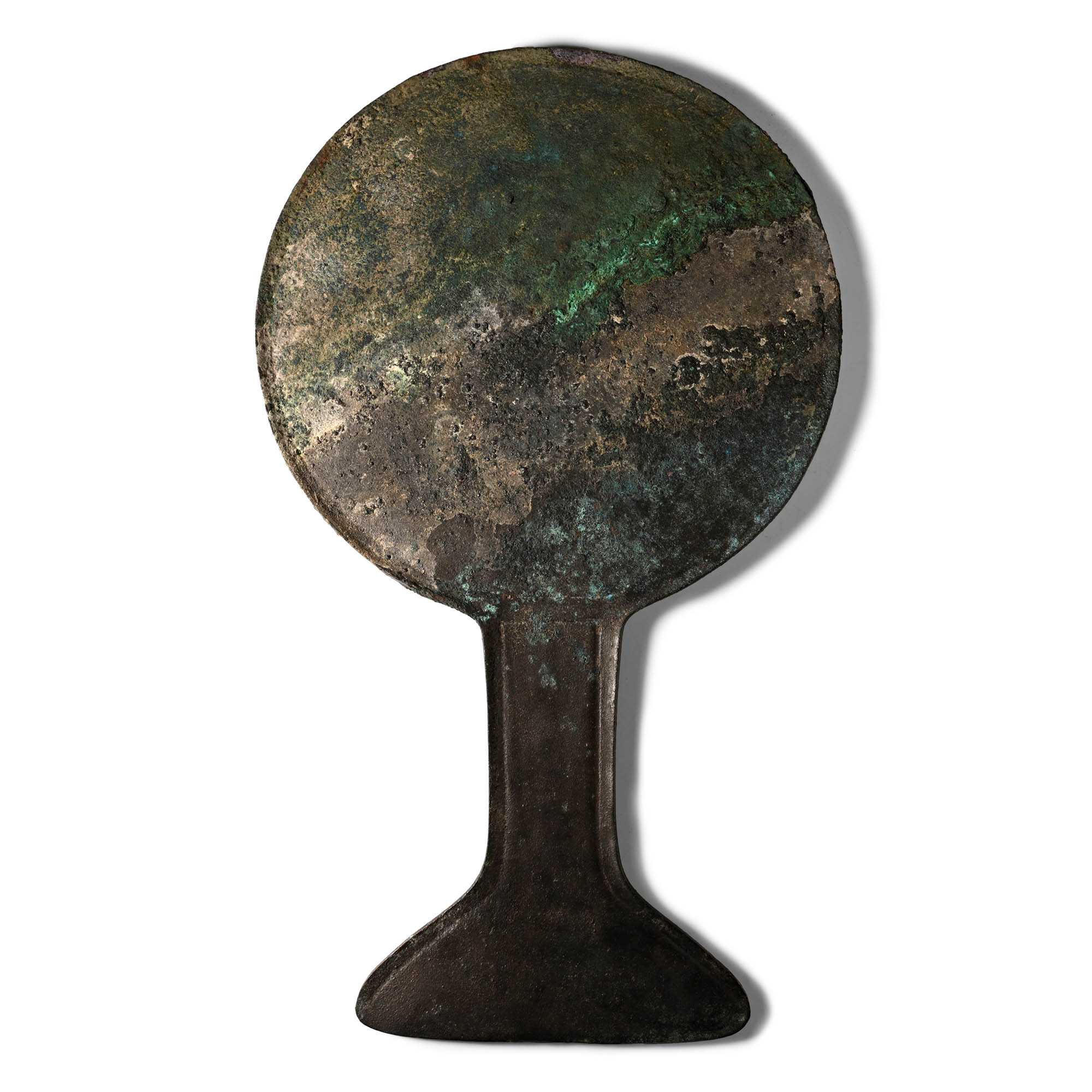
LOT 0063
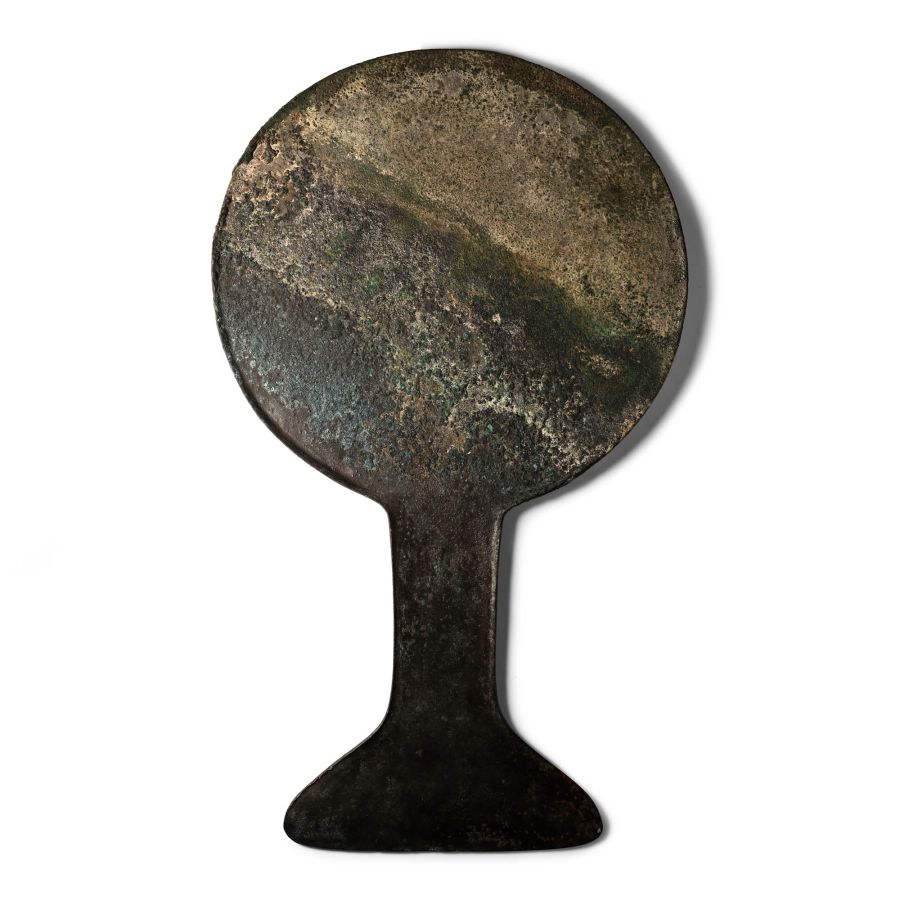
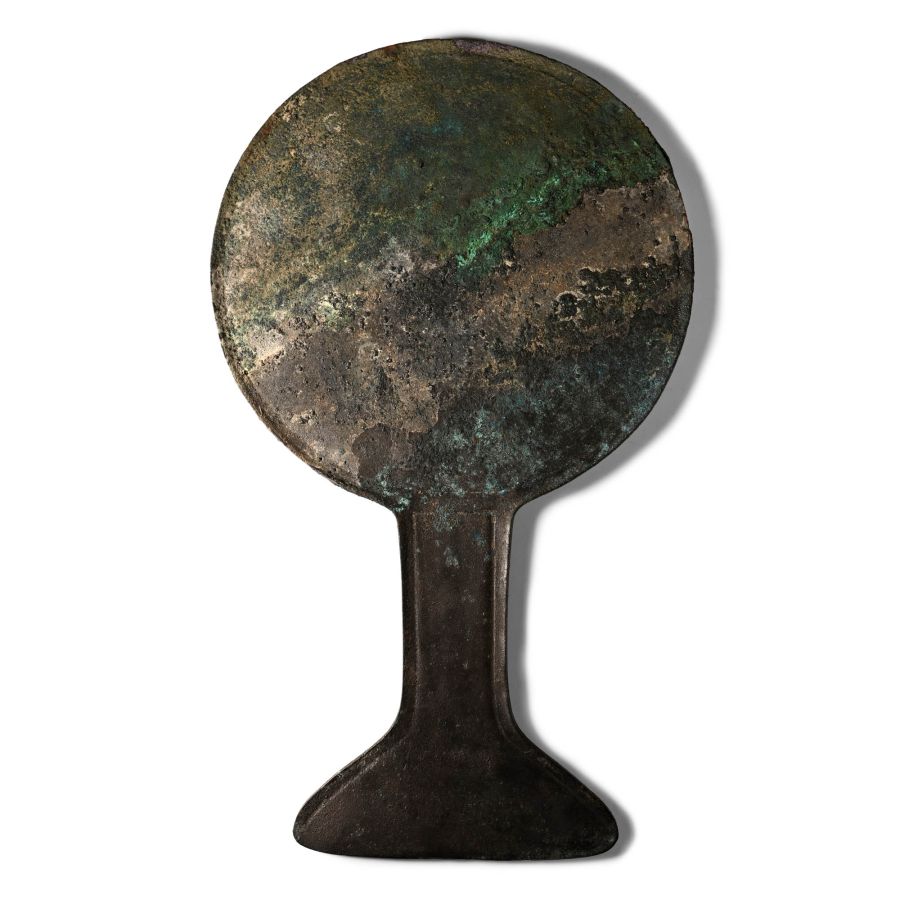
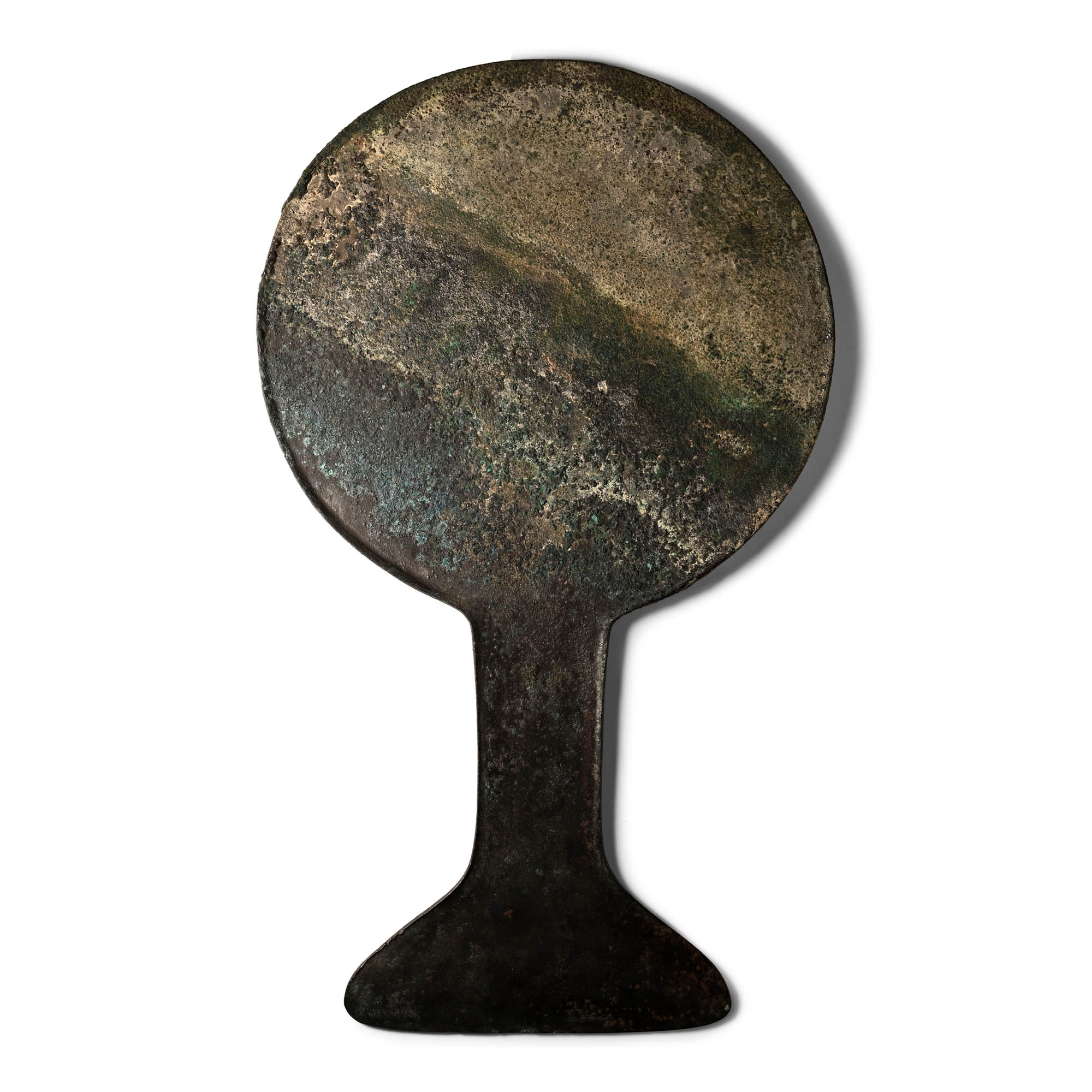
Massive Graeco-Parthian Bronze Mirror
LATE 3RD-1ST CENTURY B.C.
14 in. (1.14 kg, 35.5 cm).
Discoid in plan with short T-shaped handle, obverse with deep flange to edges, reverse similar but less prominent; some surface accretion.
ProvenanceUK private collection before 2000.
Acquired on the UK art market.
Property of a London gentleman.
TimeLine Auctions follows a vetting process to ensure the authenticity and legality of all items, reinforcing our commitment to integrity and responsible trading. Each antiquity, antique, and coin lot undergoes thorough examination by a vetting committee of at least ten external specialists, professional trade association members, scientists, and archaeologists: Our Vetting Process
AUCTIONS:
TimeLine is a leading auction house specialising in antiquities, ancient art, collectables, natural history, coins, medals, and books. Our auctions offer museums, collectors, historians, and enthusiasts the opportunity to acquire unique and historically significant pieces.
-
Etruscan Bronze Statuette
Circa 6th century B.C.Sold for (Inc. bp): £130
Standing figure wearing a tunic with straight arms placed to the sides, with exaggerated facial features including bulbous eyes; mounted on a custom-made stand. 49.6 grams total, 84 mm including stand
From a collection acquired on the UK art market from various auction houses and collections mostly before 2000. From an important Cambridgeshire estate; thence by descent.
The statuette belongs to a group of standing archaic statuettes, with short hair rendered by incised lines. They are usually depicted with legs together, arms at the sides or bent forward if they are holding objects (see the augur statuette from Lapis Niger, Rome). -
Graeco-Roman Silver Spoon with Lion Head
1st century B.C.-1st century A.D.Sold for (Inc. bp): £1,040
Deep piriform bowl with scooped repoussé rear, baluster formed as a lioness's head with applied rosette to the brow, twisted handle with knop finial. 9.42 grams, 15.2 cm
From the collection of a gentleman, acquired on the London art market in the 1990s. -
Villanovan Bronze Pendant
8th-7th century B.C.Sold for (Inc. bp): £156
Formed as a domed disc pendant with openwork cross and central hole; triangular bale above, three loops below each with a crotal bell attached; mounted on a custom-made stand. 86 grams (134 grams), 11.9 cm(14.5 cm)
From a collection acquired on the UK art market from various auction houses and collections mostly before 2000. From an important Cambridgeshire estate; thence by descent.
The round element represents the four-spoked wheel of a chariot, typical of the Bronze Age. The motif has been interpreted as solar symbolism since this period. The circularity between solar cosmologies—symbolic wheel/solar vehicle/functional chariot—was deeply ingrained since at least the 15th century from North Europe to Aegeaum, and continued in the early Iron Age.
