
Loading, please wait...


LOT 0042
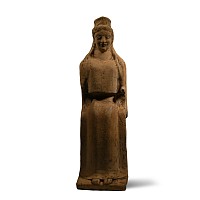
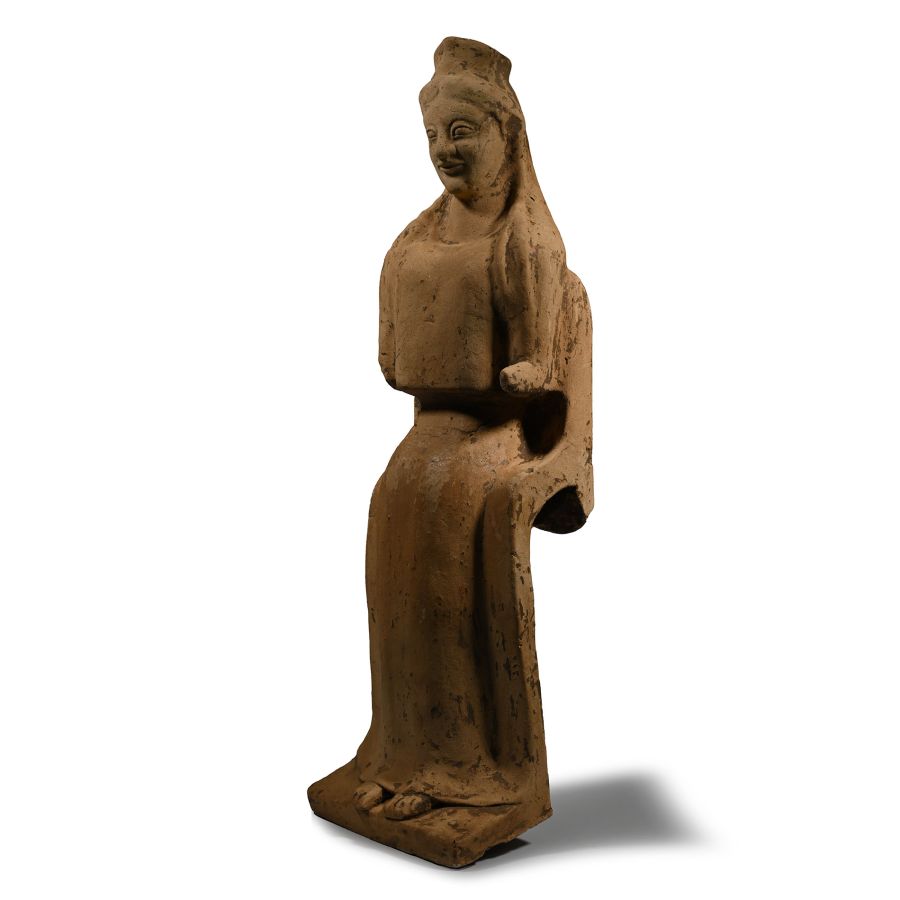
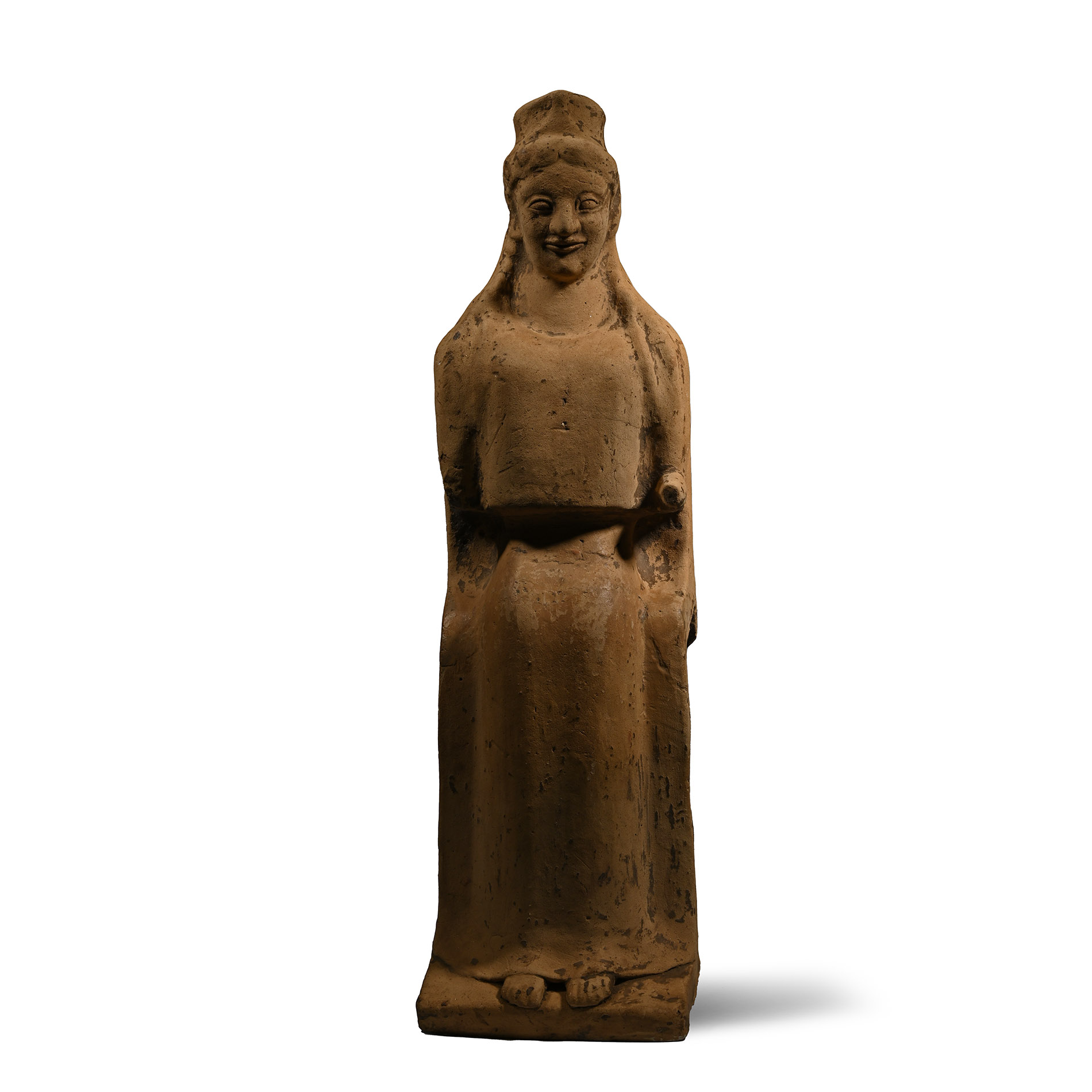
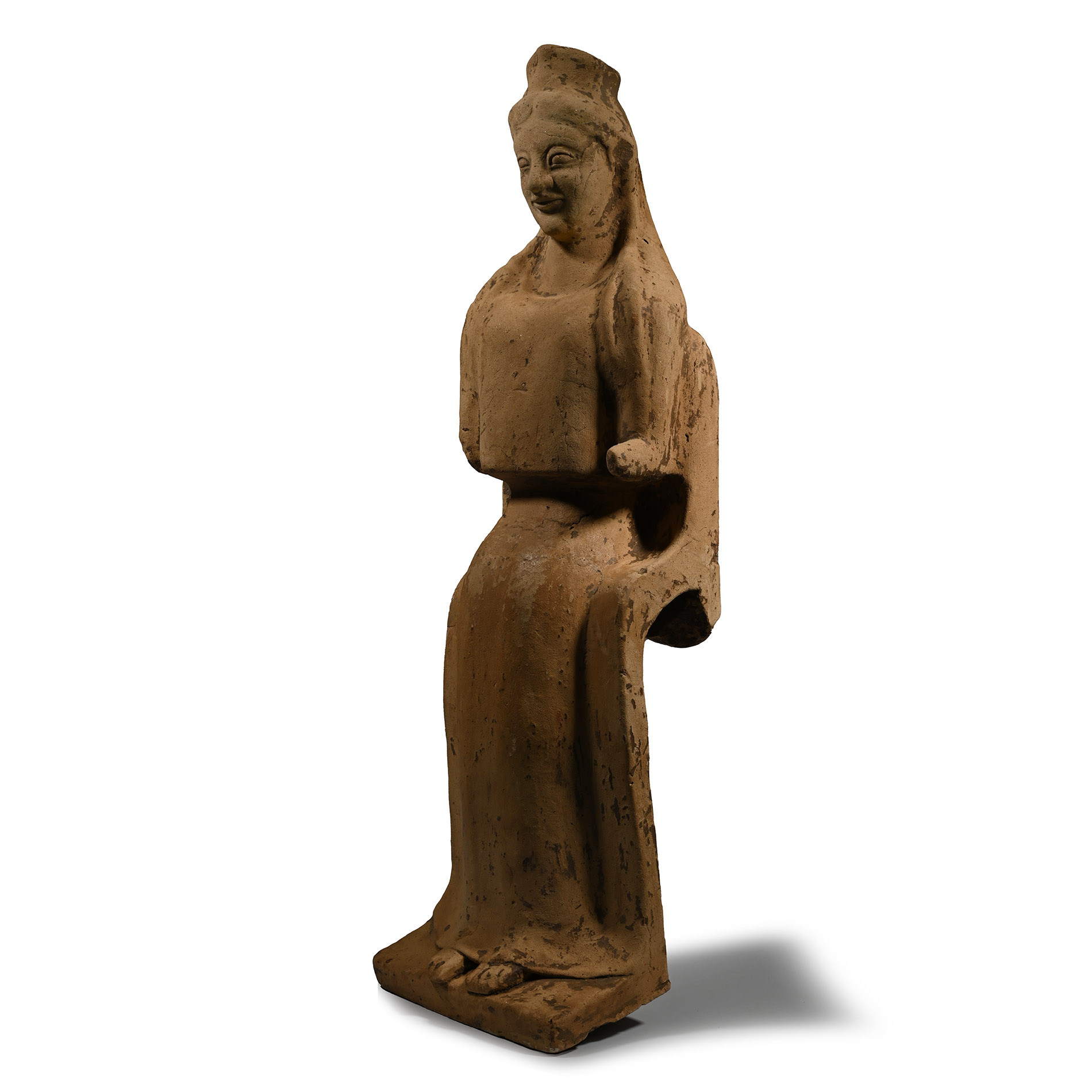
Massive Archaic Greek Terracotta Statuette of a Seated Goddess Demeter
LATE 6TH CENTURY B.C.
22 3/4 in. (2.02 kg, 57.7 cm).
Seated on a high-backed throne, wearing a polos headdress with two long braids falling from underneath the headdress, wearing a long chiton fastened by a belt, the left arm raised, possibly once holding a dove; well marked facial features, slightly almond-shaped large symmetrical eyes with slightly raised eyelids, straight nose, strongly pronounced mouth with fleshy lips and shallow ears; traces of brown slip, repaired.
Provenancewith H.A.C., Basel, prior 1999.
Accompanied by a thermoluminescence analysis report no.N125a51 from Oxford Authentication.
Accompanied by an academic report by Dr Raffaele D'Amato.
This lot has been checked against the Interpol Database of stolen works of art and is accompanied by search certificate no.12461-228712.
This lot has been cleared against the Art Loss Register database, and is accompanied by an illustrated lot declaration signed by the Head of the Antiquities Department, Dr Raffaele D'Amato.
Cf. Biers, W.R., The Archaeology of Greece. An Introduction, Ithaca-London, 1987, fig.8.63, p.236, for a similar statuette; see a similar terracotta of seated Demeter at the Brooklyn Museum, accession no.34.689; other similar terracottas at the British Museum, London, accession nos. GR 1863, 0728, 273, 274, 266, 268 and 269.
FootnotesOne of the most typical 6th century B.C. terracotta female figurines was that of a standing or seated woman wearing a chiton and a himation over it. It was a votive figure offered at the shrines or temples, usually representing the goddess Demeter. Attica was one of the principal centres of figurine production, but Corinth continued to produce solid standing or seated females with moulded fronts and flat backs. The mass production of such terracotta was also typical of Magna Graecia.
CONDITIONTimeLine Auctions follows a vetting process to ensure the authenticity and legality of all items, reinforcing our commitment to integrity and responsible trading. Each antiquity, antique, and coin lot undergoes thorough examination by a vetting committee of at least ten external specialists, professional trade association members, scientists, and archaeologists: Our Vetting Process
AUCTIONS:
TimeLine is a leading auction house specialising in antiquities, ancient art, collectables, natural history, coins, medals, and books. Our auctions offer museums, collectors, historians, and enthusiasts the opportunity to acquire unique and historically significant pieces.
LOT 0042
Massive Archaic Greek Terracotta Statuette of a Seated Goddess Demeter
Sold for (Inc. bp): £2,860
-
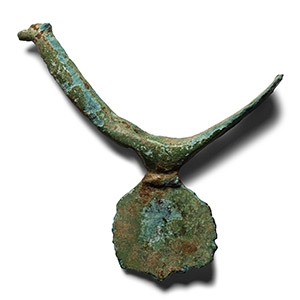
Greek Geometric Votive Gift in the Form of a Bird
8th century B.C.Estimate: £150 - 200 (‡+bp*)
Opening Bid: £50
Comprising a columnar neck with pinched detailing to the head and spatulate tail, discoid plate below. 8.47 grams, 46 mm
with Christie's, London, 25 January 2001, no.263 [Part]. Accompanied by a copy of an Art Loss Register certificate no.S00034403. This lot is accompanied by an illustrated lot declaration signed by the Head of the Antiquities Department, Dr Raffaele D’Amato. This lot is accompanied by an illustrated lot declaration signed by the Head of the Antiquities Department, Dr Raffaele D'Amato. -
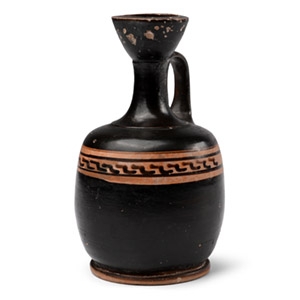
Greek Black-Glazed Lekythos
South Italic, circa 4th century B.C.Sold for (Inc. bp): £312
Ovoid in profile with trumpet-shaped spout and strap handle, reserved band below the shoulder with running guilloche motif. 89 grams, 10.5 cm
From the private collection of a Canadian gentleman living in Essex, UK, formed since the 1920s-circa 1990. Property of an Essex lady until the late 1990s; thence by descent. From the private collection of an Essex gentleman since the late 1990s. This lot is accompanied by an illustrated lot declaration signed by the Head of the Antiquities Department, Dr Raffaele D'Amato. -
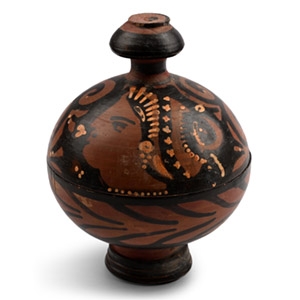
Greek Apulian Black-Glazed Lidded Pyxis with Lady of Fashion
South Italic, circa 325-300 B.C.Sold for (Inc. bp): £416
Squat and bulbous profile with broad body and domed lid with knop handle; black and red coloured bands and teardrops, profile bust of a lady of fashion with detailing picked out in cream and white; laurel leaf frond to the lower body; socle base; attributed to the Stoke-on-Trent Group: 'Pouting Lips' Sub-Group. 240 grams, 11.7 cm
From the private collection of a Canadian gentleman living in Essex, UK, formed since the 1920s-circa 1990. Property of an Essex lady until the late 1990s; thence by descent. From the private collection of an Essex gentleman since the late 1990s. This lot is accompanied by an illustrated lot declaration signed by the Head of the Antiquities Department, Dr Raffaele D'Amato.
