
Loading, please wait...
LOT 0224
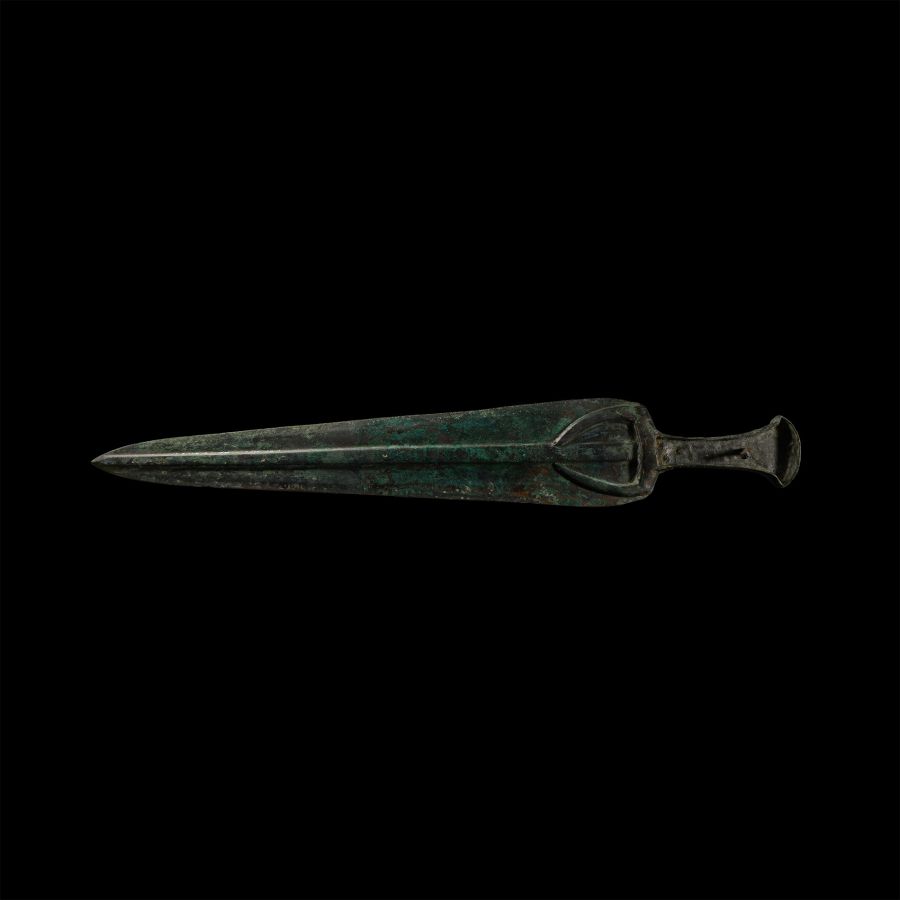
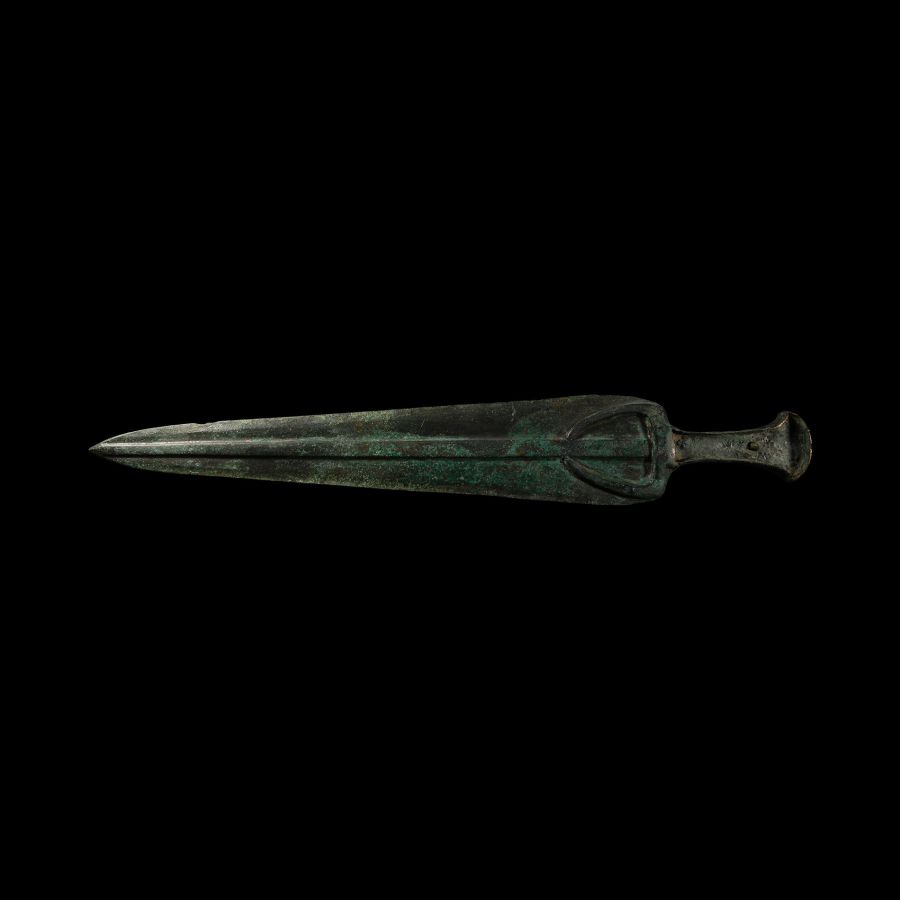
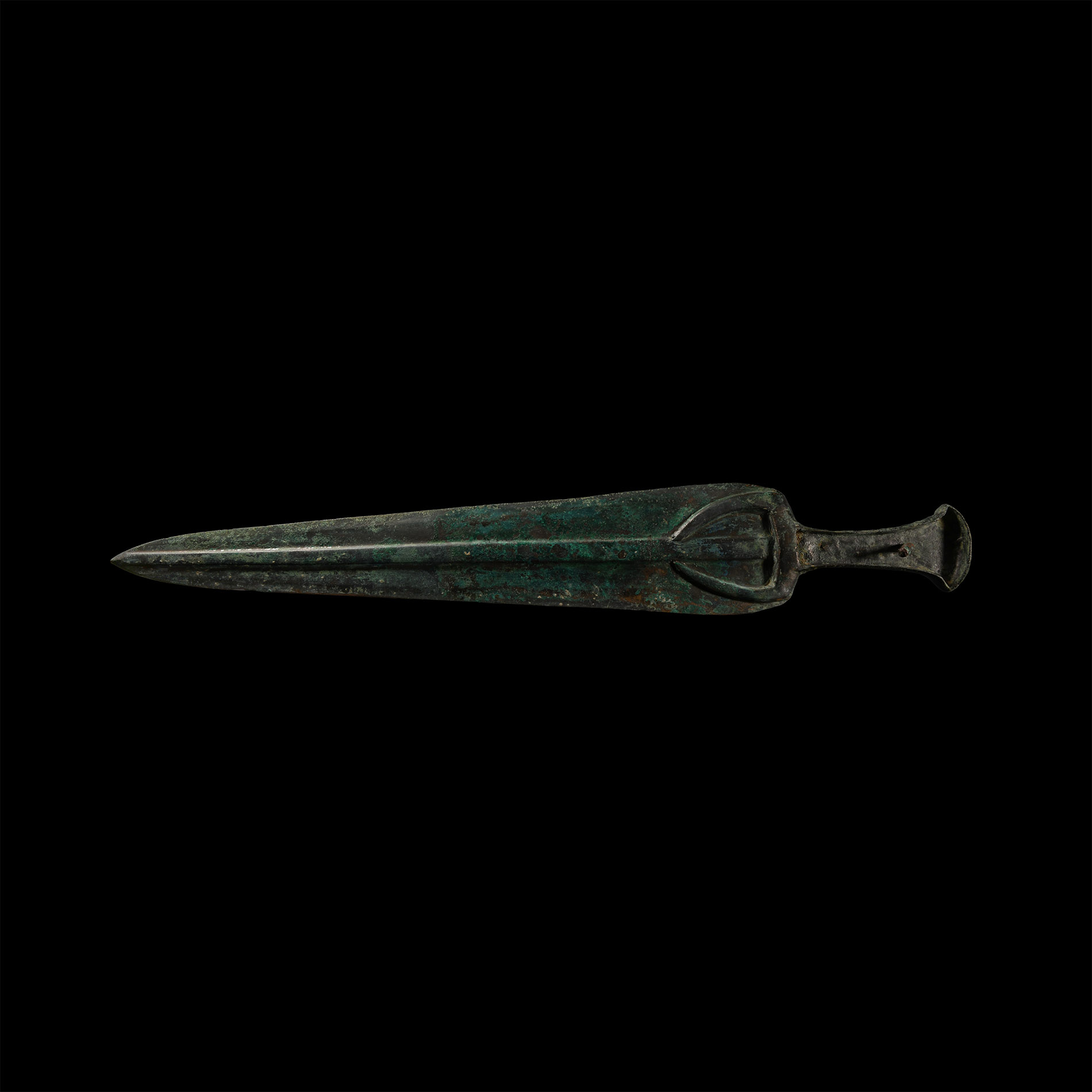
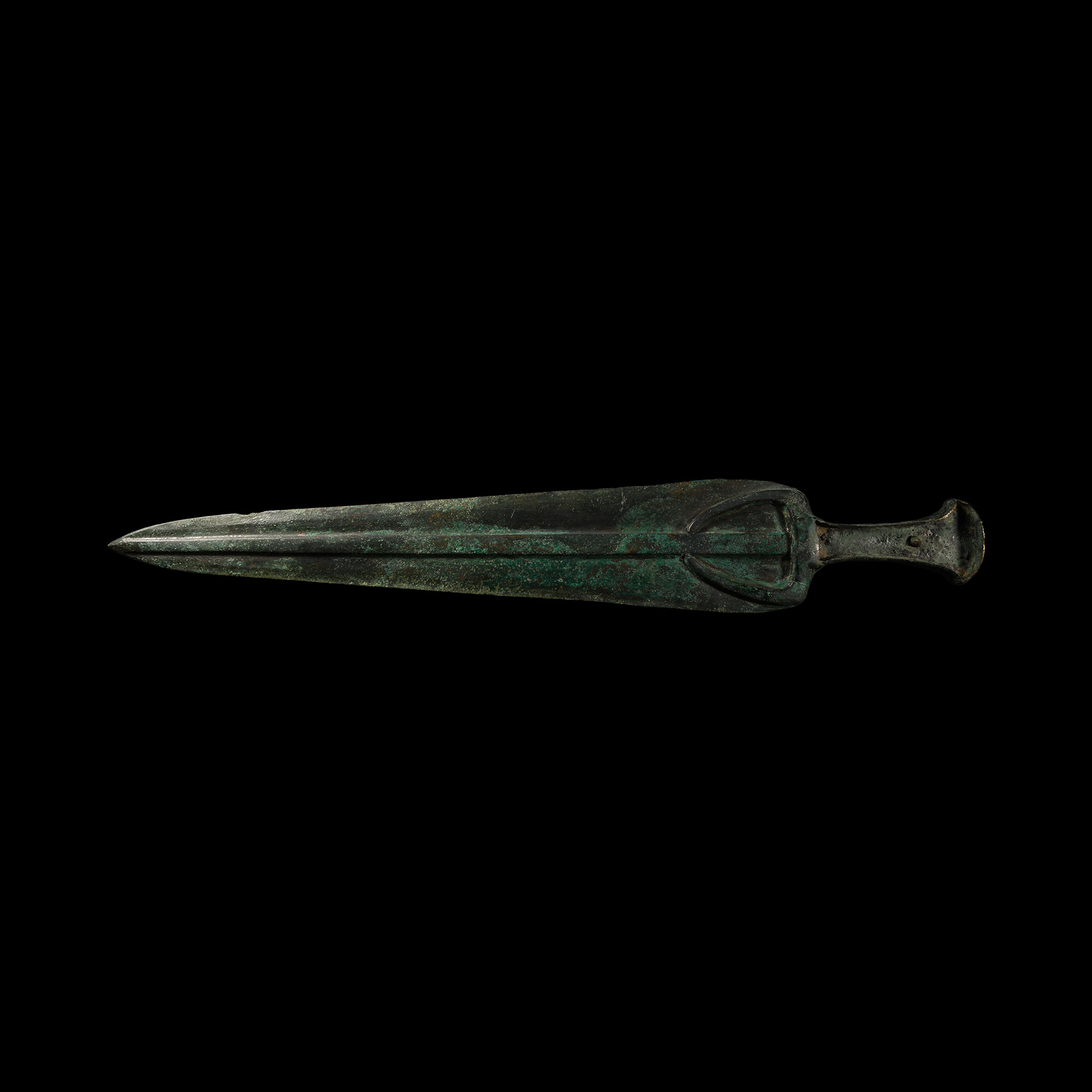
Marlik Sword with Decorated Hilt
14TH-10TH CENTURY B.C.
15 3/8 in. (477 grams, 39 cm).
A bronze sword with flanged hilt, penannular guard and strong midrib running to the pointed tip, hilt and pommel open to accept inlays, bronze fastening nail still visible in the pommel.
ProvenanceEx S. Motamed collection.
with Bellman's Auctions, 20th-26th June 2015, lot 2482.
Property of a London gentleman.
Cf. Khorasani, M.M., Arms and Armour from Iran - The Bronze Age to the End of the Qajar Period, Tübingen, 2006, p.400, cat.41, for identical type.
FootnotesAccording to Khorasani and Negahban, blade and grip of this kind of swords were cast in one-piece mould. The penannular guard was later added to the blade.
CONDITIONTimeLine Auctions follows a vetting process to ensure the authenticity and legality of all items, reinforcing our commitment to integrity and responsible trading. Each antiquity, antique, and coin lot undergoes thorough examination by a vetting committee of at least ten external specialists, professional trade association members, scientists, and archaeologists: Our Vetting Process
AUCTIONS:
TimeLine is a leading auction house specialising in antiquities, ancient art, collectables, natural history, coins, medals, and books. Our auctions offer museums, collectors, historians, and enthusiasts the opportunity to acquire unique and historically significant pieces.
-
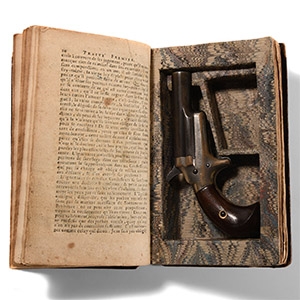
Colt .41 Rimfire Derringer Pistol and Book Case
19th century A.D.Sold for (Inc. bp): £715
A Colt .41 calibre single action rimfire single-shot derringer pocket pistol, the barrel top marked 'COLT' and the left frame '41 CAL'; with nickel-plated brass frame and steel rifled barrel (swivel to load) and bird's beak butt with plain wood grips; the pistol contained in an original case formed from a hollowed out leather-bound book Pratique du Sacrament de Penitence ou Methode pour L'Administrer Utilement, published Paris, 1714, the compartment lined with marbled paper with section for spare bullets; action in working order. 450 grams total, book 17 x 10 cm
Acquired Holts Auction, 2020, lot 899. Property of a Kent collector. Accompanied by lot ticket.
Sold as an exempt item under Section 58 (2) of the Firearms Act, 1968, to be held as a curiosity or ornament. No license required but buyer must be over 18 years of age. -
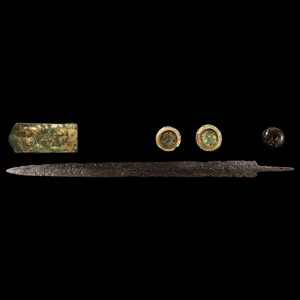
Migration Period Spatha Sword Blade with Fittings
Circa 4th-5th century A.D.Sold for (Inc. bp): £1,950
A military assemblage comprising: a double-edged spatha with a lentoid parallel-sided iron blade and pointed tip, battle nicks to both cutting edges; long tang with a bronze fastening rivet in situ; oblate chalcedony pommel; gilt copper-alloy chape scabbard fitting with fastening holes and a pair of round scabbard or baldric fittings. 937 grams total, 5-81.3 cm
Fine condition
Acquired 1971-1972. From the collection of the vendor's father. Property of a London, UK, collector. Accompanied by an academic report by Dr Raffaele D’Amato. This lot has been checked against the Interpol Database of stolen works of art and is accompanied by a search certificate number no.11587-198852.
Prestigious swords with richly trimmed sheaths, guards and hilts of the Great Migration Period on the Cimmerian Bosphorus are very few, although some specimens have been excavated from Kerch, Phanagoria, Hermonassa and Dzhurga-Oba. They were either custom-made or received as war booty. This sword belongs to a group of spathae of late Roman typology spread among the Germanic and Nomad foederati, and garrison troops of the Northern Black Sea and Bosphorus. -
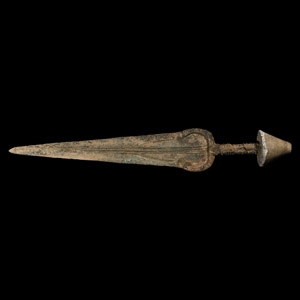
Luristan Sword Blade
Late 2nd millennium B.C.Sold for (Inc. bp): £936
A bronze sword with solid cast hilt with penannular guard and a horizontally ribbed grip; a conical stone mushroom pommel and a multi-fullered blade tapering to a sharp tip; handle repaired. 876 grams, 56 cm
Acquired 1980-2015. Ex Abelita family collection.
According to Moorey, such category of swords were distributed in the Northern Iran area, as proved by the Amarlu finds. Based on the example from the Ashmolean Museum, he dated them to the end of the 2nd millennium B.C., more precisely to a period between 1400-1200 B.C.
