
Loading, please wait...
LOT 1057
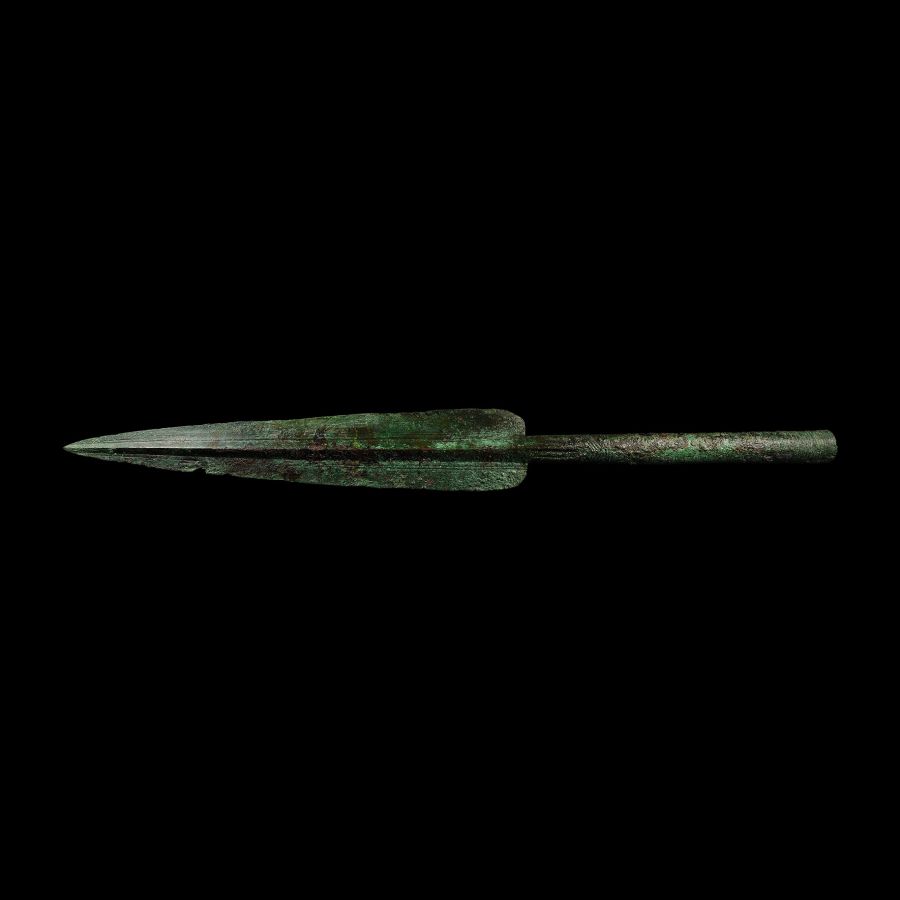
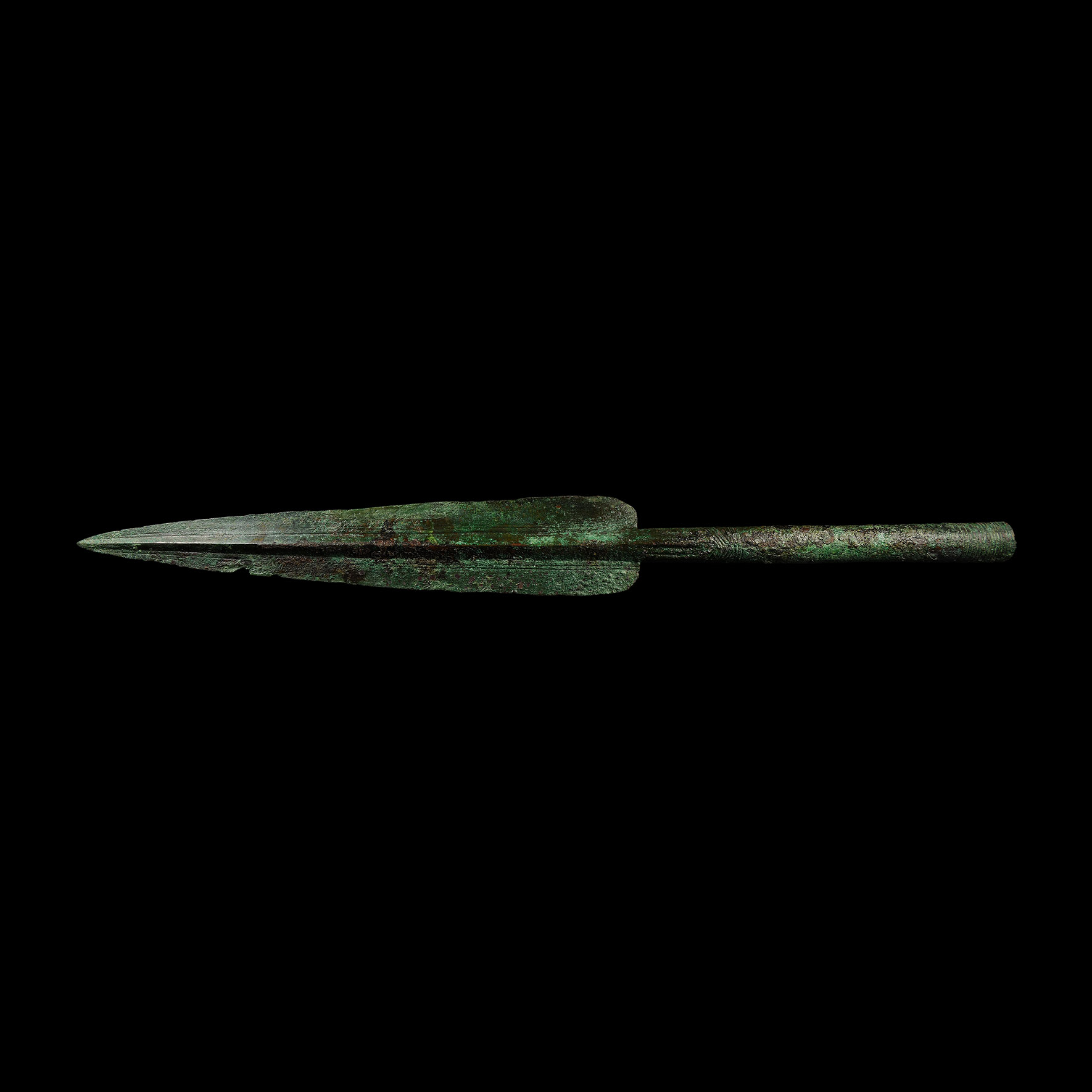
Marlik Decorated Spearhead
14TH-10TH CENTURY B.C.
21 3/4 in. (562 grams, 55 cm).
A bronze spearhead with projecting midribs, long folded socket, decorated by concentric horizontal lines at the base and beneath the blade, horizontal triangles and vertical grooves along the shaft; triangular blade with round shoulders, ornamented by vertical lines running parallel to the midrib; pair of holes on the lower part of the shaft for attachment to a wooden haft.
ProvenanceEx important Japanese collection, 1970s-2010.
LiteratureSee similar typology in Khorasani, M.M., Arms and Armour from Iran - The Bronze Age to the End of the Qajar Period, Tübingen, 2006, p.626, cat.271.
FootnotesThe spearhead, cast in one piece, belongs to the type VIII, subtype B (triangular blade) of the Khorasani classification. Similar spearheads were excavated by Dr Negahban in the Marlik necropolis (tomb 1, trench III D) and are preserved in the National Museum of Iran, Teheran.
CONDITIONTimeLine Auctions follows a vetting process to ensure the authenticity and legality of all items, reinforcing our commitment to integrity and responsible trading. Each antiquity, antique, and coin lot undergoes thorough examination by a vetting committee of at least ten external specialists, professional trade association members, scientists, and archaeologists: Our Vetting Process
AUCTIONS:
TimeLine is a leading auction house specialising in antiquities, ancient art, collectables, natural history, coins, medals, and books. Our auctions offer museums, collectors, historians, and enthusiasts the opportunity to acquire unique and historically significant pieces.
-
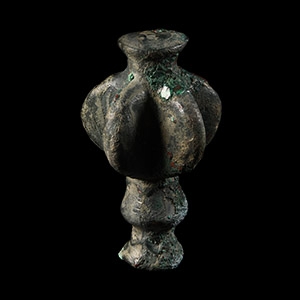
Western Asiatic Flanged Macehead
Late 3rd millennium B.C.Sold for (Inc. bp): £104
A cylindrical bronze macehead with five D-shaped flanges to the circumference; socket to base. 131 grams, 80 mm
Early 1990s London collection. Acquired on the UK art market. From a private collection, Lancashire, UK.
Bronze maces with a long bronze tubular sleeve appeared in Mesopotamia from the last third of the 3rd millennium B.C., apparently being of Palestinian origin. This type of mace was then spread to Elam and from there to India. -
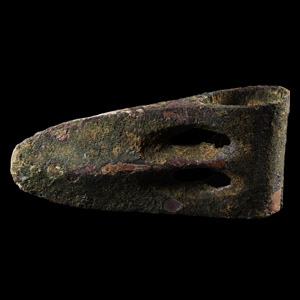
Babylonian Bronze Axehead
2nd millennium B.C.Sold for (Inc. bp): £416
A bronze duck-billed shaft-hole axe head featuring a curved, beak-shaped blade with two pierced eyes and a raised median ridge. 204 grams, 10.5 cm
Acquired early 1990s. Ex private American collection; thence by descent. Private Swiss collection since 1998. -
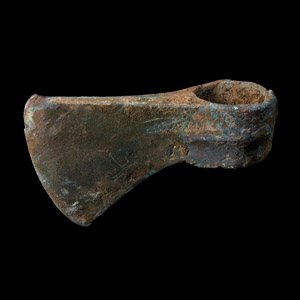
Western Asiatic Socketted Axehead
3rd millennium B.C.Sold for (Inc. bp): £89
A Bronze Age axehead with swept blade, large socket with raised circumferential rib and a vertical rib to the rear. 545 grams, 13 cm
Fine condition.
Private UK collection, 1980s-1990s. Acquired from a UK gallery, circa 2000.
This axe belongs to a group mainly including those of rectangular shape, the blades themselves rectangular or with slightly divergent edges, with a straight or rounded edges.
