
Loading, please wait...
LOT 0391
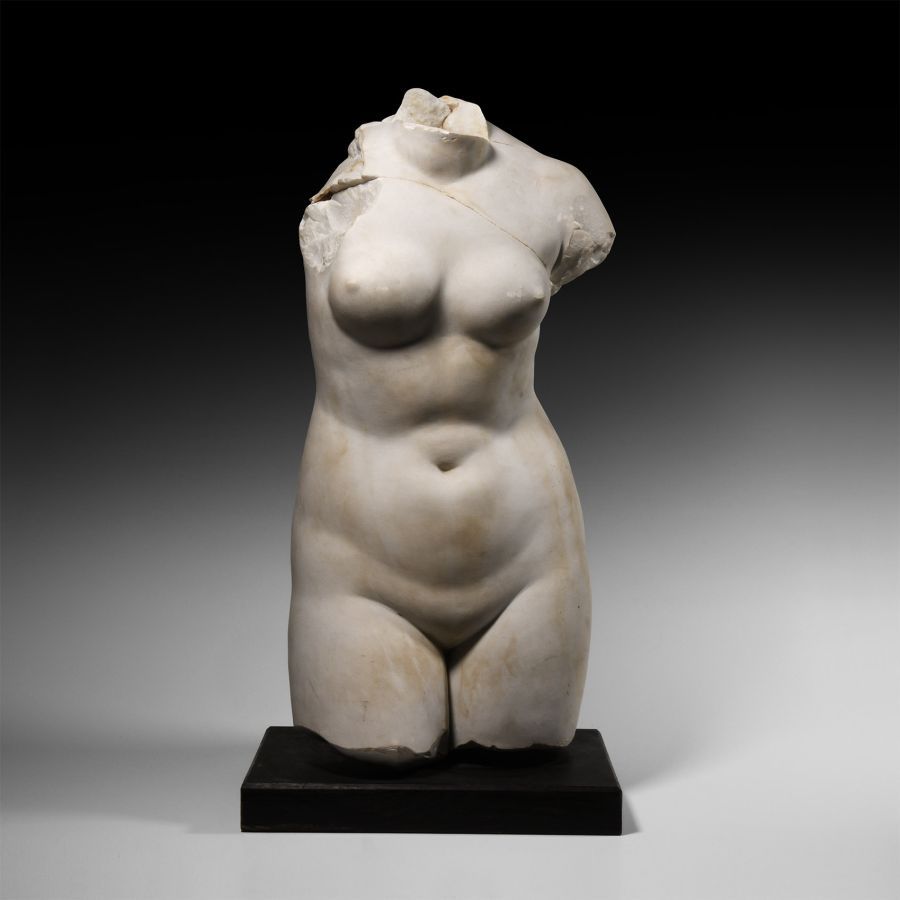
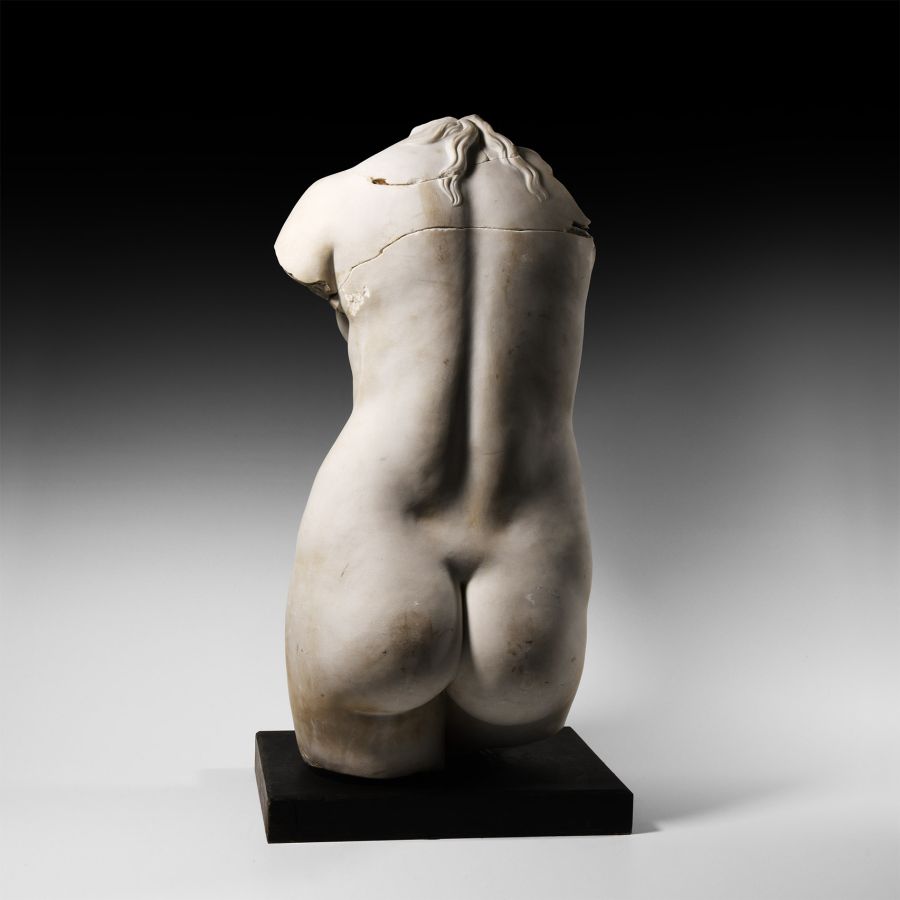
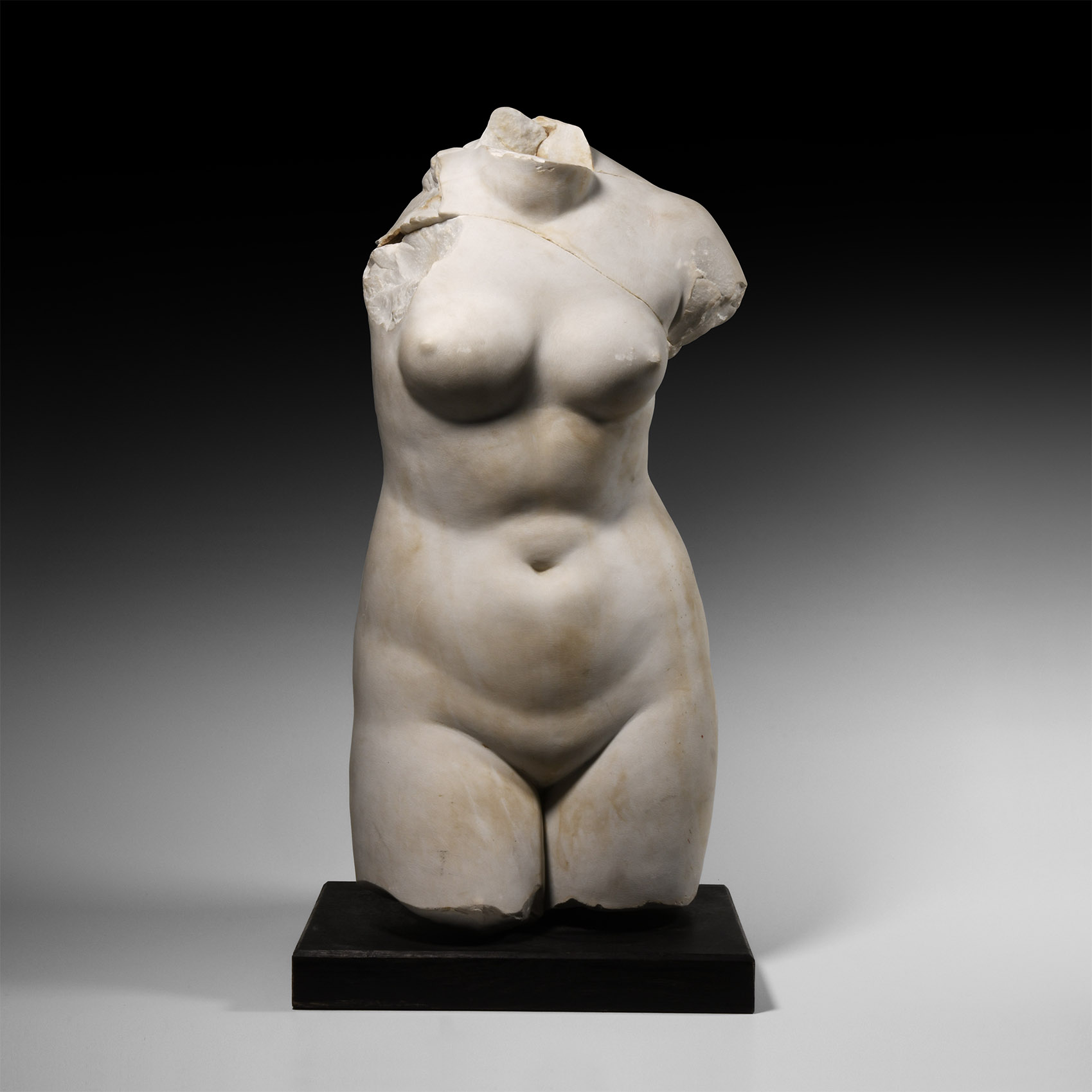
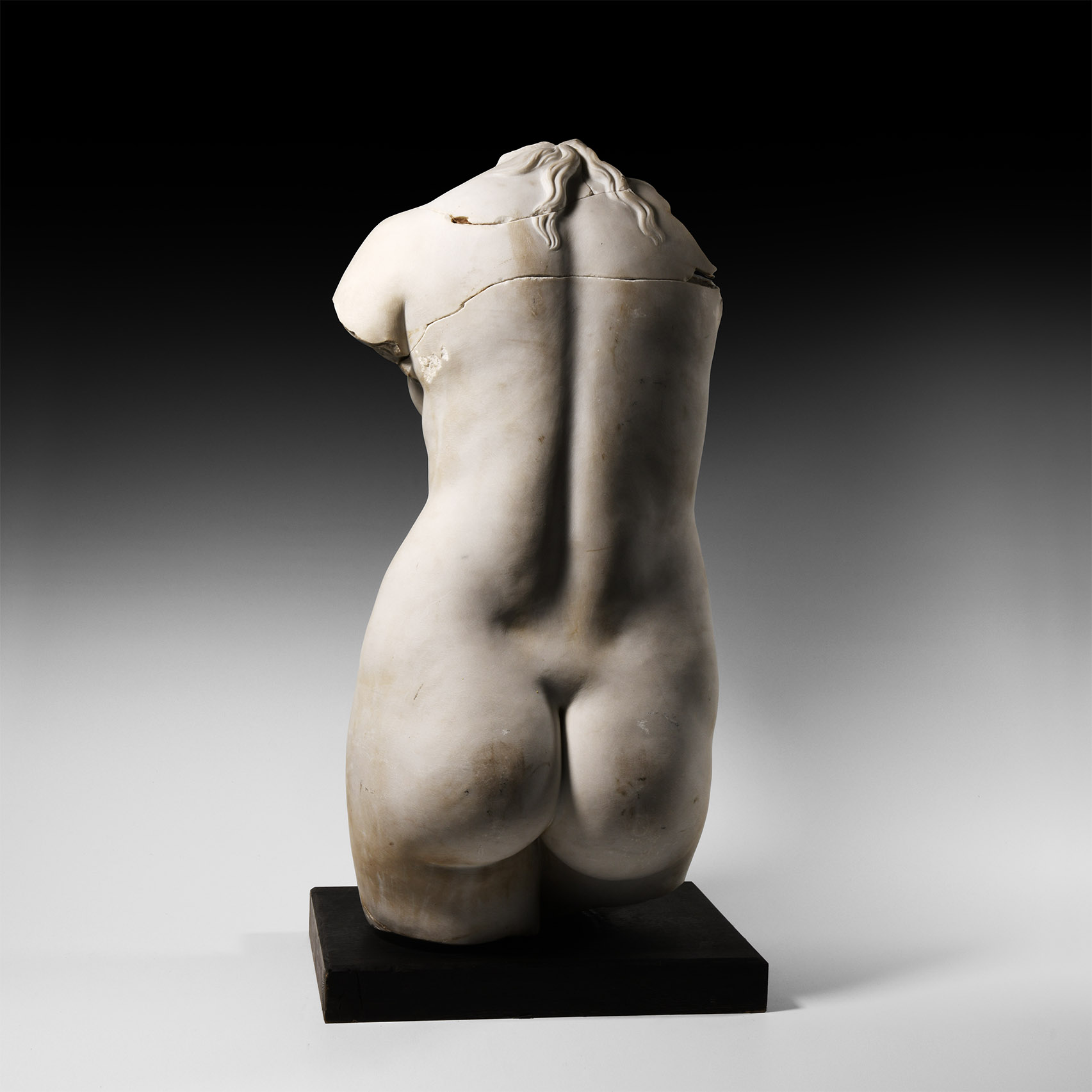
Marble Torso of Aphrodite of Knidos
19TH-20TH CENTURY A.D.
25 1/4 in. (51.1 kg total, 64 cm high including stand).
A marble torso from a once larger statue of the goddess Venus, modelled naturalistically, inspired by Praxiteles's nude Aphrodite from the Greek city-state of Knidos.
ProvenanceFrench collection, 1960s-early 2000s.
From an important Paris gallery, France.
The original statue of nude Aphrodite (Venus) was created for the Temple of Aphrodite at Knidos as a devotion monument. It represented the nude Goddess as she proceeded for the ceremonial bath that regenerated her pureness, discreetly concealing herself with her hand and holding a cloth with her other hand. The monument is famous for its beauty, and it is intended to be seen from every aspect.
CONDITIONTimeLine Auctions follows a vetting process to ensure the authenticity and legality of all items, reinforcing our commitment to integrity and responsible trading. Each antiquity, antique, and coin lot undergoes thorough examination by a vetting committee of at least ten external specialists, professional trade association members, scientists, and archaeologists: Our Vetting Process
AUCTIONS:
TimeLine is a leading auction house specialising in antiquities, ancient art, collectables, natural history, coins, medals, and books. Our auctions offer museums, collectors, historians, and enthusiasts the opportunity to acquire unique and historically significant pieces.
-
Post Medieval Statue of Saint Nicholas
16th-17th century A.D. or laterEstimate: £3,000 - 4,000 (+bp*)
Opening Bid: £1,500
A ceramic statue of St Nicholas standing in episcopal attire with stole and pallium, pectoral cross and mitre; his hands spread in a benevolent gesture, head turned slightly downwards; rosette and other detailing to the robes and headgear; integral rectangular base; repaired. 1.10 m high
English private collection. This lot has been checked against the Interpol Database of stolen works of art and is accompanied by search certificate number no.11675-199817. -
Roman Style Silver Rings with Gemstones
20th century A.D.Sold for (Inc. bp): £234
A pair of silver finger rings with flared shoulders, one with inset carnelian cloison intaglio of Mercury with caduceus, the other with jasper intaglio of the same subject. 31 grams total, 25 mm each
with Dawson's, London, 31 February 2022, lot 464 [Part, Listed as Roman, £3,317.60]. English private collection. -
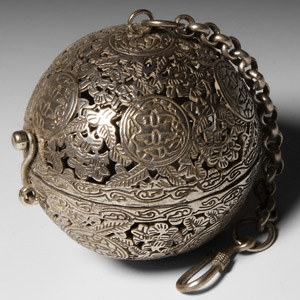
Post Medieval Gimballed Incense Burner
20th century A.D.Sold for (Inc. bp): £130
A silver hinged spherical incense burner with swivel clasp and gimbal; pierced decoration of foliate form with roundels incised with flying insects; swivel clasp and suspension chain with decorated hook; Chinese characters (possibly a maker's name) inscribed to hook. 91 grams, 16 cm long
with a London, UK gallery 1971-early 2000s.
