
Loading, please wait...

LOT 2397
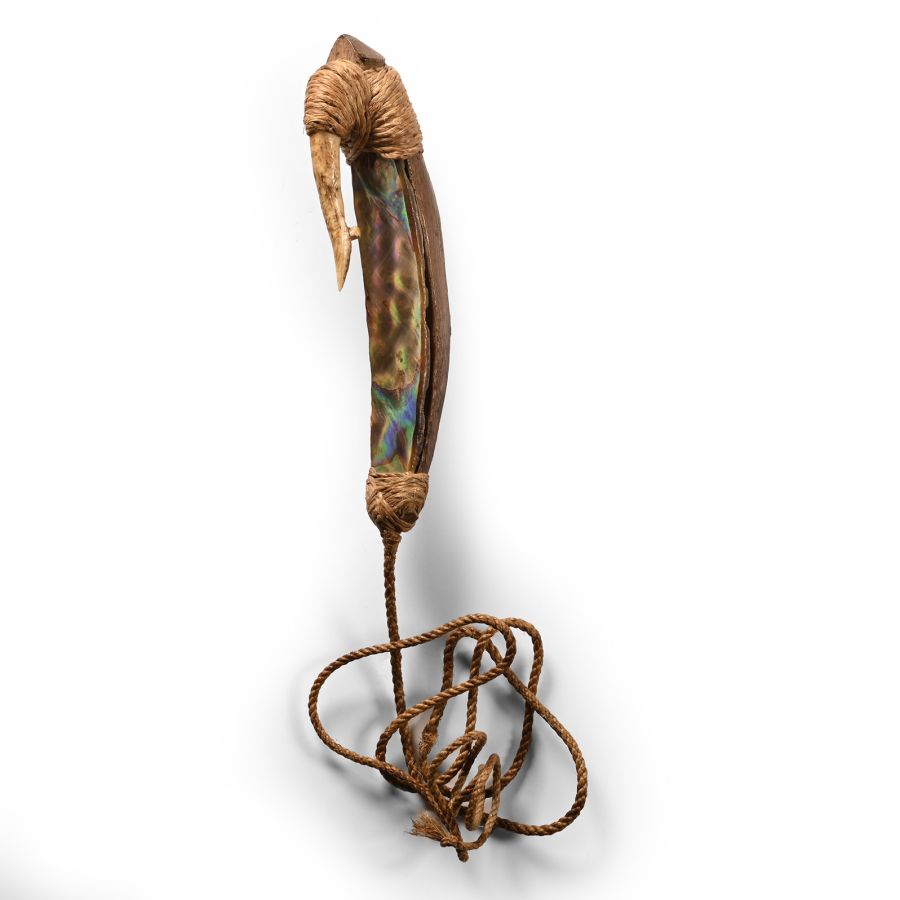
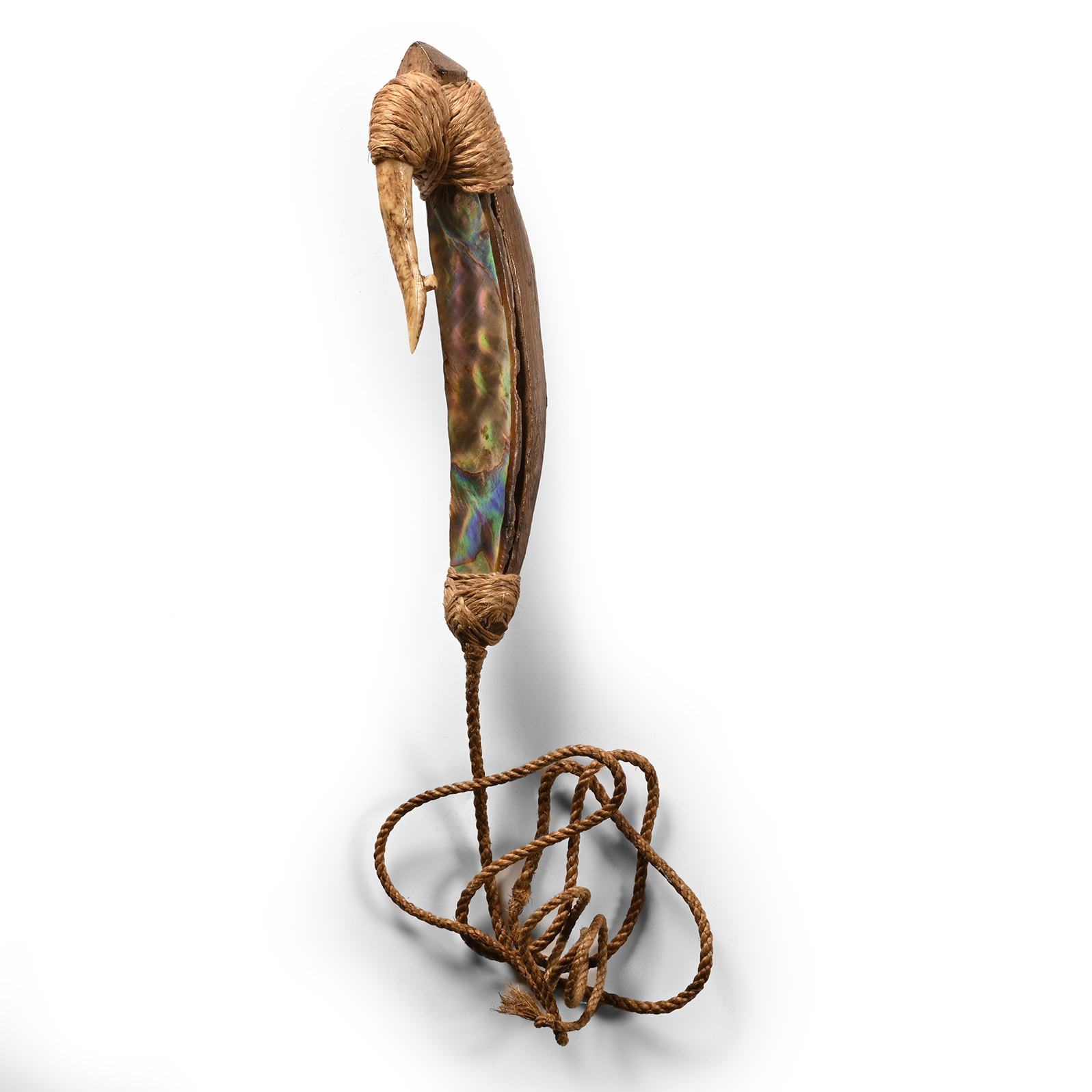
Maori Trawling Lure Fish Hook
NEW ZEALAND, 18TH-19TH CENTURY A.D.
3 1/2 in. (15.9 grams, hook: 90 mm).
An Oceanic fish-hook comprising a D-section wooden shank with polished shell panel (the lure) and barbed bone hook attached with twine. [No Reserve]
ProvenanceFrom the private collection of Kenneth Machin (1936-2020), Buckinghamshire, UK; his collection of antiquities and natural history was formed since 1948; thence by descent.
LiteratureSee Starzecka, D.C., Neich R. & Pendergrast, M., The Maori Collections of the British Museum, British Museum Press, 2010; Grulke, W., Adorned by Nature: Adornment, Exchange & Myth in the South Seas, At One Communications, 2022; Blau, D. & Maas, K., Fish Hooks of the Pacific Islands, Hirmer, 2012. Hooper, S., Pacific Encounters: Art & Divinity in Polynesia 1760-1860, British Museum Press, 2006.
FootnotesThis Maori trolling lure fish hook (pā kahawai) comprises three pieces – a worked piece of polished haliotis or paua shell attached to a curved, wooden shank, and then a carved long barb. Each of the segments is held in place by tightly bound muka fibre. Such lures were used by the Maori to fish for sea salmon (kahawai). The lure would be dragged behind a fast-moving canoe to attract the prey with the haliotis shell glinting in the sun to emulate the scales of fish to attract larger fish. The technique of using a trolling lure was a Polynesian fishing technique that was brought to New Zealand by the Maori and adapted using local materials.
CONDITIONTimeLine Auctions follows a vetting process to ensure the authenticity and legality of all items, reinforcing our commitment to integrity and responsible trading. Each antiquity, antique, and coin lot undergoes thorough examination by a vetting committee of at least ten external specialists, professional trade association members, scientists, and archaeologists: Our Vetting Process
AUCTIONS:
TimeLine is a leading auction house specialising in antiquities, ancient art, collectables, natural history, coins, medals, and books. Our auctions offer museums, collectors, historians, and enthusiasts the opportunity to acquire unique and historically significant pieces.
-
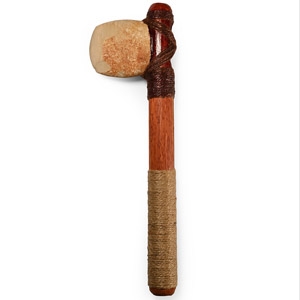
Aboriginal Chert Axe
Australia, 20th century A.D.Sold for (Inc. bp): £72
Comprising a split wooden haft with cord bindings, fitted polished stone blade with cord bindings secured with a resinous adhesive. 257 grams, 28 cm
From New South Wales, Australia. From the private collection of Kenneth Machin (1936-2020), Buckinghamshire, UK; with collection no.27; his collection of antiquities and natural history was formed since 1948; thence by descent. -
.jpg)
Shipwreck African Slave Trade Manilla Currency Bracelet Pair
19th century A.D.Sold for (Inc. bp): £91
Group of two penannular round-section bracelets with clubbed ends. 150 grams total, 59-63 mm
From the shipwrecked English Schooner 'Douro' sunk off the Isles of Scilly in 1843. Ian Wilkinson collection, Nottinghamshire, UK, formed since 1985. Each accompanied by a copy of a certificate of authenticity from the Isles of Scilly Underwater Centre. -
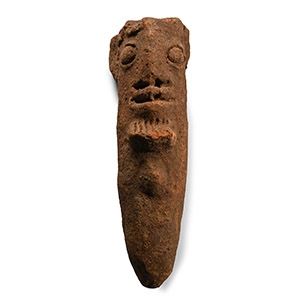
Central African Komaland Terracotta Burial Mound Head Spike
12th-16th century A.D.Sold for (Inc. bp): £65
Cylindrical peg with stylised anthropomorphic head detailing, button eyes, segmented ledge beard, slit mouth, segmented fringe above. 254 grams, 13.8 cm
From a collection acquired on the UK art market from various auction houses and collections mostly before 2000. From an important Cambridgeshire estate; thence by descent.
