
Loading, please wait...
LOT 0938
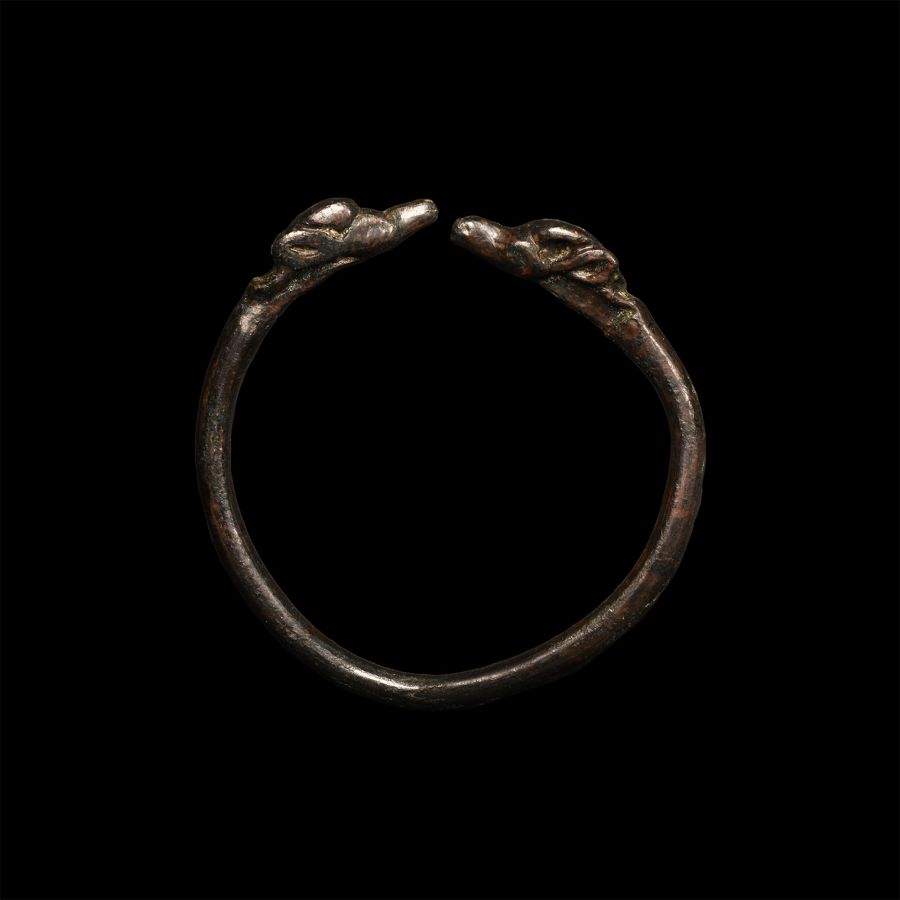
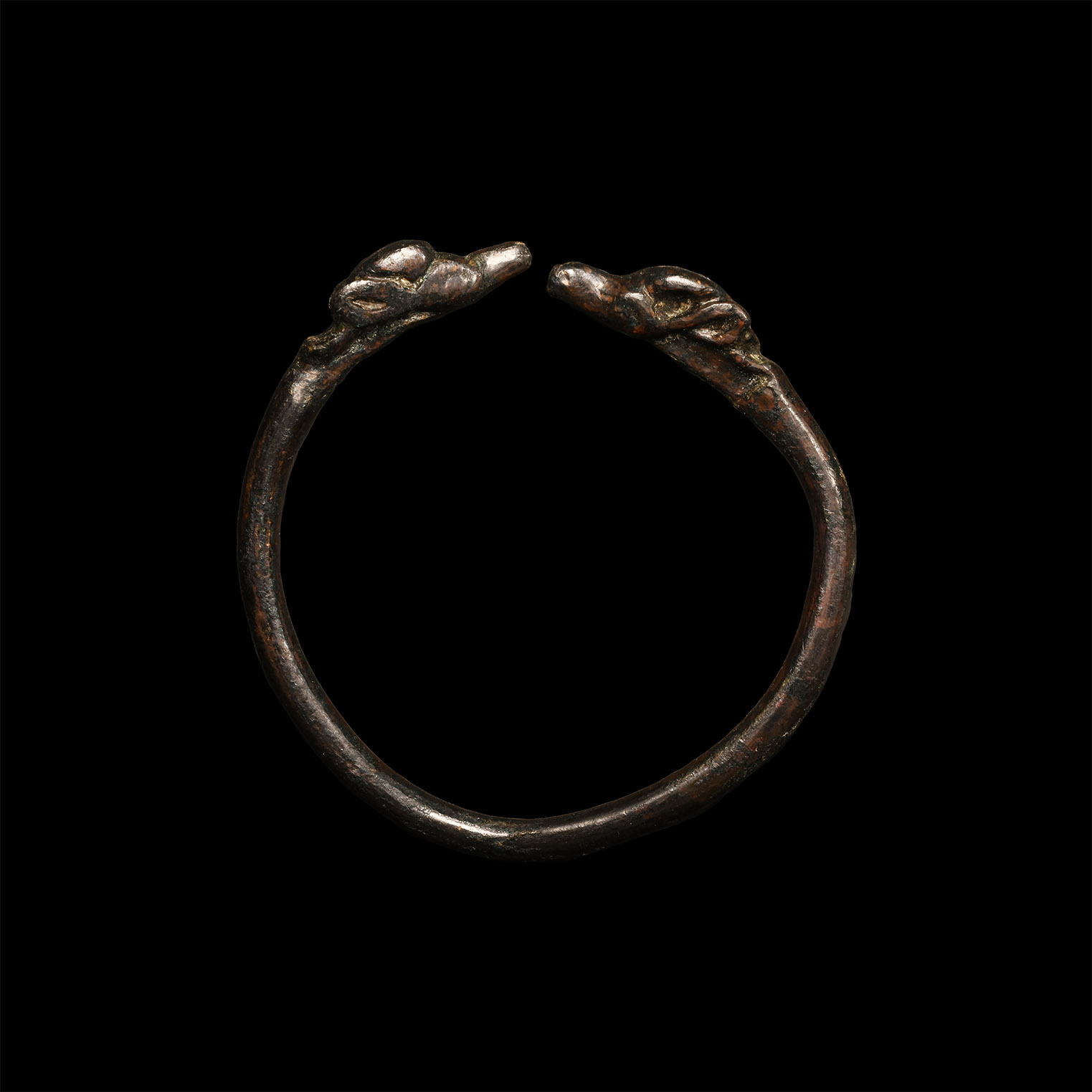
Luristan Zoomorphic Bracelet
CIRCA 8TH-6TH CENTURY B.C.
2 3/4 in. (40 grams, 69 mm).
A copper-alloy bracelet composed of a round-section hoop and horned animal head terminals. [No Reserve]
Provenancewith a London, UK gallery 1971-early 2000s.
CONDITIONTimeLine Auctions follows a vetting process to ensure the authenticity and legality of all items, reinforcing our commitment to integrity and responsible trading. Each antiquity, antique, and coin lot undergoes thorough examination by a vetting committee of at least ten external specialists, professional trade association members, scientists, and archaeologists: Our Vetting Process
AUCTIONS:
TimeLine is a leading auction house specialising in antiquities, ancient art, collectables, natural history, coins, medals, and books. Our auctions offer museums, collectors, historians, and enthusiasts the opportunity to acquire unique and historically significant pieces.
-
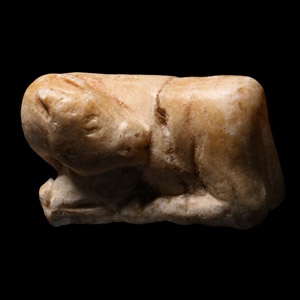
Sumerian Amuletic Calf Figurine
3rd-2nd millennium B.C.Estimate: £300 - 400 (+bp*)
Opening Bid: £150
A composition amuletic figurine of a calf with legs folded and bound beneath the body, head turned along the flank, slot to the underside. 9.46 grams, 30 mm
Fine condition.
Acquired 1969-1999. London collection of the late Mr S.M., thence by descent. -
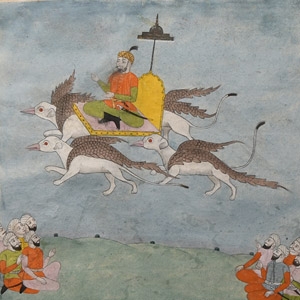
Framed Indo-Persian Watercolour Painting
Early 20th century A.D.Estimate: £120 - 170 (+bp*)
Opening Bid: £60
A watercolour painting showing scene composed of a figure being transported by four winged mythical creatures, two groups of onlookers seated in the landscape below; two columns of text below; mounted in a reveal and a glazed wooden frame. 1 kg, 48 x 30.2 cm
Fine condition.
Acquired on the UK art market, 1980s-1990s. The Woodbridge collection of Indo-Persian art. -
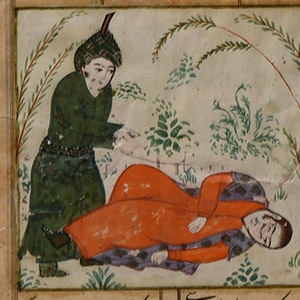
Framed Indo-Persian Watercolour Manuscript Leaf
Late 19th-early 20th century A.D.Estimate: £80 - 100 (+bp*)
Opening Bid: £40
A manuscript leaf with a watercolour scene of two men in a landscape, one lying on the ground, surrounded by trees and grass, panels of five lines of a poem above and below, border around the whole; set in a reveal within a glazed wooden frame. 637 grams, 27.2 x 20 cm
Fair condition.
Acquired on the UK art market, 1980s-1990s. The Woodbridge collection of Indo-Persian art.
