
Loading, please wait...

LOT 1312
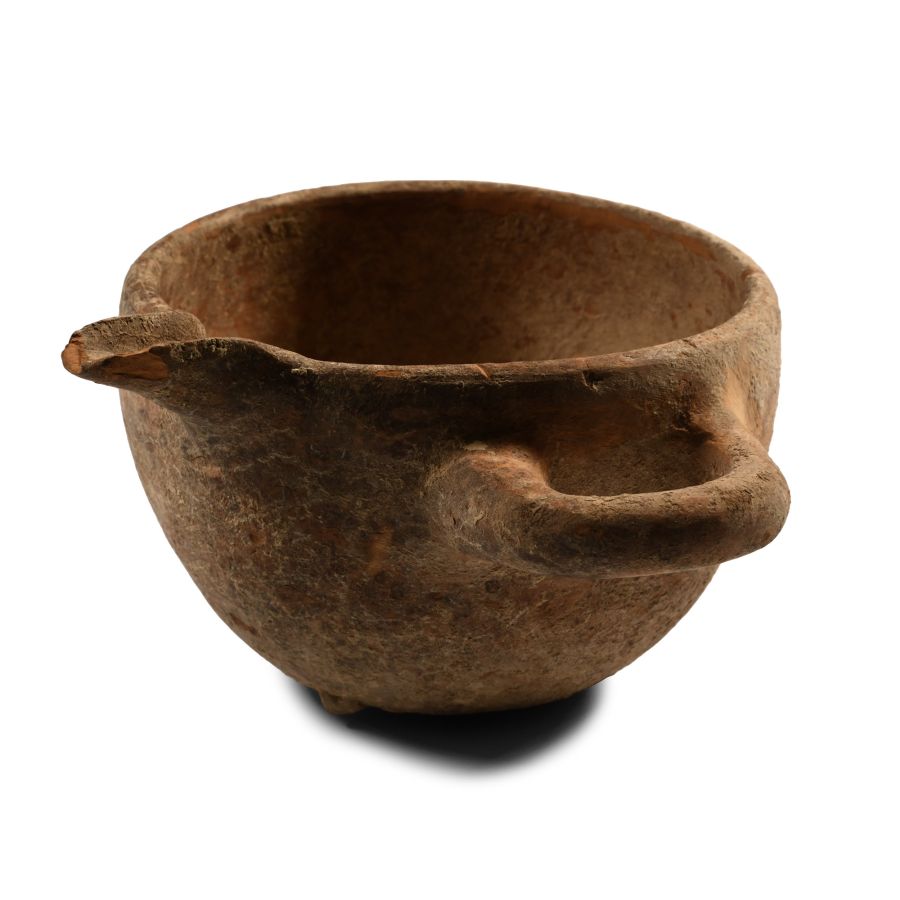
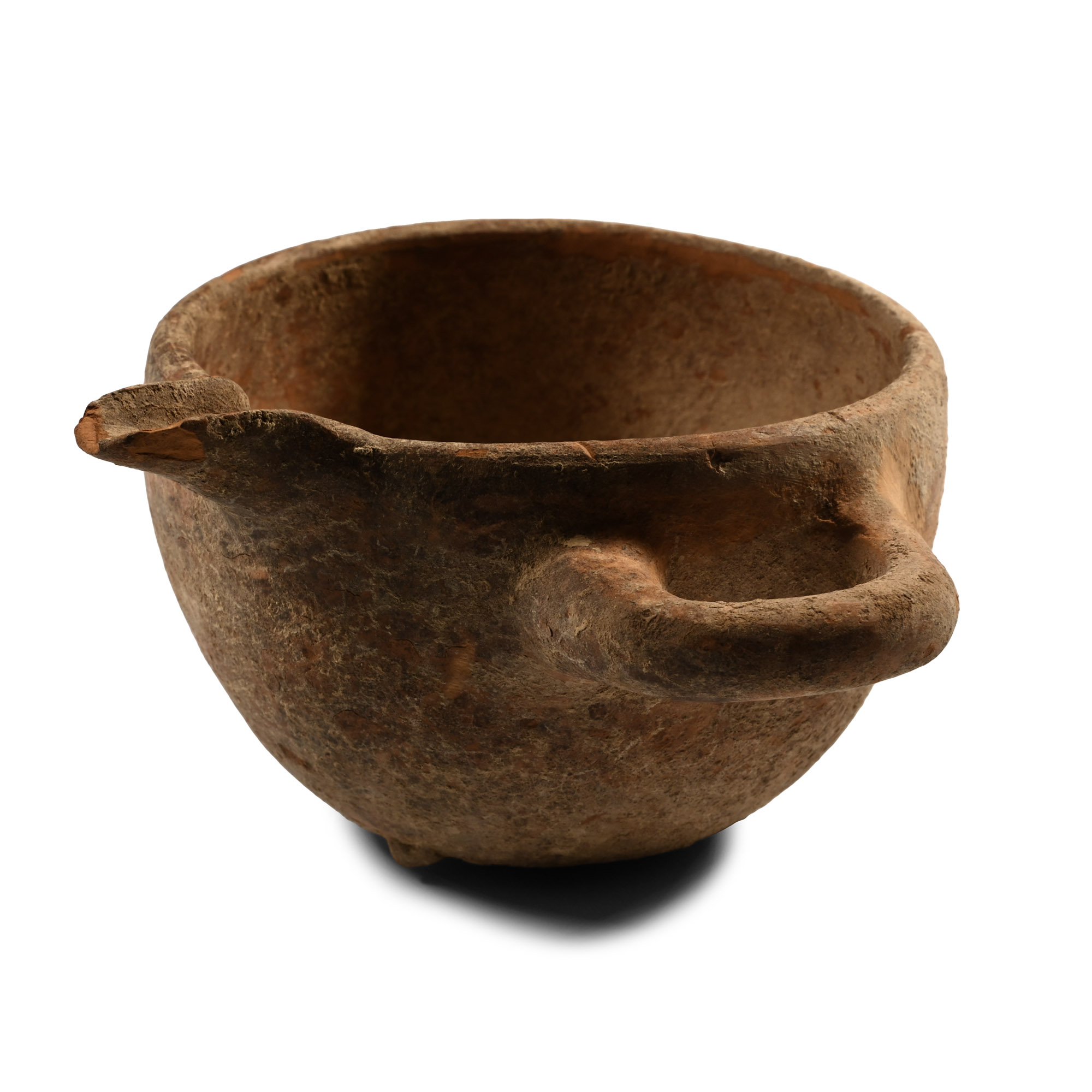
Luristan Terracotta Spouted Cup
CIRCA 800-600 B.C.
5 1/8 in. (232 grams, 13 cm).
With a short pouring spout on the rim and a single horizontal lateral handle; three stub feet to the base. [No Reserve]
ProvenanceAcquired 1980-2015.
Ex Abelita family collection.
Ex TimesAncient, Bristol, UK.
Accompanied by a copy of a previous catalogue entry.
This lot has been cleared against the Art Loss Register database, and is accompanied by an illustrated lot declaration signed by the Head of the Antiquities Department, Dr Raffaele D'Amato.
TimeLine Auctions follows a vetting process to ensure the authenticity and legality of all items, reinforcing our commitment to integrity and responsible trading. Each antiquity, antique, and coin lot undergoes thorough examination by a vetting committee of at least ten external specialists, professional trade association members, scientists, and archaeologists: Our Vetting Process
AUCTIONS:
TimeLine is a leading auction house specialising in antiquities, ancient art, collectables, natural history, coins, medals, and books. Our auctions offer museums, collectors, historians, and enthusiasts the opportunity to acquire unique and historically significant pieces.
-
Western Asiatic Terracotta Jar
1st millennium B.C.Sold for (Inc. bp): £33
Coarse ware jar with biconvex profile, flared rim. 1.62 kg, 20.5 cm
Acquired 1980-2015. Ex Abelita family collection. This lot has been cleared against the Art Loss Register database, and is accompanied by an illustrated lot declaration signed by the Head of the Antiquities Department, Dr Raffaele D'Amato. -
Sumerian Green Stone Cylinder Seal
Uruk, 3rd millennium B.C.Estimate: £550 - 750 (+bp*)
Opening Bid: £300
With incuse frieze of three horizontal lines of stylised seated figures, pierced for suspension. 17.5 grams, 21 mm
Ex 'S' collection, London, UK. Examined by Professor Wilfrid George Lambert FBA (1926-2011), historian, archaeologist, and specialist in Assyriology and Near Eastern archaeology, in the late 1980s and early 1990s. This lot has been cleared against the Art Loss Register database, and is accompanied by an illustrated lot declaration signed by the Head of the Antiquities Department, Dr Raffaele D'Amato. -
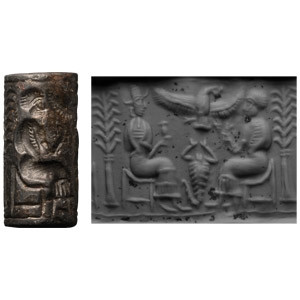
Western Asiatic Old Babylonian Haematite Cylinder Seal
Early 2nd millennium B.C.Sold for (Inc. bp): £390
With frieze comprising two seated figures facing each other, each holding a cup in one hand, farahavar above and rearing scorpion below; frond scene divider; supplied with a museum-quality impression. 5.35 grams, 20 mm
From the 'S' collection, acquired 1970-1990s. The collection was seen and studied by W.G. Lambert, late Professor of Assyriology at the University of Birmingham, 1970-1993. This lot has been cleared against the Art Loss Register database, and is accompanied by an illustrated lot declaration signed by the Head of the Antiquities Department, Dr Raffaele D'Amato.
