
Loading, please wait...
LOT 1061
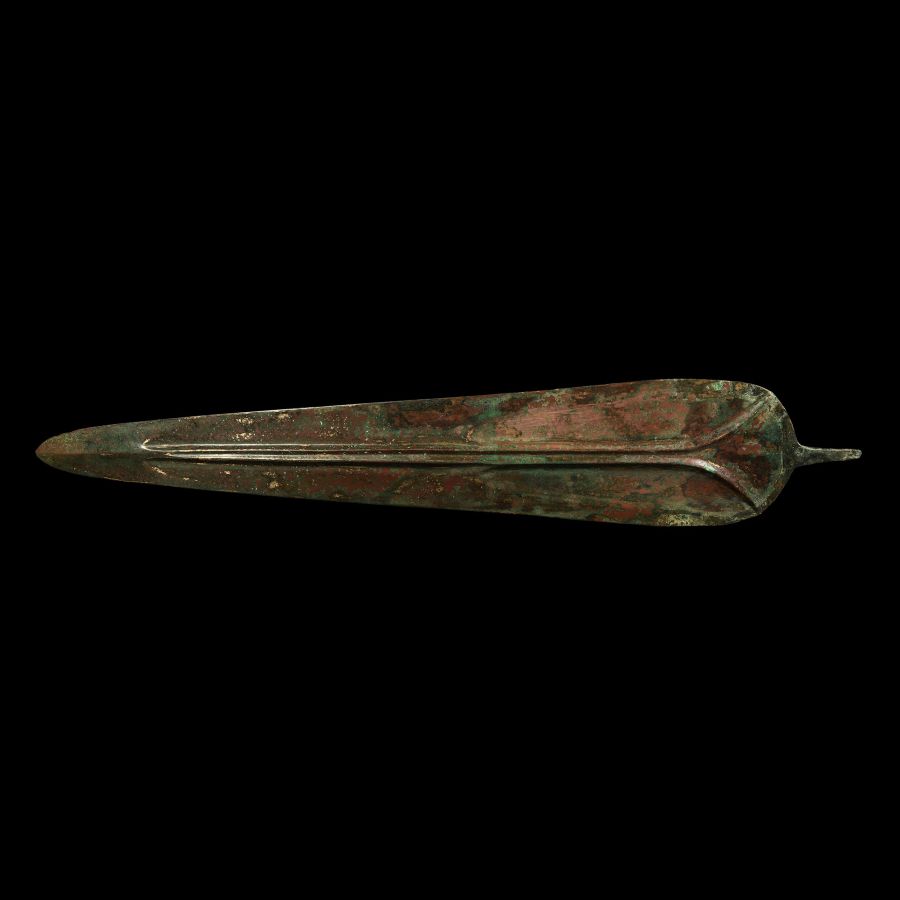
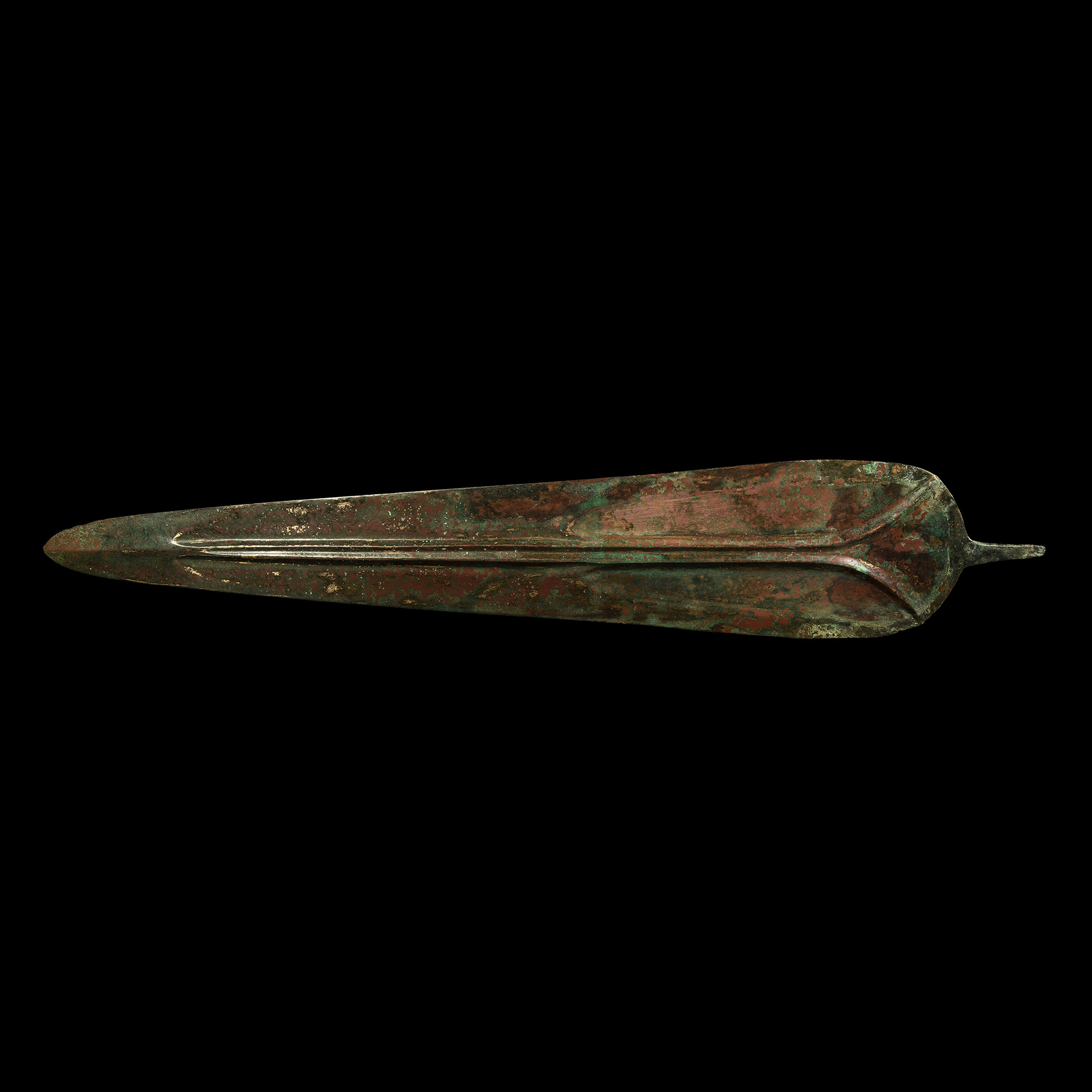
Luristan Sword Blade with Blood Channels
2ND MILLENNIUM B.C.
16 1/4 in. (422 grams, 41.5 cm).
A substantial bronze leaf-shaped blade with raised midrib extending to a short tang, ribbed fullers with curved ends extending to the shoulders.
ProvenanceAcquired in the 1990s.
With a London, UK, gallery.
Property of a London collector; from her family's private collection.
See Khorasani, M.M., Arms and Armour from Iran. The Bronze Age to the End of the Qajar Period, Tübingen, 2006, s. cat 31, for type.
FootnotesThe metalworking techniques used in making bronze weapons in Luristan were very complex. Surfaces were often finished in repoussé work, and some of the weapons were chased, others engraved.
CONDITIONTimeLine Auctions follows a vetting process to ensure the authenticity and legality of all items, reinforcing our commitment to integrity and responsible trading. Each antiquity, antique, and coin lot undergoes thorough examination by a vetting committee of at least ten external specialists, professional trade association members, scientists, and archaeologists: Our Vetting Process
AUCTIONS:
TimeLine is a leading auction house specialising in antiquities, ancient art, collectables, natural history, coins, medals, and books. Our auctions offer museums, collectors, historians, and enthusiasts the opportunity to acquire unique and historically significant pieces.
-
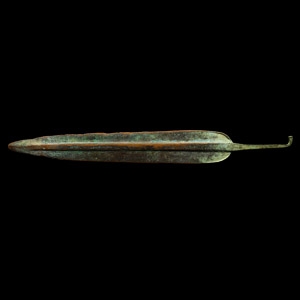
Marlik Spearhead with Pronounced Ridge
14th-10th century B.C.Sold for (Inc. bp): £114
A heavy bronze spearhead comprising an oval blade with gently curved shoulders and strong midrib, flat rectangular-section tang tapering to a curved end. 432 grams, 45.8 cm
Fine condition.
Ex Abelita family collection, 1980-2015.
The spearhead belongs to the type V of the heavy spearheads, similar to the ones excavated by Dr. Negahban in Tomb 47 (Trench XXIIE) of the Marlik necropolis. The heavy spearheads, cast in one piece, usually have an oval blade with rounded gently curved shoulders and a rounded midrib near the tang. -
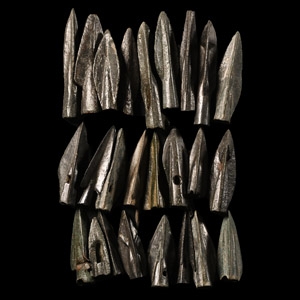
Greek Arrowhead Group
5th-3rd century B.C.Sold for (Inc. bp): £312
A group of 25 bronze socketted arrowheads, including leaf-shaped types and examples with triangular cross-sections. 76.9 grams total, 21-40 mm
Acquired before 2000. From the collection of a European gentleman living in the UK. -
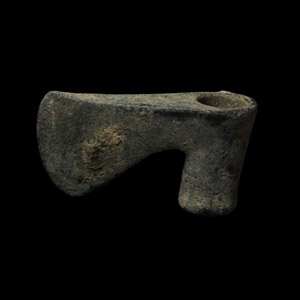
Luristan Socketted Axehead
13th-7th century B.C.Sold for (Inc. bp): £89
A small, heavy socketted bronze axehead with convex cutting edge. 243 grams, 86 mm
Fine condition.
English collection formed in the 1990s. UK art market. Property of an Essex gentleman.
Unadorned weapons, especially axes, adzes and picks, were made by Luristan craftsmen using simple clay or stone bivalve moulds, into which was inserted a core to form the socket for the shaft. Typically, the metallic composition consisted of a combination of arsenical bronze and copper, together with a small percentage of lead.
