
Loading, please wait...
LOT 0892
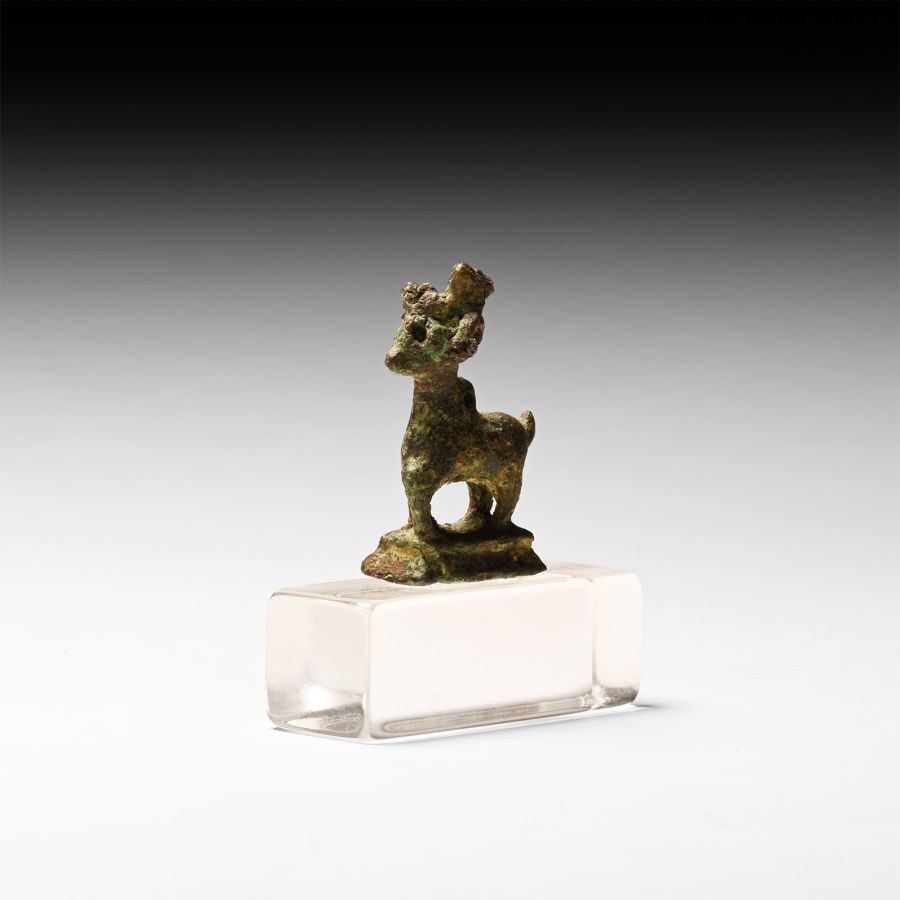
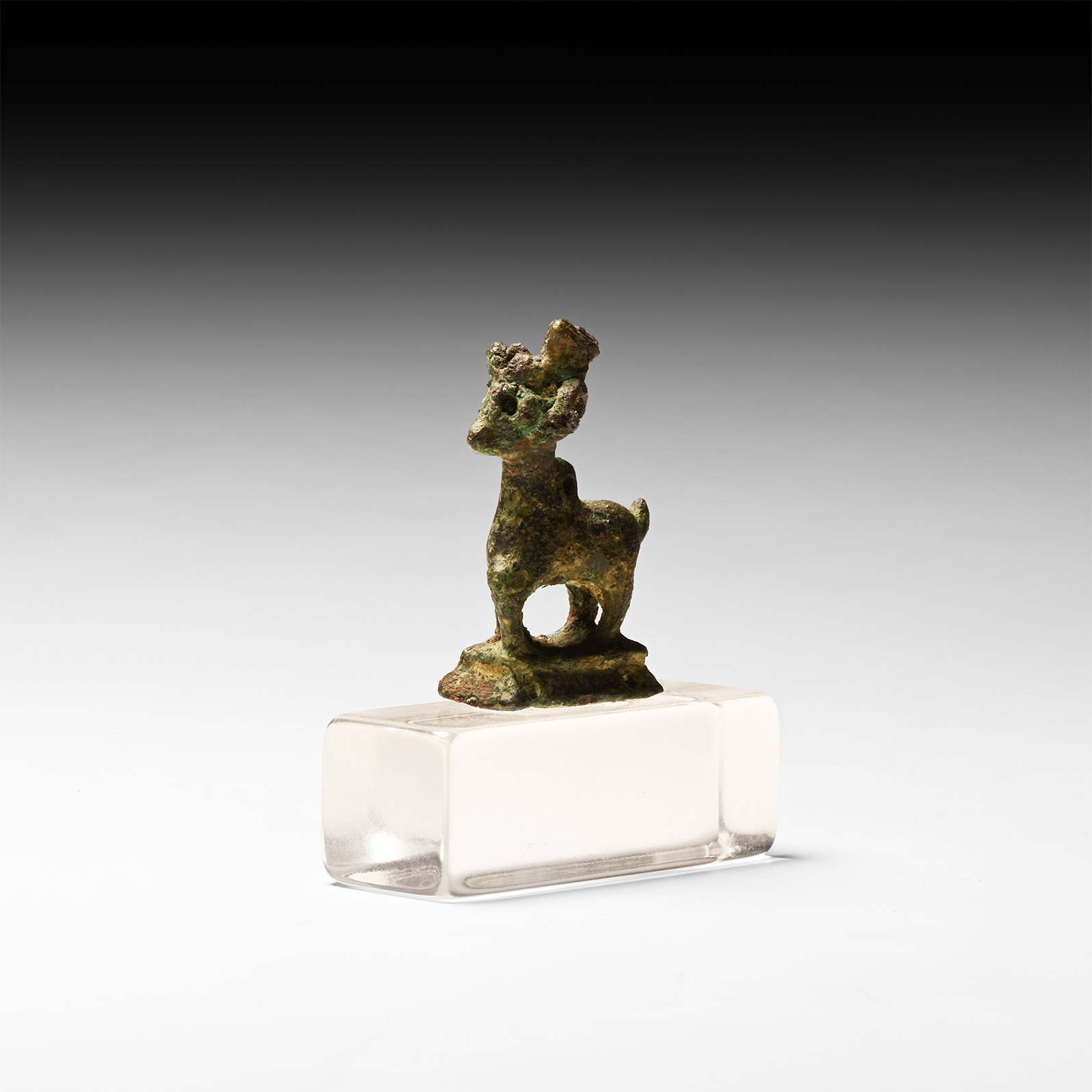
Luristan Standing Ibex
1ST MILLENNIUM B.C.
2 1/4 in. (45 grams total, 58 mm high including stand).
A copper-alloy ibex statuette modelled standing on a tiered plinth, suspension loop to base of neck; mounted on a custom-made display base.
ProvenanceAcquired before the early 1970s.
Ex London, UK, gallery.
Property of a London gentleman.
TimeLine Auctions follows a vetting process to ensure the authenticity and legality of all items, reinforcing our commitment to integrity and responsible trading. Each antiquity, antique, and coin lot undergoes thorough examination by a vetting committee of at least ten external specialists, professional trade association members, scientists, and archaeologists: Our Vetting Process
AUCTIONS:
TimeLine is a leading auction house specialising in antiquities, ancient art, collectables, natural history, coins, medals, and books. Our auctions offer museums, collectors, historians, and enthusiasts the opportunity to acquire unique and historically significant pieces.
LOT 0892
Luristan Standing Ibex
Estimate £300 - 400€350 - 460 (for guidance only)$410 - 540 (for guidance only)
-
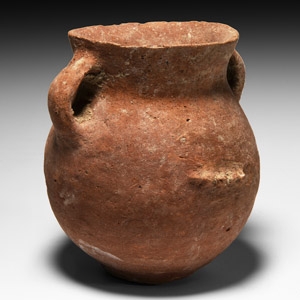
Western Asiatic Trans Jordan Redware Burnished Jar
Circa 3000 B.C.Sold for (Inc. bp): £72
A bulbous ceramic jar with flared neck flanked by two integral handles, two strips of raised knops to the body; hole near base of one handle. 359 grams, 12 cm high
Acquired 1970s. From an important deceased family collection by descent. -
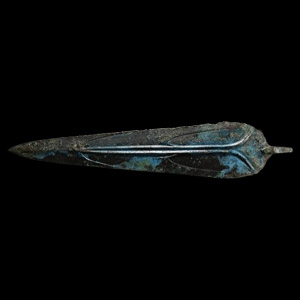
Western Asiatic Sword with Blood Channel
Early 1st millennium B.C.Sold for (Inc. bp): £416
A substantial bronze leaf-shaped blade with raised midrib extending to a short tang, ribbed fullers with curved ends extending to the shoulders. 303 grams, 35 cm
Acquired 1980-2015. Ex Abelita family collection. -
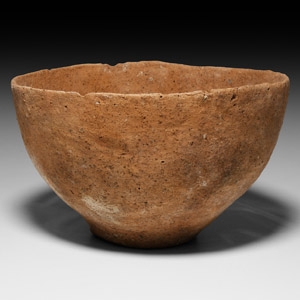
Holy Land Terracotta Bowl
3rd-2nd millennium B.C.Sold for (Inc. bp): £117
A carinated terracotta bowl with integral foot. 950 grams, 13 cm high
Acquired before 2000. Property of a London, UK, gentleman. Property of an Essex, UK, gentleman.
