
Loading, please wait...
LOT 0836
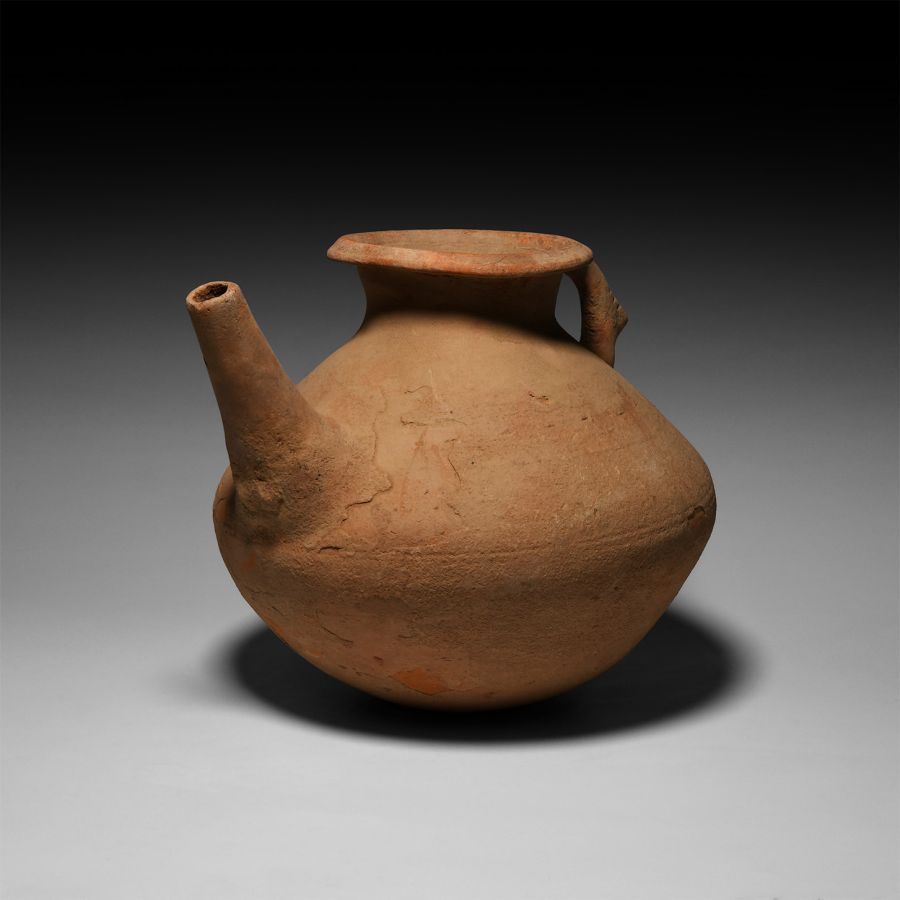
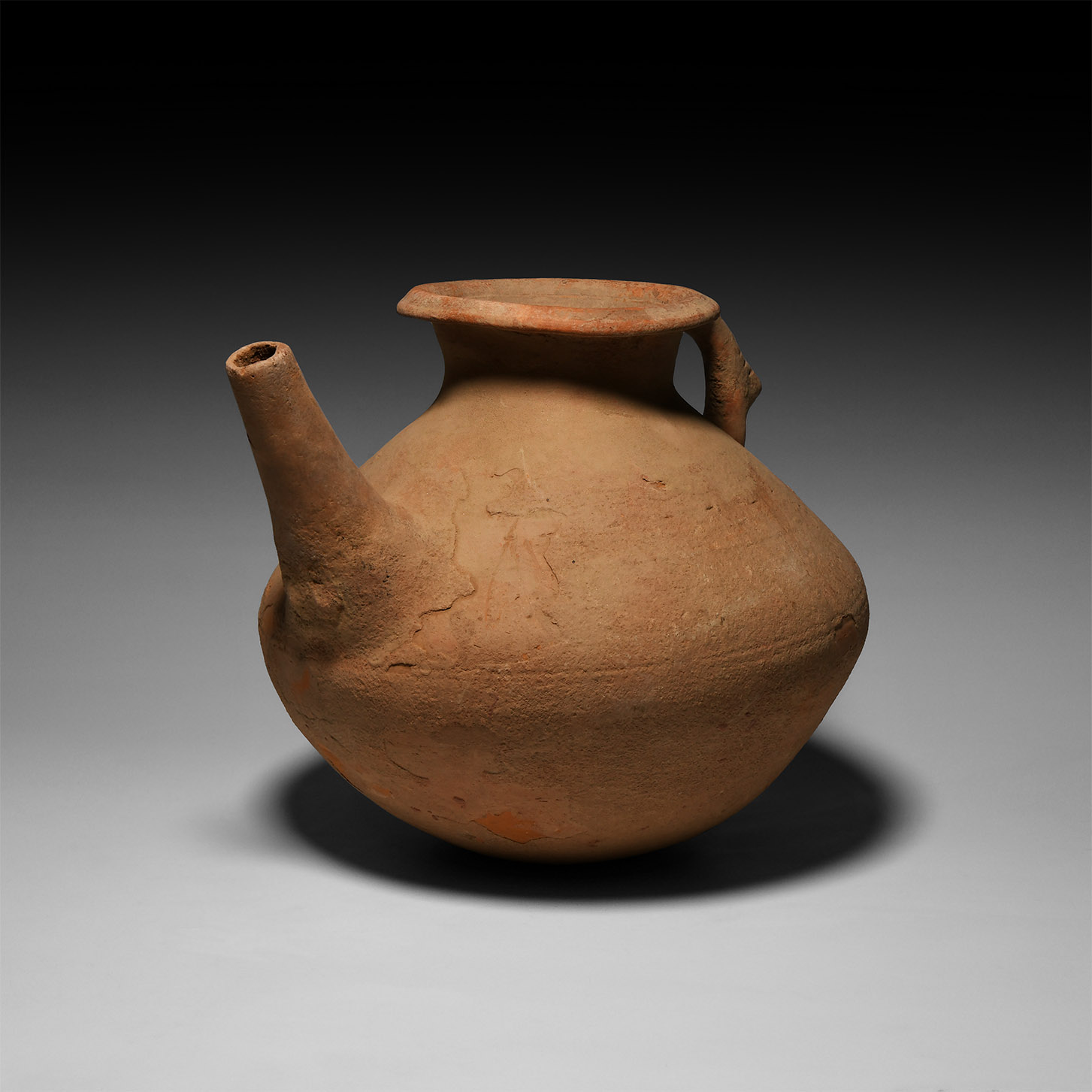
Luristan Spouted Vessel
2ND-1ST MILLENNIUM B.C.
8 5/8 in. (1.75 kg, 22 cm high).
A large ceramic pouring vessel with bulbous body and trumpet-shaped mouth, keeled strap handle to the rear with notch detailing, tapering spout and bands of circumferential linear ornament.
ProvenanceAcquired 1980-2015.
Ex Abelita family collection.
TimeLine Auctions follows a vetting process to ensure the authenticity and legality of all items, reinforcing our commitment to integrity and responsible trading. Each antiquity, antique, and coin lot undergoes thorough examination by a vetting committee of at least ten external specialists, professional trade association members, scientists, and archaeologists: Our Vetting Process
AUCTIONS:
TimeLine is a leading auction house specialising in antiquities, ancient art, collectables, natural history, coins, medals, and books. Our auctions offer museums, collectors, historians, and enthusiasts the opportunity to acquire unique and historically significant pieces.
-
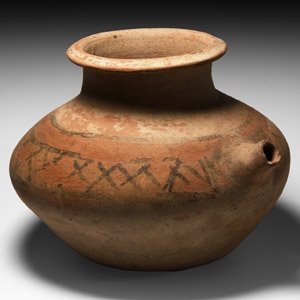
Western Asiatic Painted Spouted Vessel
2nd-1st millennium B.C.Sold for (Inc. bp): £46
A ceramic vessel with rounded underside, biconvex body, trumpet-shaped mouth with raised internal rim; spout to the shoulder; painted band of decoration to the shoulder. 724 grams, 21 cm wide
Acquired 1980-2015. Ex Abelita family collection. -
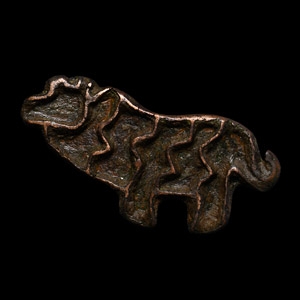
Central Asian Compartmented Seal Pendant with Bovine
23rd-20th century B.C.Sold for (Inc. bp): £208
A bronze compartmented stamp seal in the form of a stylised bovine, suspension loop to reverse; accompanied by a typed and signed scholarly note by W.G. Lambert, the late Professor of Assyriology at the University of Birmingham, 1970-1993, which states: '...This is a compartmented seal, not openwork, with a stout suspension loop on the back. The shape is that of a bovine with short curly tail, heavy body, thick neck and only a very slight hump. For practical reasons there are only the shortest of horns, where, as with the feet, the ridge around the edges of the seal is not continued. This comes from west central Asia, and dates to c.2300-2000 B.C. It is a very rare piece of great merit.' 22 grams, 52 mm
1980s-early 1990s collection, UK. Accompanied by an original typed and signed scholarly note issued by the late Professor W.G. Lambert. -
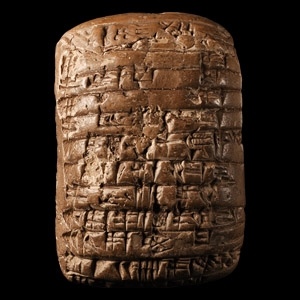
Ur III Cuneiform Tablet, an Inventory of Drivers of Plough Oxen
Late 3rd millennium B.C.Sold for (Inc. bp): £1,300
A pillow-shaped clay tablet bearing dense rows of cuneiform text to both principal faces; an inventory of workers, drivers of plough oxen, under the responsibility of a team leader; among the workers, several are mentioned as 'sick', the lower part of the tablet has been restored, the cuneiform signs on two lines are false. 82 grams, 63 mm
Acquired early 1990s. Ex private American collection; thence by descent. Private Swiss collection since 1998.
