
Loading, please wait...
LOT 1047
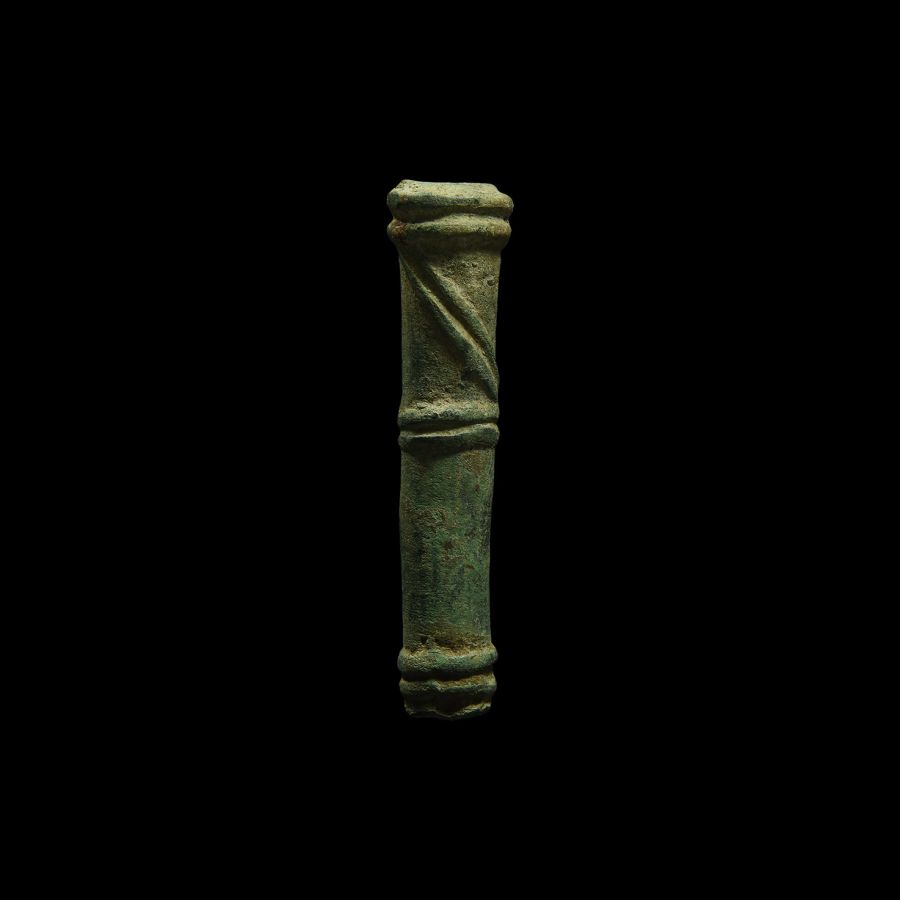
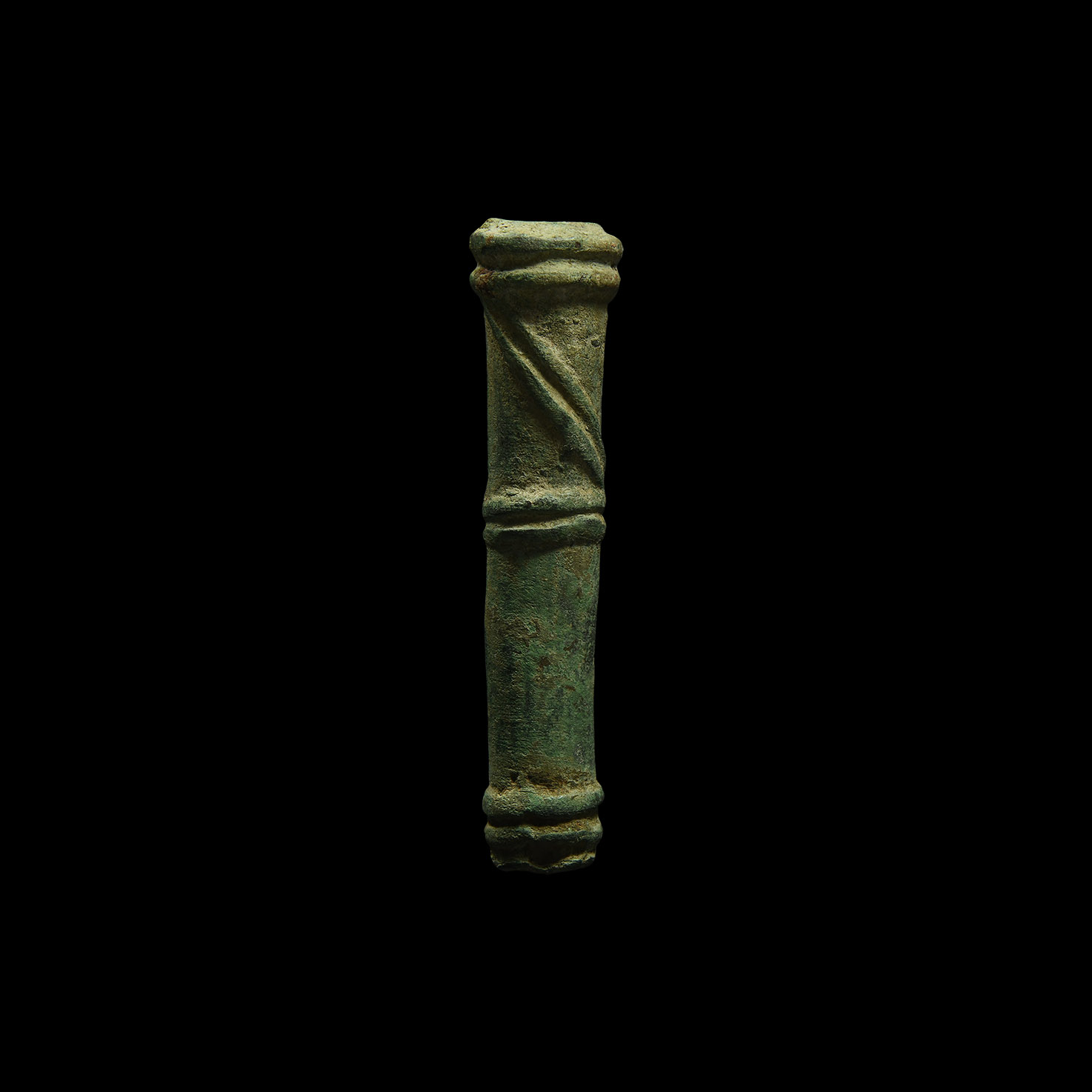
Luristan Socketted Cudgel
13TH-7TH CENTURY B.C.
6 in. (473 grams, 15.5 cm wide).
A bronze cudgel or handle of an axe or mace reinforced at both ends by raised moulding, the handle adorned with a double spiral in relief.
ProvenancePrivate family collection formed in London, mid 1980s to early 1990s.
LiteratureSee Godard, A., Les Bronzes du Luristan, Paris, 1931, pl.XIX, no.58; Godard, Y. and A., Bronzes de Luristan, La Haye, 1954, pl.2, cat.16.
CONDITIONTimeLine Auctions follows a vetting process to ensure the authenticity and legality of all items, reinforcing our commitment to integrity and responsible trading. Each antiquity, antique, and coin lot undergoes thorough examination by a vetting committee of at least ten external specialists, professional trade association members, scientists, and archaeologists: Our Vetting Process
AUCTIONS:
TimeLine is a leading auction house specialising in antiquities, ancient art, collectables, natural history, coins, medals, and books. Our auctions offer museums, collectors, historians, and enthusiasts the opportunity to acquire unique and historically significant pieces.
LOT 1047
Luristan Socketted Cudgel
Estimate £300 - 400€350 - 460 (for guidance only)$410 - 540 (for guidance only)
-
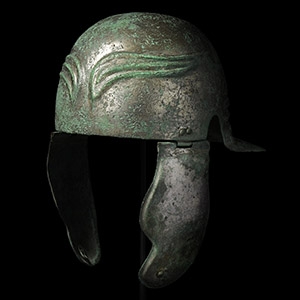
Roman Legionary Helmet with Wings of Jupiter
Late 1st century B.C.-early 1st century A.D.Sold for (Inc. bp): £52,000
A tinned sheet-bronze legionary helmet of Imperial Gallic Type A with deep rounded bowl, simple C-shaped cut-outs for the ears, integral flared neck-guard extending some way along the sides, corrugated ribs to the occipital area at the rear and corrugated 'wings' or eyebrows (Russel-Robinson's Type E) above the brow; small stud the rear of the neck-guard attaching suspension loops to the underside; hinged bracket at each temple for a deeply curved cheek-guard with gently flared rim, bearing a loop to the inner face to accept an vinculum fastening strap; accompanied by a custom-made display stand. 2.38 kg total, 29 cm high (41 cm including stand)
typologically important helmet of the utmost rarity, excellent state of preservation.
From a West Coast, USA, arms and armour family collection; thence by descent. Accompanied by an academic report by Dr Raffaele D'Amato. This lot has been checked against the Interpol Database of stolen works of art and is accompanied by search certificate number no.11585-199847.
This important and well-preserved helmet (Cassis) belongs to a small and rare group of helmets of the Weisenau type (modern term). The development of this helmet formed the main category of legionary helmets in 1st and 2nd centuries A.D. This early category was characterised by a very high hemispherical calotte and a slightly sloping, narrow neck guard. They were fitted with a pair of prominent curved eyebrows (symbolising the wings of Jupiter’s thunderbolts) flanking two rivetted bosses. -
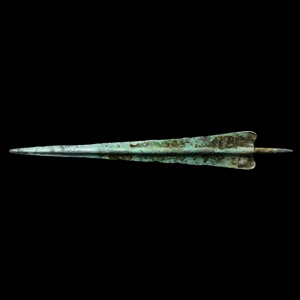
Western Asiatic Spearhead
12th-10th century B.C.Sold for (Inc. bp): £108
A bronze spearhead tapering from shoulders to rounded tip; the short tang tapering to end for insertion into a shaft. 375 grams, 42 cm
Fine condition.
Abelita family collection, 1980-2015.
This is a type 2 spearhead with a long blade and short tang. The elongated blade had two rivet heads at its base, here effaced by a later restoration. Similar pieces have been excavated in Marlik and Amlash. -
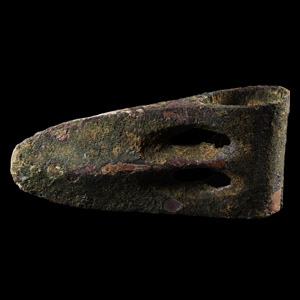
Babylonian Bronze Axehead
2nd millennium B.C.Sold for (Inc. bp): £416
A bronze duck-billed shaft-hole axe head featuring a curved, beak-shaped blade with two pierced eyes and a raised median ridge. 204 grams, 10.5 cm
Acquired early 1990s. Ex private American collection; thence by descent. Private Swiss collection since 1998.
